The decision is your doorway, not the bar
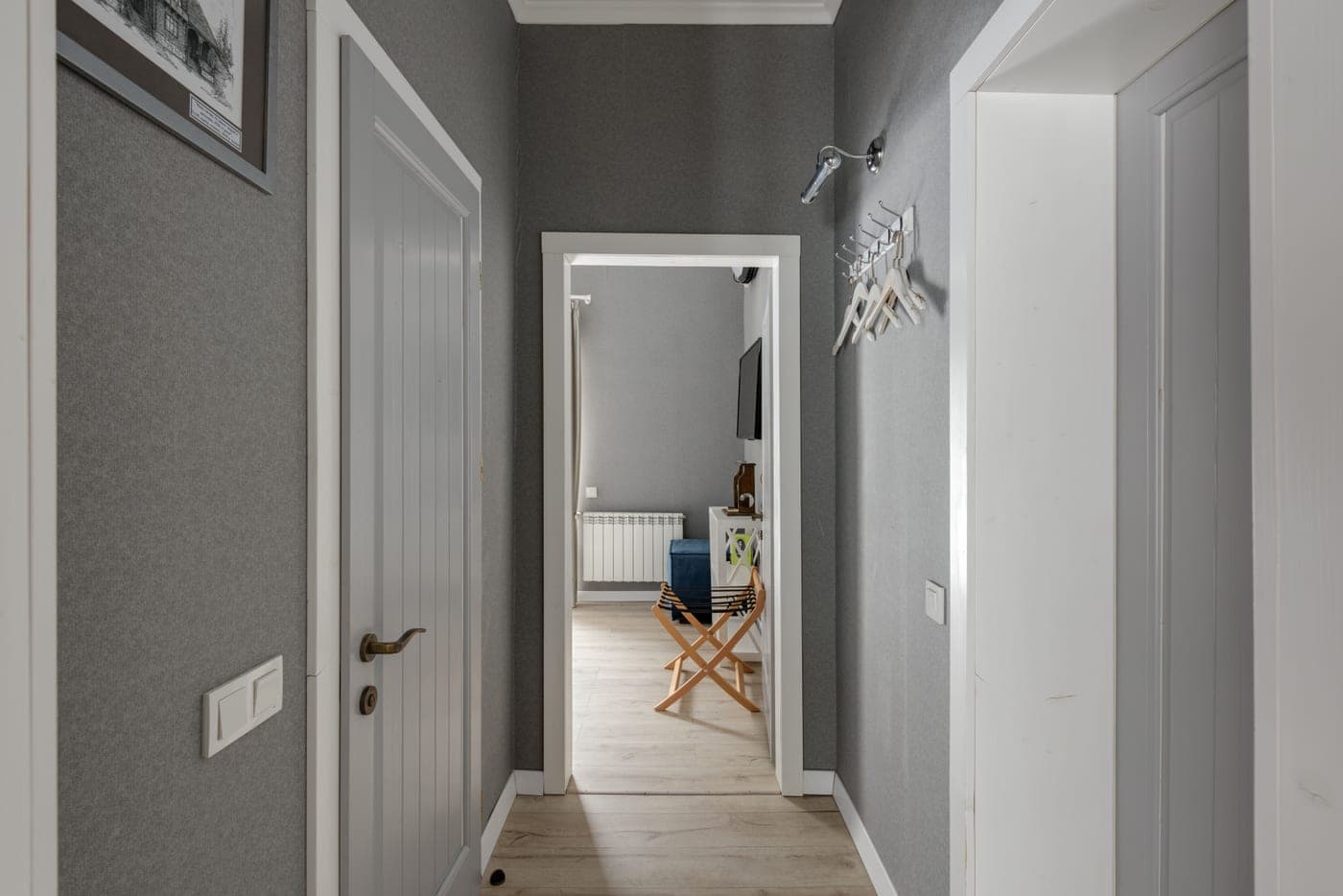
Every pull-up bar question resolves to four measurements you can take in two minutes: the width of your door opening, the depth of the trim around it, your ceiling height, and whether your lease lets you drill. Take those four numbers first and the product decision mostly makes itself.
Leverage doorway bars — the common shape with a long arm that hooks over the frame — need a 24 to 32 inch opening with trim on both sides, and they leave when you do. They are the right answer for most renters and the wrong answer for a flat, trimless modern frame. Telescoping bars wedge inside the opening with pressure and suit frames with no trim, at the cost of a lower rating and a mark on the paint if you overtighten. Wall and ceiling mounts bolt into studs or joists, take weighted work and kipping, and leave four large holes. Free-standing towers need no fixing at all and take about four square feet of floor permanently.
The doorway vs wall-mount vs free-standing page runs that decision properly, with the measurements that send you down each branch.
Ceiling height, the constraint people forget
A dead hang with straight legs needs the bar at about your standing reach — roughly your height times 1.3 — and a full rep needs another 10 to 12 inches of headroom above the bar for your head and hands. Under an eight foot ceiling that arithmetic does not close for most adults, and the answer is simply to bend your knees: the exercise is unchanged. What an eight foot ceiling does rule out is a ceiling mount, which drops the bar 14 inches and puts a bracket in your line of pull for no gain over a doorway bar. The ceiling arithmetic has the numbers by user height.
What decides the price
Load rating and how it is achieved. A 300 pound rating on a doorway bar is a statement about the steel and the geometry; treat anything unrated as unrated. Grip count and spacing — wide, narrow and neutral positions on one bar is genuinely useful and is where the cheap bars economize. Padding and finish, which sounds cosmetic until the foam on a $20 bar compresses into your palms. On wall mounts, reach-from-wall is the spec that decides whether you can do a full rep without your knees hitting drywall, and it is the one buyers never check.
Will it damage the door frame?
The honest answer is that a correctly fitted leverage bar distributes load across the frame and usually leaves nothing worse than compression marks in the paint, and that an incorrectly fitted one — or one used for kipping and explosive work — can absolutely dent trim or pull it loose. The full answer, with what to put between the bar and the trim is worth five minutes before you hang anything in a rental.
The two specs buyers never check
Trim depth. A leverage bar hooks over the door casing, and most are built for trim up to about 3.5 inches deep. Deeper decorative casing, or a frame with no casing at all, and the bar either will not seat or will seat badly. Measure it with a ruler, not by eye.
Reach-from-wall on a wall mount. This is the distance the bar stands out from the wall, and it decides whether your knees hit the drywall on the way up. Sixteen inches is workable, twenty or more is comfortable, and under fourteen means bending your legs behind you for every rep. Manufacturers publish the number and almost nobody reads it.
Where to start
If your door frame takes a leverage bar, buy one and a set of assistance bands and start today; that combination works at any strength level from zero reps upward. If you own the place and have a garage, a bolted wall bar is a better long-term purchase and opens up weighted work later. If you can neither drill nor use the doorway, a tower is the remaining answer and it is a perfectly good one — it just wants floor.