Guide · Training
How to get your first pull-up, on a bar in your own doorway
Four exercises, three days a week, eight weeks. Hang, lower, assist, row — and a clear rule for when to take the band away. No gym, no machine, no one watching.
Rope & Rep is reader-supported. Product links go through our affiliate resolver and we may earn a commission from qualifying purchases at no cost to you. Prices are the retailer's and change — every button opens the live price on Amazon rather than showing a stale number.

A person hanging from a bar with straight arms in a home training space. Licensed stock photograph of the category — not the specific product.
Get your first pull-up in eight weeks · 4 steps
1
Week 1–2: build the hang
Three days a week, do 3 dead hangs to near-failure with two minutes of rest between them. Add 3 sets of 8 inverted rows. The goal is grip and shoulder tolerance, not pull strength.
2
Week 3–4: add negatives
Jump or step to the top of the bar with your chin over it, then lower for a slow count of five. Do 4 sets of 3. Keep the hangs as a warm-up and the rows as a finisher.
3
Week 5–6: band-assisted reps
Loop a band over the bar, step in with one foot, and do 4 sets of 5 strict reps. Pick the lightest band that lets you finish all five with control, not the one that makes it easy.
4
Week 7–8: step the band down and test
Move to the next thinner band for 4 sets of 5. Test a single unassisted rep at the start of one session each week, fully rested, before any other work.
Why this order works
A pull-up fails in one of three places: the hands let go, the shoulders cannot hold a loaded overhead position, or the back and arms cannot move you. Most beginners assume the third and train only that, which is why so many plans stall — you cannot express pulling strength through a grip that opens at eight seconds or a shoulder that shrugs up around your ears.
So the first two weeks buy grip and a stable shoulder, cheaply, by hanging. The middle weeks use the part of the movement you are already strong enough for — lowering, where almost everyone can control more weight than they can lift. Only then does the plan spend its effort on the concentric rep itself, with a band removing a known amount of load at the bottom of the range and almost none at the top, which is exactly where you need the help and where you do not.
The four exercises
1. Dead hang
Hands just outside shoulder width, arms straight, shoulders active — not shrugged to your ears, not fully relaxed either. Think “pull your shoulder blades down an inch and hold there.” Hang until your grip is nearly gone, note the seconds, and rest two minutes. Three of those. If 20 seconds is your number in week one, that is fine; most people double it inside a month.
2. Negative (eccentric)
Get your chin over the bar however you can — a chair, a jump, a box — then take five full seconds to lower under control until your arms are straight. Stepping back up is not part of the exercise; reset each time. Three reps per set, four sets. Negatives are the single most productive thing on this list and also the most tempting to rush. Count out loud.
3. Band-assisted pull-up
Loop the band over the bar, thread it through itself, and put one foot (not a knee — a knee slips) in the loop. Start from a dead hang with straight arms, pull until your chin clears the bar, lower all the way down. The band should let you finish five with the last rep looking like the first. If rep five is a thrash, the band is too light; if rep eight would be easy, it is too heavy.
4. Inverted row
Under a low bar, a pair of rings, or the underside of a sturdy table: body straight, heels on the floor, pull your chest to the bar. It trains the same muscles horizontally, at a load you choose with your foot position, and it is the exercise that keeps your elbows and shoulders healthy while the rest of the plan hammers them. Rings make this noticeably more comfortable because your wrists rotate through the rep.
The eight-week schedule
| Week | First | Second | Finisher | Weekly test |
|---|---|---|---|---|
| 1–2 | 3 × max dead hang | — | 3 × 8 inverted rows | Note your hang time |
| 3–4 | 2 × max dead hang | 4 × 3 negatives (5 sec.) | 3 × 8 inverted rows | 1 cold rep attempt |
| 5–6 | 1 × dead hang (warm-up) | 4 × 5 band-assisted | 3 × 10 inverted rows | 1 cold rep attempt |
| 7–8 | 1 × dead hang (warm-up) | 4 × 5, next band down | 3 × 10 inverted rows, feet raised | 1 cold rep attempt |
The weekly test is a single attempt, rested, before anything else in the session. Not at the end, not after the bands, not “one more try” four times. One honest rep tells you where you are; five tired attempts tell you nothing and cost you the session.
When to drop the band
Move down a band when you can complete 4 sets of 5 strict reps with the current one and the final rep of the last set is controlled rather than survived. Expect the step down to feel like starting over — it should, it is a real jump in load. If you cannot get three reps with the thinner band, do the first two sets on the thinner band and the last two on the thicker one for a week, then switch fully.
The three mistakes that stall people
- Training to failure every session. Assisted reps are a skill rehearsal. Leave one in the tank on every set; the adaptation comes from repeating good reps often, not from grinding bad ones.
- Half reps. Chin over the bar at the top, arms straight at the bottom. A rep that starts from a bent arm skips the hardest part and is why some people can do “five” on a machine and zero on a bar.
- Kipping to get the number. Swinging works as a different exercise with different requirements. It does not build a strict pull-up, and on a leverage doorway bar it can walk the bar out of the frame — see whether doorway bars damage frames.
Where to hang the bar
Any doorway you pass often. The bar that gets used is the one in the hallway, not the one in the spare room with the door shut. If your frame will not take a leverage bar, the doorway vs wall-mount vs free-standing decision covers the alternatives, and ceiling height for a pull-up bar tells you whether your room has the headroom for a full rep.
Picks
What the plan needs
A bar to hang from, bands to scale the movement down to where you are today, and — optionally — rings for the row variation that builds the same pull with less shoulder strain.
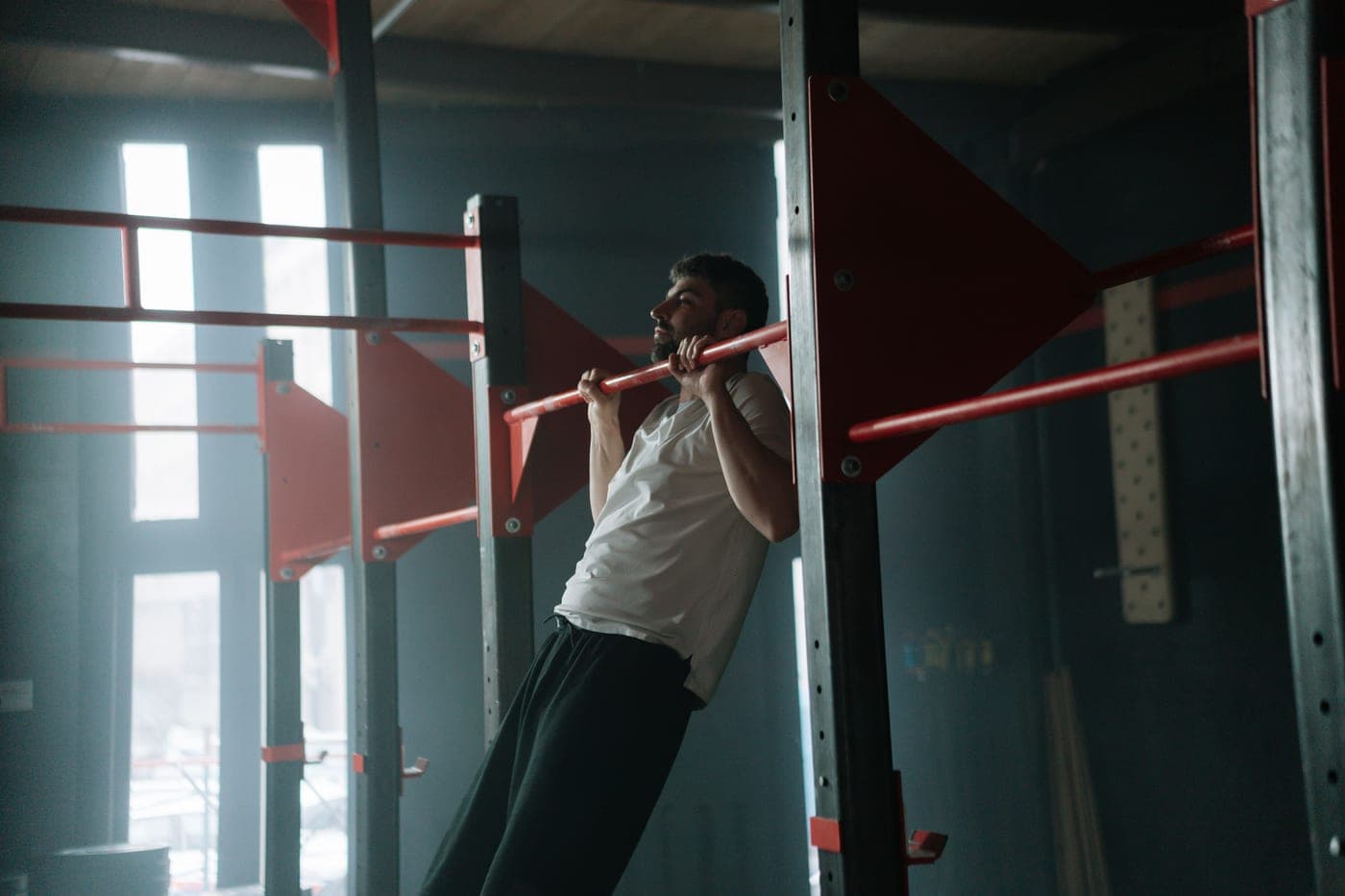
Key specs
- Door width
- 24–32 in. (trim to 3.5 in.)
- Mounting
- Leverage, no screws
- Rated load
- 300 lb
Scores · editorial, out of 10
- Fit & clearance (door, ceiling, depth)
- 7
- Reversibility (no drill, no marks, takedown)
- 9
- Rated load & build
- 7
- Grip options
- 8
- Value
- 10
Pick 1 · Pull-up bars
Iron Gym Total Upper Body Workout Bar
Iron Gym
The doorway bar everyone copies: three grips, a 300 lb rating, fits a 24–32 in. door with trim up to 3.5 in., and it leaves with you when the lease ends.
Best for
A first bar in a standard apartment doorway
Pros
- Fits the most common US interior door range and trim depth without tools
- Three grip positions (wide, narrow, neutral) on a bar this cheap is rare
- Flips to the floor for push-ups and dips — one piece of gear, four movements
Cons
- The leverage design needs a door with trim on both sides; flat, trimless frames won't hold it
- Grip width is fixed — taller lifters may find the wide grip a touch narrow
Specs from Iron Gym — Total Upper Body Workout Bar listing (door width, trim, load).
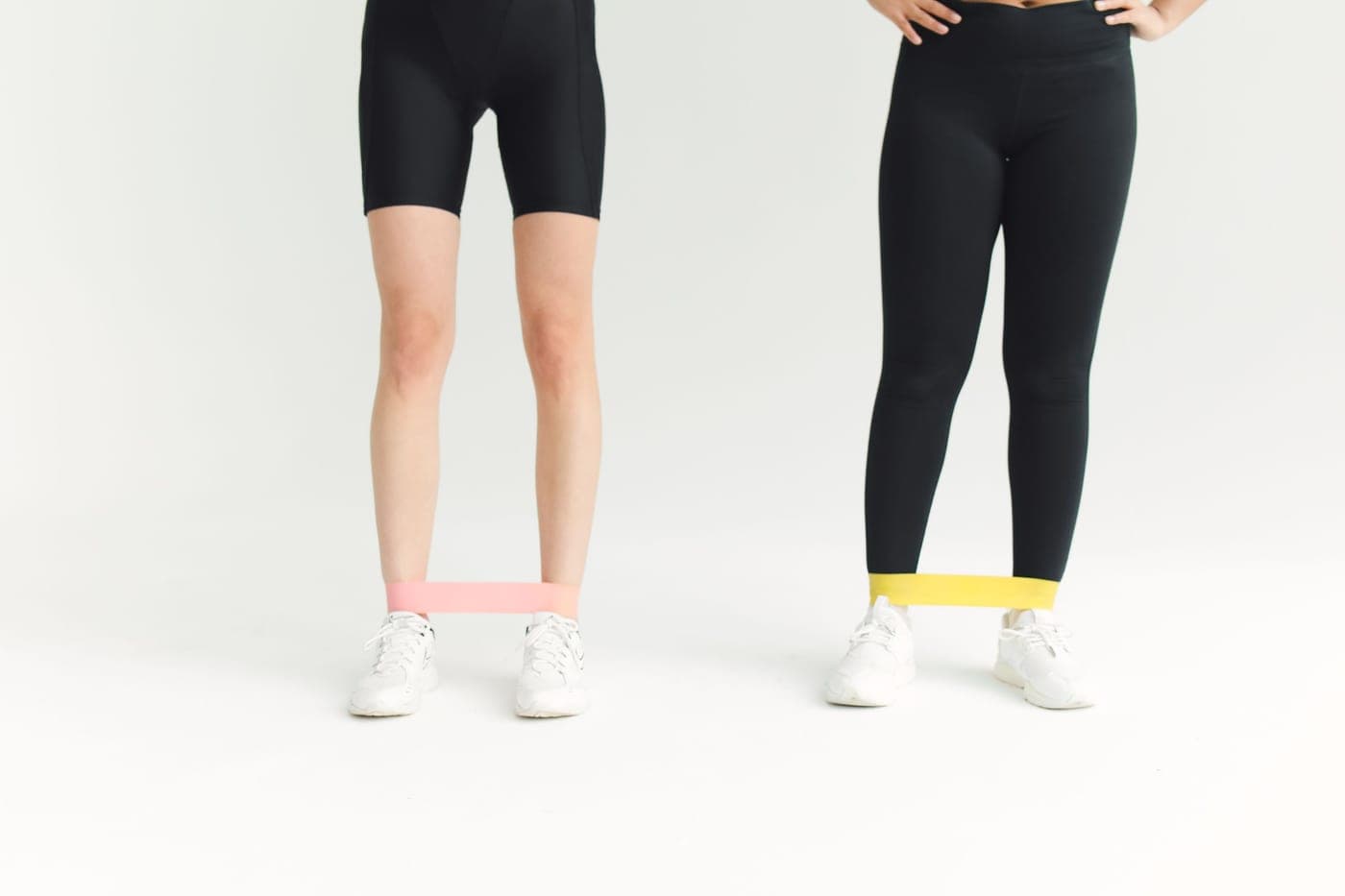
Key specs
- Length
- 41 in. loop
- Assistance
- #1 red 10–35 lb to #5 blue 65–175 lb
- Widths
- 1/2 in. to 2.5 in.
Scores · editorial, out of 10
- Assistance range
- 10
- Material & safety
- 8
- Sizing clarity
- 9
- Bar compatibility
- 10
- Value
- 8
Pick 2 · Assistance bands
WODFitters Pull-Up Assistance Bands (set)
WODFitters
The standard 41 in. loop bands with a clearly published range — red 10–35 lb up to blue 65–175 lb — sold as sets so you can step down assistance as you get stronger.
Best for
Anyone working toward a first pull-up who wants a progression, not one band
Pros
- Published resistance per color, so you can plan the step-down from green to red
- Sets of 4 or 5 cover a 200 lb beginner through to a light-assist finisher
- Natural latex, 41 in. — fits any doorway bar or tower
Cons
- Latex — not for latex allergies, and it degrades in sunlight
- The thickest bands can snap a foot out from under you if you slip; step in carefully
Specs from WODFitters — Resistance Bands (length, resistance by color, widths).
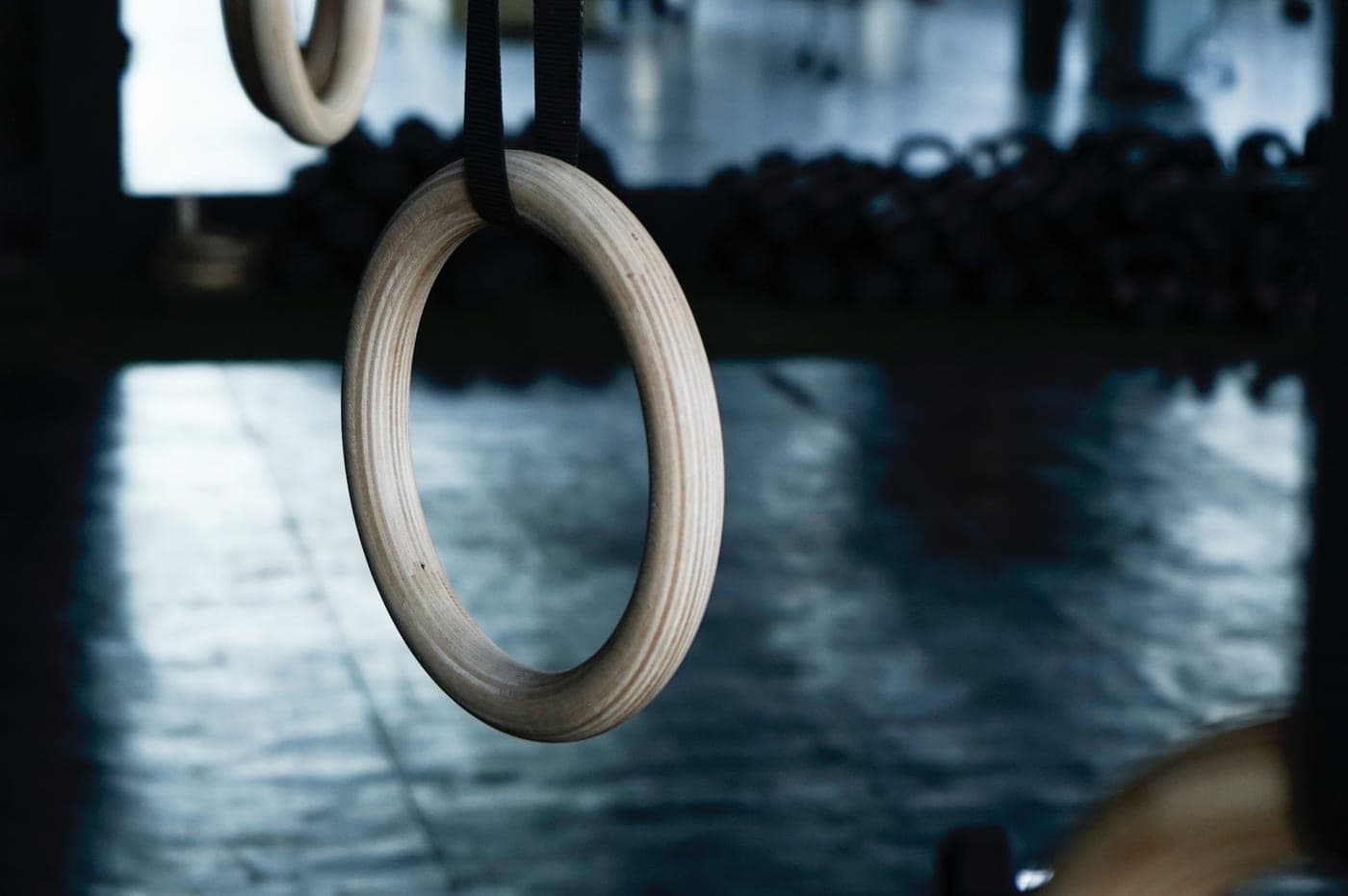
Key specs
- Rings
- Birch wood, 28 mm
- Straps
- 2 × 14.76 ft, 1.5 in., numbered scale
- Rated load
- 1500 lb
Scores · editorial, out of 10
- Strap length & numbering
- 10
- Material & grip
- 9
- Rated load
- 10
- Setup where a renter can hang them
- 8
- Value
- 9
Pick 3 · Gymnastic rings
PACEARTH Wooden Gymnastic Rings (1500 lb)
PACEARTH
Birch rings on 14.76 ft, 1.5 in. cam-buckle straps printed with a scale, rated 1500 lb — the wood ring set that makes leveling both rings under a ceiling a ten-second job.
Best for
A first pair of wood rings hung from a doorway bar, a beam or a tree
Pros
- Numbered straps — set both rings to the same mark and they're level, every time
- 1.5 in. straps are wider than most, so they dig into wrists less on dips
- Serrated cam buckles; birch grips well with or without chalk
Cons
- Wood must stay dry — not for a rainy balcony or an outdoor tree year-round
- 14.76 ft is long for an 8 ft ceiling; you'll coil the excess
Specs from PACEARTH — Wooden Gymnastics Rings listing (ring size, strap length/width, capacity).
FAQ
Questions readers ask
How long does it take to get your first pull-up?
Most beginners who train three days a week with hangs, negatives and band-assisted reps get there in 8 to 12 weeks. Starting strength, bodyweight and training history move that range in both directions.
Do resistance bands actually help you learn pull-ups?
Yes, because a band removes the most assistance at the bottom of the rep — where you are weakest — and almost none at the top. That matches the shape of the problem better than a machine does.
Should I do negatives or band pull-ups first?
Negatives first. They let you handle the full range at a load you can already control, and they build the grip and shoulder tolerance that assisted reps assume you have.
How often should I train pull-ups?
Three non-consecutive days a week, stopping short of failure. Daily attempts are how people accumulate elbow pain and no reps.
Can I learn pull-ups at home without a bar?
You can build most of the strength with inverted rows under a table and band pull-downs, but the rep itself is a skill you have to practice on a bar. A doorway bar is the cheapest fix.
Related
Keep reading
- Pull-up progression
What to do after the first rep — 1 to 10 and beyond.
- Best doorway pull-up bars
The bars that fit a rented door frame.
- Best resistance bands for pull-ups
Which band set, and which colors you actually need.
- Gymnastic rings for beginners
Ring rows, the friendlier version of the inverted row.
- Bodyweight training for beginners
The wider program this sits inside.
Sources