What to buy first
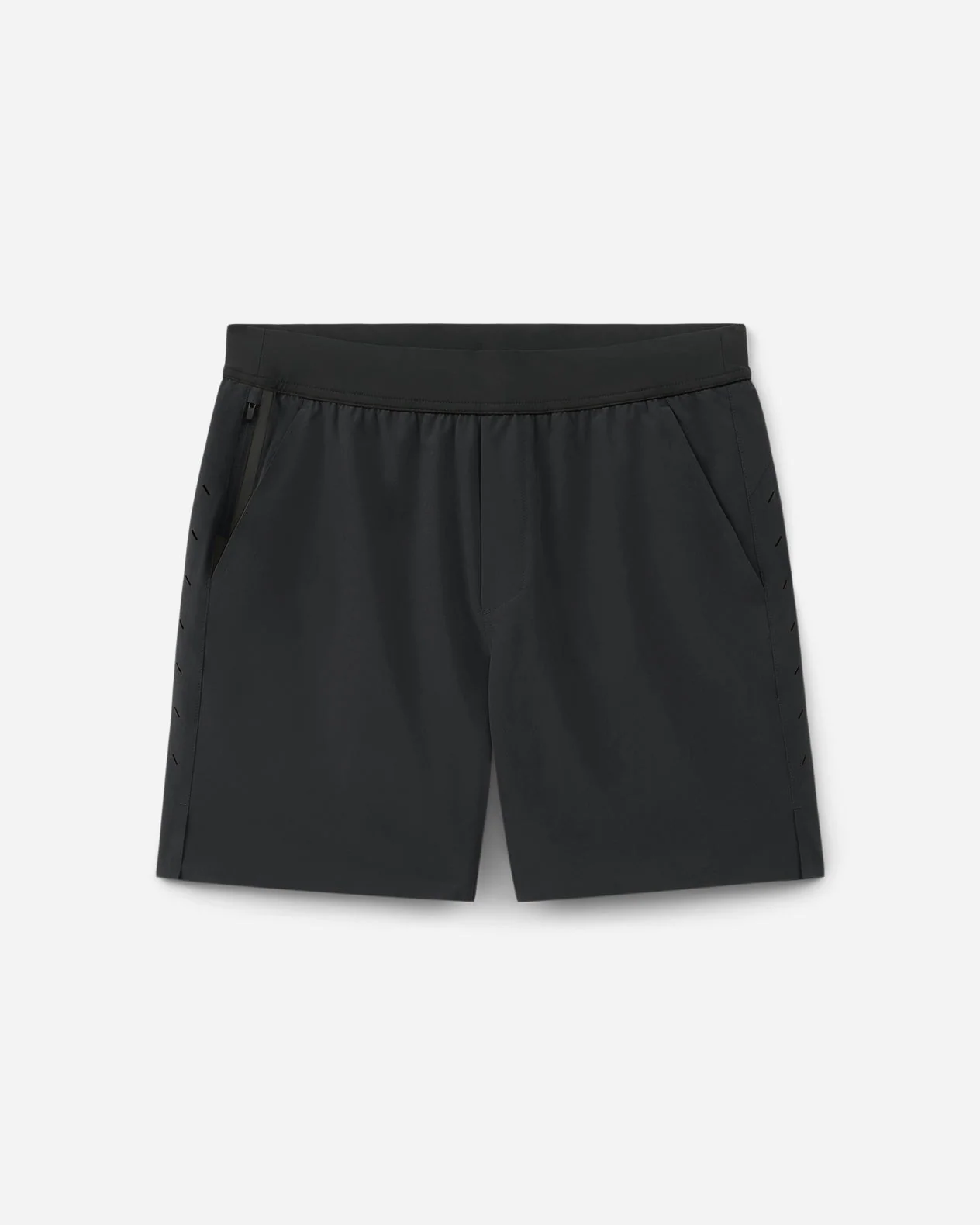
One pair of shorts you reach for without thinking, in the inseam that suits whichever you do more of — conditioning or lifting. That is the whole starting kit. Training at home means the same pair gets worn two or three times between washes in a room with no air conditioning, so the things that matter are the waistband, the liner and whether a pocket will hold a phone through a set of double-unders.
How this category divides
Shorts split three ways and the split is about the session, not the style. A light, vented short with split hems is for skipping, intervals and anything that makes a spare room hot. A tougher, abrasion- resistant short is for lifting, where the fabric meets a bench, a bar and a belt. A ripstop short is for training that leaves the house — a sled on a driveway, a rucking walk, a bar in a park. Most people need one of the first two and think they need all three.
Lined or unlined, which is the real decision
A liner is a built-in brief. Lined means one garment and one wash and is the simpler buy. Unlined is a shell you wear over compression shorts you already own, and wearing a liner inside those is the single most common complaint about a training short. Good brands sell the same short both ways at the same inseam and the same price, which turns a gamble into a preference.
What decides the price
Construction, almost entirely: four-way stretch rather than two, a waistband that does not pinch at the bottom of a squat, laser-cut ventilation instead of mesh panels, and a pocket system engineered so a phone does not swing. None of that shows in a photograph, which is why a $30 short and a $98 short look identical online and feel nothing alike in a session.
What people get wrong
Buying three pairs of the same short at once, before knowing whether they want the liner or the length. Buy one, wear it for a fortnight, then buy the second — you will know by then, and you will probably never need the third. The other mistake is spending here before the training itself is sorted: shorts do not change what you can train, and a bar or a bell does.