Guide · Training
A 12-week Marine PFT prep plan you can run from a doorway and a sidewalk
Three events, three training problems, one week that covers all of them. Pull-up volume without elbow damage, a plank that goes past two minutes, and a run build that peaks on test day instead of two weeks before it.
Rope & Rep is reader-supported. Product links go through our affiliate resolver and we may earn a commission from qualifying purchases at no cost to you. Prices are the retailer's and change — every button opens the live price on Amazon rather than showing a stale number.

A runner on a track at sunrise. Licensed stock photograph of the category — not the specific product.
Twelve-week Marine PFT preparation · 4 steps
1
Weeks 1–4: base
Three run days (two easy, one tempo), three pull-up days using submaximal sets at half your max, and planks three times a week starting from your current hold time.
2
Weeks 5–8: build
Add one interval run session a week, move pull-ups to ladders and clusters, and push plank holds past 2 minutes by adding 10 seconds a week.
3
Weeks 9–11: specificity
Run one three-mile time trial every second week at goal pace. Do one max-effort pull-up set per week, fresh. Keep everything else at maintenance volume.
4
Week 12: taper and test
Cut total volume by half, keep intensity, take two full rest days before the test, and do no pull-up work in the final 72 hours.
This is a training plan, not a standards reference. For the events, the official Initial Strength Test minimums, and where the scoring tables actually live, read the standards page — we quote only what the Marine Corps publishes and point you at the order for the rest.
The weekly template
| Day | Session | Notes |
|---|---|---|
| Monday | Pull-ups (volume) + plank | Sets at about half your max. Never to failure. |
| Tuesday | Easy run, 20–30 min. | Conversational pace. If you cannot talk, slow down. |
| Wednesday | Pull-ups (volume) + plank + rope | Rope work is the low-impact conditioning option. |
| Thursday | Tempo or interval run | Block-dependent — see below. |
| Friday | Pull-ups (quality) + plank | One near-max set, then back-offs. |
| Saturday | Long easy run, 35–45 min. | The mileage that builds the three-mile time. |
| Sunday | Rest | Actually rest. |
Event 1 — pull-ups
The rule that decides everything here: volume at submaximal effort beats max sets. If your max is 8, train sets of 4. Five sets of 4 gives you 20 quality reps and leaves your elbows intact; two sets to failure gives you 12 ugly ones and three days of recovery. Across a week, aim for roughly 40 to 70 reps once you are past the beginner stage.
Two schemes carry the plan. Ladders — 1, 2, 3, 4, 3, 2, 1 with rest equal to the reps in seconds — are the most reps-per-minute you can accumulate cleanly. Clusters — 3 reps, 30 seconds rest, repeated 5 or 6 times — are the easiest to fit into a doorway you walk past. The staged version of all of this is in the pull-up progression; if you are starting under three reps, run the first-pull-up plan for eight weeks before you start this one.
If you are testing on push-ups instead, the same logic applies with different numbers: sets at half your max, five or six times, three days a week, plus one weekly max set for the two-minute pacing practice. Practice to a clock — the two-minute limit means pacing matters as much as strength.
Event 2 — the plank
Cheap, and it plateaus fast. Three sessions a week, three holds per session, adding 10 seconds a week to your working time. Once you are past two minutes, extra time adds very little — switch the extra effort to loaded carries, hollow holds and hanging knee raises, which build the same trunk without the boredom.
Form notes that hold the time up: elbows directly under shoulders, ribs pulled down, glutes tight, neutral neck. The hold ends when the hips sag, not when the clock says so.
Event 3 — the three-mile run
This is the event that takes the longest to move and the one people ruin by running every session hard. Build it on mostly-easy mileage with one harder session a week:
| Block | Easy runs | Hard session | Long run |
|---|---|---|---|
| Weeks 1–4 | 2 × 20–30 min. | Tempo: 15 min. at comfortably-hard | 30–40 min. |
| Weeks 5–8 | 2 × 25–35 min. | Intervals: 6 × 400 m at goal pace, 90 sec. rest | 40–50 min. |
| Weeks 9–11 | 2 × 25–35 min. | Alternate: 3-mile time trial / 5 × 600 m | 40 min. |
| Week 12 | 1 × 20 min. easy | 2 × 400 m at pace, then stop | None |
Know your goal pace as a per-mile number and practice it. Most failed run scores are pacing failures, not fitness failures — going out 45 seconds too fast in the first mile costs more than a month of training gains.
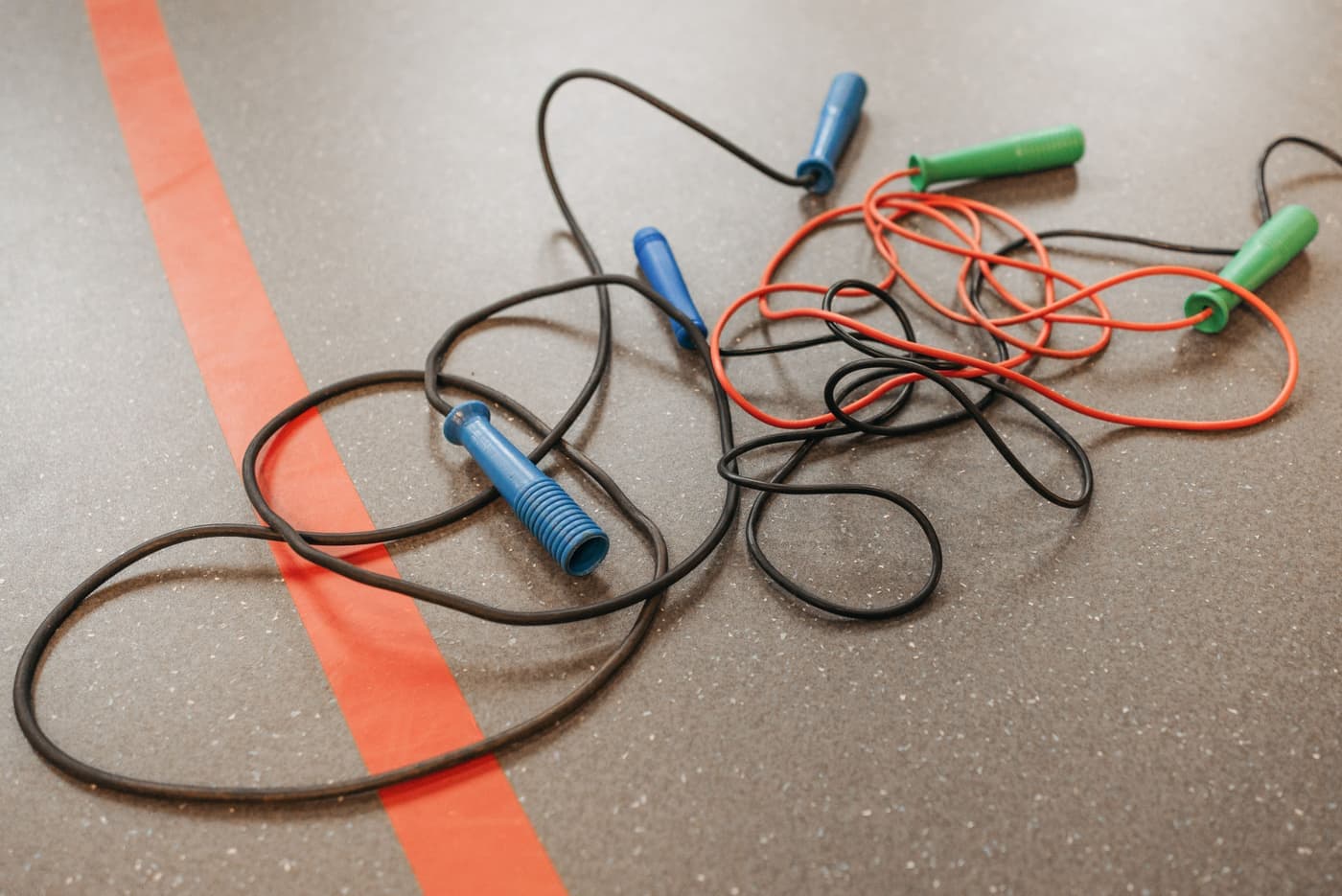
If running is limited by shin splints, a treadmill you do not have, or a schedule that puts you indoors, a jump rope covers real aerobic work at a similar heart rate with far less impact per session. It does not replace running — the test is a run, and running is a skill — but it keeps the engine building on the weeks when the miles are not available. Jump rope vs running covers the trade honestly.
Test week
Cut volume in half, keep the intensity, and protect sleep. Two full rest days before the test. No pull-up work in the final 72 hours — the arms need to be fresh for the one set that counts. On the day: warm up properly before the run, and treat the first quarter mile as the discipline test it is.
Where the gear fits
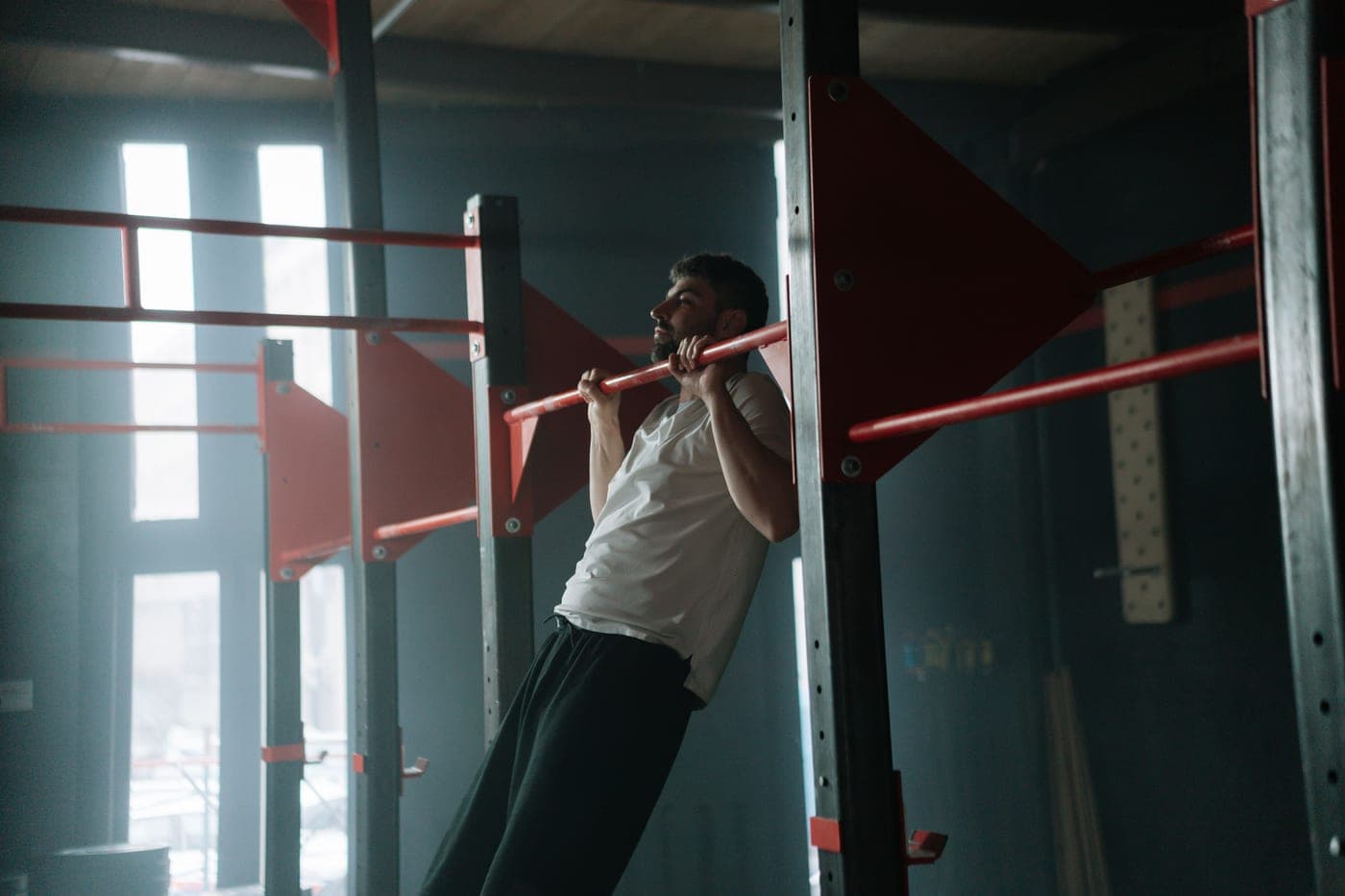
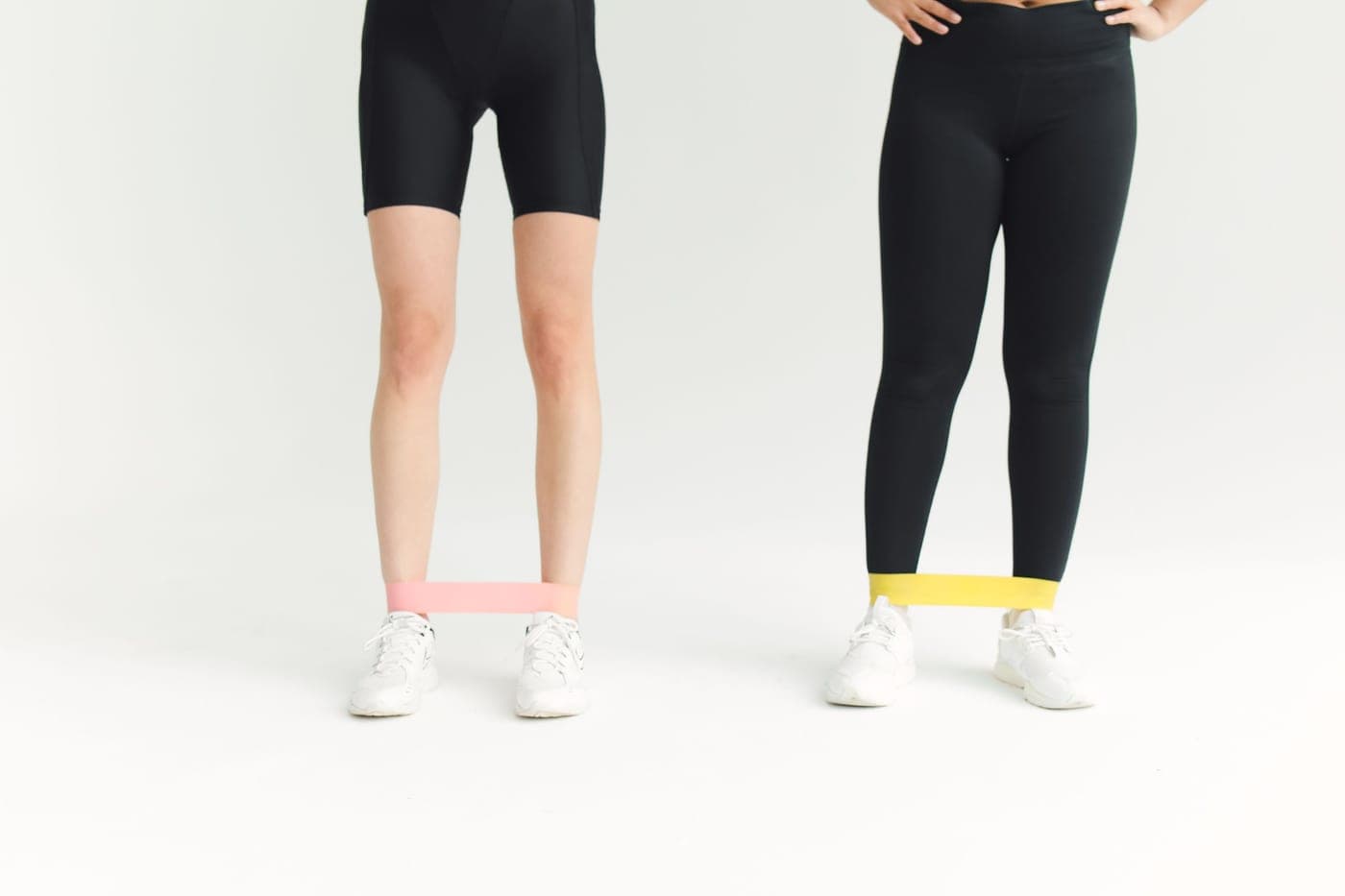
You need a bar you will pass several times a day, which in an apartment means a doorway bar in a hallway, not a wall mount in a spare room. If your frame will not take one, the doorway vs wall-mount decision covers the alternatives, and no-screw bars covers rentals where drilling is out. Add a band for assisted volume in block one, and a rope for the conditioning days. Nothing else on this site is required to pass a PFT.
Picks
The three things this plan runs on
A bar you will actually pass several times a day, a rope for the conditioning days when a run is not happening, and a band for the assisted volume in the first block.
Key specs
- Door width
- Up to 33 in., up to 6 in. deep
- Mounting
- Leverage with padded frame guards
- Rated load
- 300 lb
Scores · editorial, out of 10
- Fit & clearance (door, ceiling, depth)
- 8
- Reversibility (no drill, no marks, takedown)
- 10
- Rated load & build
- 7
- Grip options
- 8
- Value
- 8
Pick 1 · Pull-up bars
Perfect Fitness Multi-Gym Pro
Perfect Fitness
The doorway bar with the gentlest frame contact: flat, foam-padded door guards, fits doors to 33 in. wide and 6 in. deep, 300 lb rating, and it flips to the floor for dips.
Best for
Renters who care most about not marking the door frame
Pros
- Patented flat door-frame guards with thick foam pads spread the load instead of pressing a bar into the trim
- Fits frames up to 6 in. deep — thicker walls than most leverage bars allow
- Padded handles at wide, close and hammer positions; turns over for sit-ups, push-ups and dips
Cons
- At 6.2 lb it is heavier than the bare-steel bars, so hanging it one-handed takes practice
- No telescoping — a doorway over 33 in. is out
Specs from Perfect Fitness — Multi-Gym Pro listing (door width/depth, capacity, dimensions).
Key specs
- Cable
- 9 ft PVC-coated braided steel
- Bearings
- Dual ball bearing
- Handles
- 6 in. EVA memory foam
Scores · editorial, out of 10
- Rope type fit for the buyer
- 7
- Adjustability & sizing
- 8
- Bearings & handles
- 8
- Apartment-friendliness (floors, noise)
- 6
- Value
- 10
Pick 2 · Jump ropes
DEGOL Skipping Rope with Ball Bearings
DEGOL
The cheapest rope that isn't a toy: a 9 ft PVC-coated steel cable, dual ball bearings, and 6 in. memory-foam handles — the default first rope for an apartment.
Best for
A first rope for someone who has never jumped and wants to spend the least
Pros
- Ball bearings at this price mean the rope turns without twisting — the thing cheap ropes get wrong
- 9 ft cable trims to fit anyone up to about 6 ft 2 in.
- Long foam handles are forgiving for a beginner's grip
Cons
- A thin coated cable stings when you miss and frays on bare concrete — use a mat
- Light cable gives little feedback, so timing takes longer to learn than with a PVC or weighted rope
Specs from DEGOL — Skipping Rope with Ball Bearings listing (cable, bearings, handles).
Key specs
- Length
- 41 in. loop, 4.5 mm thick
- Assistance
- #0 2–15 lb to #7 120–300+ lb
- Sizes
- 9 graded bands
Scores · editorial, out of 10
- Assistance range
- 10
- Material & safety
- 9
- Sizing clarity
- 8
- Bar compatibility
- 10
- Value
- 6
Pick 3 · Assistance bands
Serious Steel Assisted Pull-Up Bands
Serious Steel Fitness
Nine graded 41 in. bands from 2–15 lb up to 120–300+ lb, sold singly or in sets — the finest steps between assistance levels of any band line here.
Best for
Small, precise steps down in assistance, or a very light finishing band
Pros
- Nine sizes — the #0 orange (2–15 lb) is the lightest true pull-up band you can buy
- Sold individually, so you only buy the step you need next
- Layered latex construction; used as the reference band by several gyms
Cons
- Nine near-identical colors across brands is confusing — go by the number, not the color
- Individually they cost more than a bundled set from a house brand
Specs from Serious Steel Fitness — 41 in. Latex Resistance Pull Up Bands (sizes, resistance).
FAQ
Questions readers ask
How long does it take to prepare for the Marine PFT?
Twelve weeks is enough to move all three events meaningfully if you are already training. From an untrained start, plan on six months — the run improves slowest.
How do I increase my pull-ups for the PFT?
Submaximal volume, three days a week: sets at about half your max, using ladders or clusters, for 40 to 70 reps a week. Test your max once a week at most, fresh, before other work.
Can you train for the Marine PFT at home?
Almost entirely. A doorway pull-up bar, a floor for the plank, and a sidewalk for the run cover all three events. A band helps in the early weeks and a rope covers conditioning when a run is not possible.
Should I run every day to improve my three-mile time?
No. Three to four runs a week, with only one of them hard, improves the time faster and with far fewer injuries than daily hard running.
What are the Marine PFT events?
Pull-ups or push-ups, the plank pose, and a three-mile run. The official minimums and where the scoring tables live are on the standards page.
Related
Keep reading
- Marine PFT standards
The events and the official IST minimums.
- Pull-up progression
The rep schemes behind the pull-up block.
- Best pull-up bars
The bar to run this on.
- Best jump ropes
Conditioning on the days a run isn't possible.
- Jump rope vs running
What a rope does and doesn't replace.
Sources
- —U.S. Marine Corps — Requirements to become a Marine (IST minimums, PFT and CFT events) · marines.com
- —Perfect Fitness — Multi-Gym Pro listing (door width/depth, capacity, dimensions) · amazon.com
- —DEGOL — Skipping Rope with Ball Bearings listing (cable, bearings, handles) · amazon.com
- —Serious Steel Fitness — 41 in. Latex Resistance Pull Up Bands (sizes, resistance) · serioussteel.com