Best Assistance Bands · Pull-Up Bars
The best resistance bands for pull-ups — and which one to start on
Three 41-inch band lines with published assistance ranges, ranked, plus the table nobody gives you: which band to start on for your body weight and how to step down to none.
Rope & Rep is reader-supported. Product links go through our affiliate resolver and we may earn a commission from qualifying purchases at no cost to you. Prices are the retailer's and change — every button opens the live price on Amazon rather than showing a stale number.
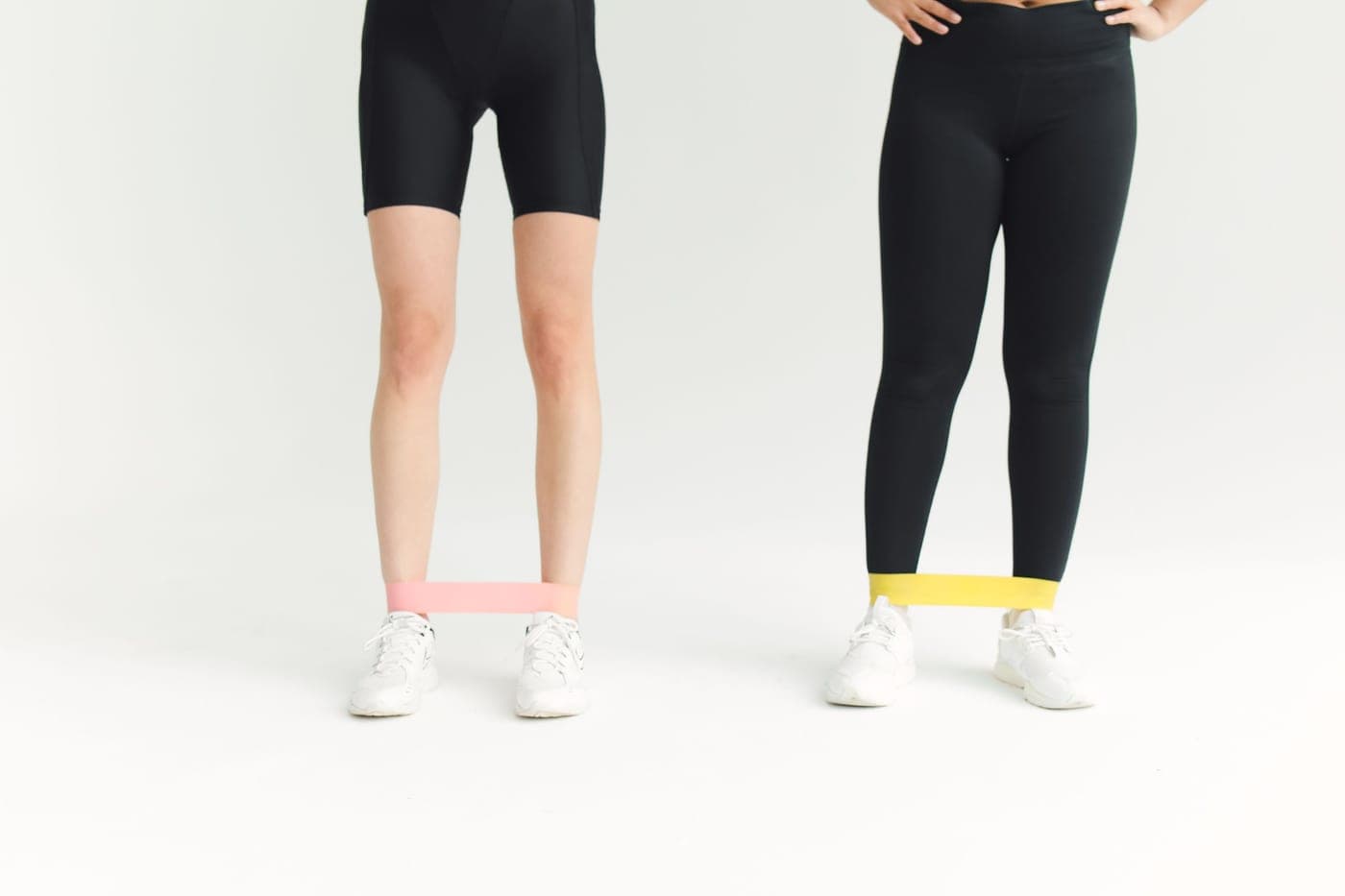
Two women using resistance bands during an indoor workout. Licensed stock photograph of the category — not the specific product.
Quick picks
| # | Product | Best for | Score | Price |
|---|---|---|---|---|
| 1 | WODFitters Pull-Up Assistance Bands (set) The standard 41 in. loop bands with a clearly published range — red 10–35 lb up to blue 65–175 lb — sold as sets so you can step down assistance as you get stronger. | Anyone working toward a first pull-up who wants a progression, not one band | 9.1 | |
| 2 | Serious Steel Assisted Pull-Up Bands Nine graded 41 in. bands from 2–15 lb up to 120–300+ lb, sold singly or in sets — the finest steps between assistance levels of any band line here. | Small, precise steps down in assistance, or a very light finishing band | 8.9 | |
| 3 | WOD Nation Pull Up Assistance Band Set (red, black, purple) A three-band starter set — red 10–35 lb, black 30–60 lb, purple 40–80 lb — that covers the whole path from your first assisted rep to a nearly unassisted one. | A first set that spans beginner to almost-there without buying five bands | 8.5 |
Scores are our editorial judgment from published specs and mounting instructions, weighted for a renter or small-space trainer — not lab measurements. We have not tested these units.
What a band does, and what it can't
Loop a 41 in. band over the bar, put a knee or foot in the bottom, and the band pushes you up most at the bottom of the rep — where you are weakest — and least at the top. That is exactly the help a first pull-up needs. It is also the limit: a band does nothing for the last inch of chin-over-bar, so band work must be paired with negatives and scapular pulls, or you get strong at the bottom and stall at the top.
Which band to start on
Manufacturers publish a resistance range at 100% stretch; for pull-ups the number that matters is how much of your body weight the band removes at the bottom. A rough rule that has worked for most beginners: start on a band that takes off 30–40% of your weight, and step down when you can do 8 clean reps.
| Body weight | Can hang 20 s, 0 pull-ups | Can do a negative | Can do 1–2 pull-ups |
|---|---|---|---|
| Under 140 lb | Black (30–60 lb) | Red (10–35 lb) | No band; negatives |
| 140–180 lb | Purple (40–80 lb) | Black (30–60 lb) | Red (10–35 lb) |
| 180–220 lb | Green (50–125 lb) | Purple (40–80 lb) | Black (30–60 lb) |
| Over 220 lb | Blue (65–175 lb) | Green (50–125 lb) | Purple (40–80 lb) |
Colors above follow the WODFitters scale (red 10–35, black 30–60, purple 40–80, green 50–125, blue 65–175 lb). Serious Steel and WOD Nation use different colors for similar numbers — buy by the pounds printed on the listing, never by color.
Stepping down
The band is a ladder, not a crutch. When 8 reps on one band feels clean, do your sets on the next lighter band and finish with 2–3 negatives from the top. When you can do 5 on the lightest band, drop the band and do singles. The whole sequence, week by week, is the pull-up progression.
Knee or foot?
Foot in the band gives more assistance (the band stretches further) and is less stable — the band can slip off a shoe and snap up. Knee in the band is steadier and safer for a beginner and gives a little less help. Start with the knee; move to the foot on a heavier band only if you need the extra assistance.
How this list was built
We compared each line's published resistance ranges, band count and sizing clarity, and scored on the assistance-band rubric — assistance range 30%, material and safety 25%, sizing clarity 15%, bar compatibility 15%, value 15%. All three are 41 in. natural latex and fit any bar; the order is decided by how clearly the line lets a beginner buy the right band and step down. No bands were tested.
The picks in detail
Every pick, reviewed
Key specs
- Length
- 41 in. loop
- Assistance
- #1 red 10–35 lb to #5 blue 65–175 lb
- Widths
- 1/2 in. to 2.5 in.
Scores · editorial, out of 10
- Assistance range
- 10
- Material & safety
- 8
- Sizing clarity
- 9
- Bar compatibility
- 10
- Value
- 8
Pick 1 · Assistance bands
WODFitters Pull-Up Assistance Bands (set)
WODFitters
The standard 41 in. loop bands with a clearly published range — red 10–35 lb up to blue 65–175 lb — sold as sets so you can step down assistance as you get stronger.
Best for
Anyone working toward a first pull-up who wants a progression, not one band
Why it is #1. The clearest published scale (red 10–35 through blue 65–175 lb), sold as 4- or 5-band sets that cover a 220 lb beginner all the way to a light finishing band. It is the set the starting table above was written from.
Pros
- Published resistance per color, so you can plan the step-down from green to red
- Sets of 4 or 5 cover a 200 lb beginner through to a light-assist finisher
- Natural latex, 41 in. — fits any doorway bar or tower
Cons
- Latex — not for latex allergies, and it degrades in sunlight
- The thickest bands can snap a foot out from under you if you slip; step in carefully
Specs from WODFitters — Resistance Bands (length, resistance by color, widths).
Key specs
- Length
- 41 in. loop, 4.5 mm thick
- Assistance
- #0 2–15 lb to #7 120–300+ lb
- Sizes
- 9 graded bands
Scores · editorial, out of 10
- Assistance range
- 10
- Material & safety
- 9
- Sizing clarity
- 8
- Bar compatibility
- 10
- Value
- 6
Pick 2 · Assistance bands
Serious Steel Assisted Pull-Up Bands
Serious Steel Fitness
Nine graded 41 in. bands from 2–15 lb up to 120–300+ lb, sold singly or in sets — the finest steps between assistance levels of any band line here.
Best for
Small, precise steps down in assistance, or a very light finishing band
The finest steps. Nine sizes from 2–15 lb to 120–300+ lb, sold singly. Buy one band at a time as you progress, and the #0 orange is the lightest true finishing band on the market.
Pros
- Nine sizes — the #0 orange (2–15 lb) is the lightest true pull-up band you can buy
- Sold individually, so you only buy the step you need next
- Layered latex construction; used as the reference band by several gyms
Cons
- Nine near-identical colors across brands is confusing — go by the number, not the color
- Individually they cost more than a bundled set from a house brand
Specs from Serious Steel Fitness — 41 in. Latex Resistance Pull Up Bands (sizes, resistance).
Key specs
- Length
- 41 in. loop
- Assistance
- 10–35 / 30–60 / 40–80 lb
- Bands
- 3 (5-band set also sold)
Scores · editorial, out of 10
- Assistance range
- 8
- Material & safety
- 8
- Sizing clarity
- 8
- Bar compatibility
- 10
- Value
- 9
Pick 3 · Assistance bands
WOD Nation Pull Up Assistance Band Set (red, black, purple)
WOD Nation
A three-band starter set — red 10–35 lb, black 30–60 lb, purple 40–80 lb — that covers the whole path from your first assisted rep to a nearly unassisted one.
Best for
A first set that spans beginner to almost-there without buying five bands
The three-band starter. Red, black and purple (10–35, 30–60, 40–80 lb) cover the useful range for most adults under 220 lb for less than a five-band bundle. Heavier beginners need a green.
Pros
- Three bands cover the useful range for most adults under about 220 lb
- 100% natural latex; 41 in. standard length
- Cheaper than a five-band bundle you'll only half use
Cons
- No heavy green/blue band — a 250 lb beginner may need more assistance than purple gives
- Colors don't match other brands' scales; note the pounds, not the color
Specs from WOD Nation — Pull Up Assistance Band Set listing (resistance per band).
Buying guide
Set or singles?
A set if you don't know where you'll start. Singles if you do, and for the last step (a #0 or #1 band you'll use for a month and then keep for warm-ups and stretching).
Which bar?
Any. A 41 in. band loops over a doorway bar, a tower or a wall bar. On a doorway bar keep the movement strict — the band adds a little bounce that the frame doesn't love.
FAQ
Questions readers ask
What resistance band should I use for pull-ups?
One that removes 30–40% of your body weight at the bottom: for most adults that is a black (30–60 lb) or purple (40–80 lb) band to start, stepping down to red (10–35 lb) as you get stronger.
Do resistance bands help you do pull-ups?
Yes, for the bottom half of the rep. Pair them with negatives and scapular pulls so the top half keeps up.
Knee or foot in the pull-up band?
Knee to start — steadier and safer. Foot gives more assistance on a heavier band but can slip.
How long do pull-up bands last?
Years if kept out of sunlight and inspected; months if left on a sunny balcony. Replace at the first nick.
Related
Keep reading
- How to get your first pull-up
The 4–8 week plan the bands belong to.
- Pull-up progression
From bands to strict reps to weighted.
- Best pull-up bars
The bar the band loops over.
- Best weighted vests for pull-ups
The other end of the ladder.
Sources