Best Pull-Up Bar Overall · Pull-Up Bars
The best pull-up bars for home, ranked by the space you have
Seven bars across doorway, wall-mount and free-standing — ordered for someone with a lease, an 8-foot ceiling and a door with trim, not for a commercial gym.
Rope & Rep is reader-supported. Product links go through our affiliate resolver and we may earn a commission from qualifying purchases at no cost to you. Prices are the retailer's and change — every button opens the live price on Amazon rather than showing a stale number.

A man doing pull-ups on a bar in a dimly lit indoor training space. Licensed stock photograph of the category — not the specific product.
Quick picks
| # | Product | Best for | Score | Price |
|---|---|---|---|---|
| 1 | Iron Gym Total Upper Body Workout Bar The doorway bar everyone copies: three grips, a 300 lb rating, fits a 24–32 in. door with trim up to 3.5 in., and it leaves with you when the lease ends. | A first bar in a standard apartment doorway | 8.1 | |
| 2 | Perfect Fitness Multi-Gym Pro The doorway bar with the gentlest frame contact: flat, foam-padded door guards, fits doors to 33 in. wide and 6 in. deep, 300 lb rating, and it flips to the floor for dips. | Renters who care most about not marking the door frame | 8.3 | |
| 3 | AmazeFan Doorway Pull Up Bar The widest-fitting leverage bar in the group — 23.3 to 36.2 in. doors, trim to 3.5 in., 400 lb rating, and it folds — for doorways the 32 in. bars can't reach. | Wide or odd-sized doorways, including 36 in. openings | 8.5 | |
| 4 |  Sportsroyals Power Tower Dip Station The best-selling power tower: pull-up bar adjustable across nine heights (about 57–87 in.), dip handles, knee-raise pads, a 26.6 × 43.2 in. base, and a 400 lb rating — no drilling anywhere. | A pull-up and dip station in a rental where nothing can touch the walls | 8.1 | |
| 5 |  REP Fitness Wall-Mounted Multi-Grip Pull-Up Bar The wall bar with the most grips: 46 in. of usable 1.25 in. bar with neutral, close, wide and angled handles, mountable at 14 or 26 in. from the wall, rated 700 lb into studs. | A garage or basement wall where you can hit two studs and want every grip | 7.2 | |
| 6 | BaseBlocks The Big Bar A full-size 81 in. free-standing bar with folding feet: 59 × 35 in. in use, 29 × 35 in. stored, 660 lb capacity, a 2 in. bar, and no bolting — the free-standing bar that actually stores. | Dead-hang pull-ups in an apartment where the bar has to disappear between sessions | 8.2 | |
| 7 | 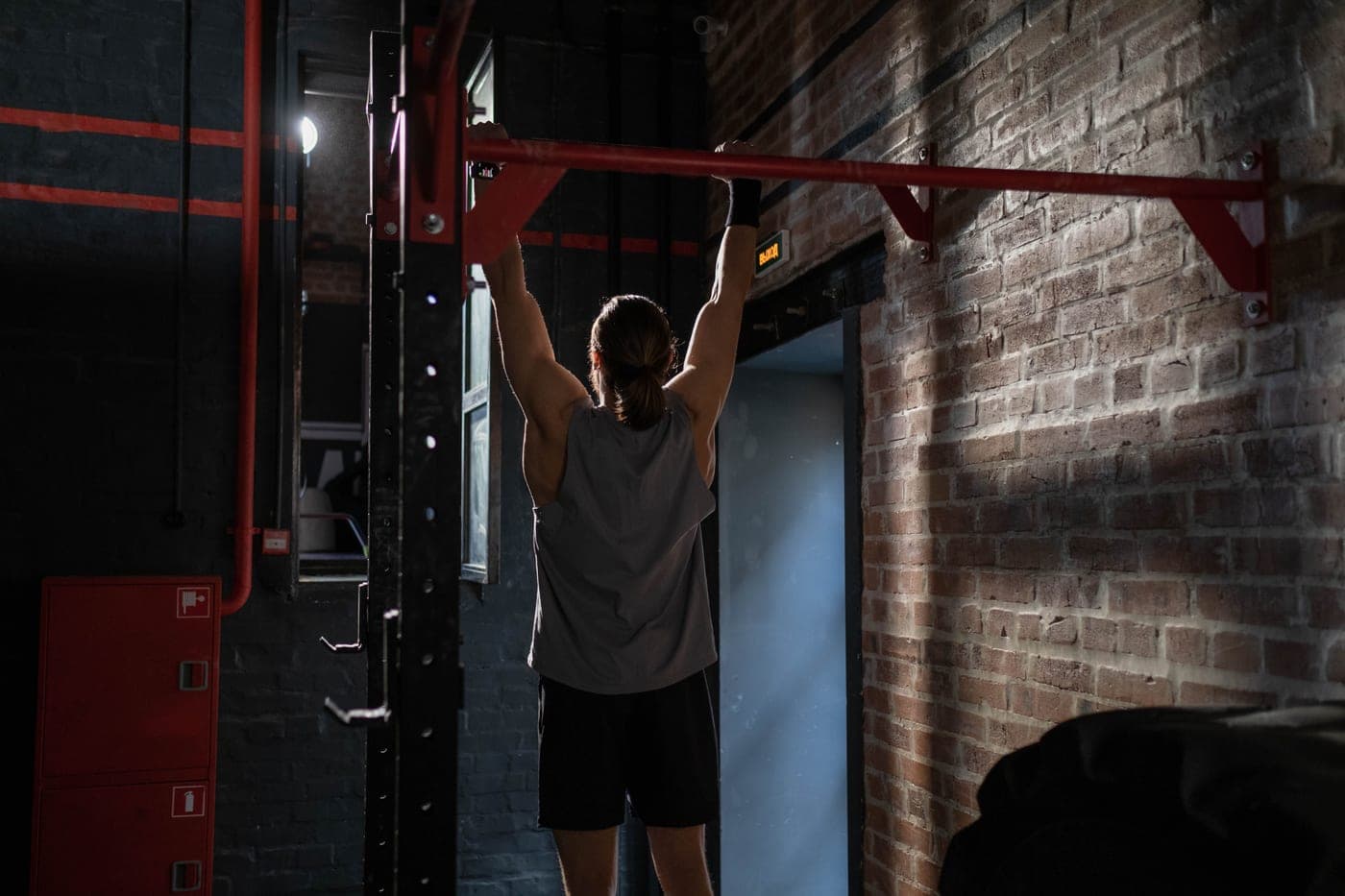 Ally Peaks Pull Up Bar for Doorway A heavier-gauge leverage bar: 1.7 mm steel rated to 440 lb, silicone frame pads, three grips, 24–32 in. doors — the one to buy if you're big or plan to add a vest. | Heavier lifters or weighted pull-ups in a standard doorway | 8.2 |
Scores are our editorial judgment from published specs and mounting instructions, weighted for a renter or small-space trainer — not lab measurements. We have not tested these units.
Why a doorway bar wins the overall list
A pull-up bar is the one piece of gear where the space matters more than the product. A 700 lb wall bar is the wrong bar for someone who cannot drill; a power tower is the wrong bar for a studio with 40 square feet of floor. So this list is ordered the way a renter buys: the bar that fits the most doorways for the least money is first, the bars that fix a specific problem (wide doors, no doorway, no walls) follow, and the wall-mount that most people can't install sits where it belongs — in the middle, for the people who can.
If you already know your constraint, skip to the page for it: doorway bars, no-screw bars, bars for 8-foot ceilings, wall-mounted bars or free-standing bars. If you don't, read doorway vs wall-mount vs free-standing first — it is the decision this whole section hangs on.
The three types in one table
| Type | Needs | Drilling | Floor space | Comes down |
|---|---|---|---|---|
| Doorway (leverage) | Door 24–36 in. wide with trim, wall above | None | None | Seconds, no trace |
| Wall / ceiling mount | Two studs or joists, 8 ft+ ceiling | Lag bolts | None | Leaves holes |
| Free-standing tower | About 2 × 3.5 ft of floor, 7.5 ft+ ceiling | None | Permanent | Yes, but it's 60 lb |
Measure these four things before you buy anything
- Door width, inside the trim. Standard interior doors are 28–32 in.; closets can be 24 in.; some modern doors are 36 in. Most leverage bars stop at 32 in.
- Trim depth and width. A leverage bar hooks over the trim on the far side of the door and braces against the wall on the near side. Trim thicker than about 3.5 in. or a frame with no trim at all won't hold one.
- Ceiling height over the bar. A doorway bar sits at about 80 in.; a 9 ft ceiling gives a wall bar room; an 8 ft ceiling means bent knees on any bar. The numbers are in ceiling height for a pull-up bar.
- Your weight plus any vest. Standard doorway bars are rated 300 lb; the heavier-gauge ones 440 lb. A wall bar is rated 400–700 lb. Buy a margin.
How this list was built
We read each maker's product page or listing for door range, trim tolerance, mounting method, rated load and footprint, confirmed each bar is sold on Amazon, and scored it on the pull-up bar rubric — fit and clearance 25%, reversibility 25%, rated load and build 20%, grip options 15%, value 15%. Reversibility is weighted as heavily as fit because for the reader this site serves, a bar that leaves holes is a bar that costs a deposit. We have not hung from these bars; the ranking is our reading of the published specs for a small-space buyer.
What we didn't include, and why
Screw-in doorway bars (the short telescoping bars that mount with brackets inside the frame) — they leave holes for a worse bar. Rack-mounted bars — they need a rack. And several very cheap towers rated under 250 lb, because a tower that sways under a 180 lb user is not a bargain.
The picks in detail
Every pick, reviewed
Key specs
- Door width
- 24–32 in. (trim to 3.5 in.)
- Mounting
- Leverage, no screws
- Rated load
- 300 lb
Scores · editorial, out of 10
- Fit & clearance (door, ceiling, depth)
- 7
- Reversibility (no drill, no marks, takedown)
- 9
- Rated load & build
- 7
- Grip options
- 8
- Value
- 10
Pick 1 · Pull-up bars
Iron Gym Total Upper Body Workout Bar
Iron Gym
The doorway bar everyone copies: three grips, a 300 lb rating, fits a 24–32 in. door with trim up to 3.5 in., and it leaves with you when the lease ends.
Best for
A first bar in a standard apartment doorway
Why it is #1. It fits the most common door in America (28–32 in. with trim), costs the least of any bar with three grips, holds 300 lb, and comes down without a mark. Most people reading this page should stop here. The doorway bar roundup compares it to five rivals in detail.
Pros
- Fits the most common US interior door range and trim depth without tools
- Three grip positions (wide, narrow, neutral) on a bar this cheap is rare
- Flips to the floor for push-ups and dips — one piece of gear, four movements
Cons
- The leverage design needs a door with trim on both sides; flat, trimless frames won't hold it
- Grip width is fixed — taller lifters may find the wide grip a touch narrow
Specs from Iron Gym — Total Upper Body Workout Bar listing (door width, trim, load).
Key specs
- Door width
- Up to 33 in., up to 6 in. deep
- Mounting
- Leverage with padded frame guards
- Rated load
- 300 lb
Scores · editorial, out of 10
- Fit & clearance (door, ceiling, depth)
- 8
- Reversibility (no drill, no marks, takedown)
- 10
- Rated load & build
- 7
- Grip options
- 8
- Value
- 8
Pick 2 · Pull-up bars
Perfect Fitness Multi-Gym Pro
Perfect Fitness
The doorway bar with the gentlest frame contact: flat, foam-padded door guards, fits doors to 33 in. wide and 6 in. deep, 300 lb rating, and it flips to the floor for dips.
Best for
Renters who care most about not marking the door frame
The gentlest on the frame. Flat foam-padded guards spread the load over the trim instead of pressing a steel hook into it, and it fits frames up to 6 in. deep. If the thing you are most worried about is the door, buy this one. See do doorway bars damage door frames.
Pros
- Patented flat door-frame guards with thick foam pads spread the load instead of pressing a bar into the trim
- Fits frames up to 6 in. deep — thicker walls than most leverage bars allow
- Padded handles at wide, close and hammer positions; turns over for sit-ups, push-ups and dips
Cons
- At 6.2 lb it is heavier than the bare-steel bars, so hanging it one-handed takes practice
- No telescoping — a doorway over 33 in. is out
Specs from Perfect Fitness — Multi-Gym Pro listing (door width/depth, capacity, dimensions).
Key specs
- Door width
- 23.3–36.2 in. (trim to 3.5 in.)
- Mounting
- Leverage, no screws; folds
- Rated load
- 400 lb
Scores · editorial, out of 10
- Fit & clearance (door, ceiling, depth)
- 9
- Reversibility (no drill, no marks, takedown)
- 9
- Rated load & build
- 8
- Grip options
- 8
- Value
- 8
Pick 3 · Pull-up bars
AmazeFan Doorway Pull Up Bar
AmazeFan
The widest-fitting leverage bar in the group — 23.3 to 36.2 in. doors, trim to 3.5 in., 400 lb rating, and it folds — for doorways the 32 in. bars can't reach.
Best for
Wide or odd-sized doorways, including 36 in. openings
For wide doors. A leverage bar that reaches 36.2 in. — the door width that puts the Iron Gym out of contention — folds flat, and is rated 400 lb. It needs 8.3 in. of door depth, so measure the frame and wall together.
Pros
- Covers 36 in. doors, which the Iron Gym-style bars physically cannot
- Folds flat for a closet or under a bed — the most storable bar here
- 400 lb rating; ergonomic angled grips are easier on the wrists than a straight bar
Cons
- Needs 8.3 in. of door depth (frame plus wall) to sit properly — measure before buying
- The extra adjustability adds parts that need re-checking each time you mount it
Specs from AmazeFan — Doorway Pull Up Bar listing (door range, depth, trim, capacity).
Key specs
- Height
- 9 levels, ~57–87 in.
- Footprint
- 26.6 × 43.2 in.
- Rated load
- 400 lb
Scores · editorial, out of 10
- Fit & clearance (door, ceiling, depth)
- 8
- Reversibility (no drill, no marks, takedown)
- 9
- Rated load & build
- 8
- Grip options
- 7
- Value
- 8
Pick 4 · Pull-up bars
Sportsroyals Power Tower Dip Station
Sportsroyals
The best-selling power tower: pull-up bar adjustable across nine heights (about 57–87 in.), dip handles, knee-raise pads, a 26.6 × 43.2 in. base, and a 400 lb rating — no drilling anywhere.
Best for
A pull-up and dip station in a rental where nothing can touch the walls
When there is no doorway that works. Nine bar heights from about 57 to 87 in., dips and leg raises on the same frame, 400 lb rating, nothing touching a wall. It gives up a permanent 2 × 3.6 ft of floor for that. The bar vs tower page is the argument in full.
Pros
- Nine bar heights cover 8 ft ceilings at the low end and tall lifters at the top
- Pull-ups, dips, leg raises and push-ups on one 58 lb frame
- Pi-shaped base with adjustable foot covers for uneven garage floors
Cons
- Sways a little at full height on wide-grip pull-ups — normal for a tower, but it isn't a wall bar
- Takes a permanent 2 × 3.6 ft of floor; it does not fold
Specs from Sportsroyals — Power Tower listing (height range, footprint, capacity).
Key specs
- Mounting
- Wall studs; 14 or 26 in. projection
- Bar
- 50 in. wide, 46 in. usable, 1.25 in.
- Rated load
- 700 lb (properly installed)
Scores · editorial, out of 10
- Fit & clearance (door, ceiling, depth)
- 7
- Reversibility (no drill, no marks, takedown)
- 3
- Rated load & build
- 10
- Grip options
- 10
- Value
- 8
Pick 5 · Pull-up bars
REP Fitness Wall-Mounted Multi-Grip Pull-Up Bar
REP Fitness
The wall bar with the most grips: 46 in. of usable 1.25 in. bar with neutral, close, wide and angled handles, mountable at 14 or 26 in. from the wall, rated 700 lb into studs.
Best for
A garage or basement wall where you can hit two studs and want every grip
The best bar if you can drill. 46 in. of usable bar with neutral, wide and angled grips, 14 or 26 in. off the wall, rated 700 lb. A landlord's written yes, two studs and a 9 ft ceiling, and this is the bar the other six are compromises toward.
Pros
- Traditional, neutral, close, wide and angled grips on one bar
- Two projection options — 26 in. lets you swing for kipping or muscle-ups, 14 in. saves space
- 700 lb rating with a 2 in. back bar; nonslip powder coat
Cons
- Needs lag bolts into two studs — not a rental-friendly install unless the landlord agrees
- At 50 in. wide it takes real wall space; check the stud spacing matches before ordering
Specs from REP Fitness — Wall-Mounted Multi-Grip Pull-Up Bar (dimensions, projection, rating).
Key specs
- Height
- 81 in. (45 in. low setting)
- Footprint
- 59 × 35 in.; folds to 29 × 35 in.
- Rated load
- 660 lb
Scores · editorial, out of 10
- Fit & clearance (door, ceiling, depth)
- 8
- Reversibility (no drill, no marks, takedown)
- 10
- Rated load & build
- 10
- Grip options
- 5
- Value
- 6
Pick 6 · Pull-up bars
BaseBlocks The Big Bar
BaseBlocks
A full-size 81 in. free-standing bar with folding feet: 59 × 35 in. in use, 29 × 35 in. stored, 660 lb capacity, a 2 in. bar, and no bolting — the free-standing bar that actually stores.
Best for
Dead-hang pull-ups in an apartment where the bar has to disappear between sessions
A full dead hang with folding feet. 81 in. tall, 660 lb, and it folds from 59 × 35 in. to 29 × 35 in. It is the only free-standing bar here that a studio can put away. You pay for the folding; it has no dip handles.
Pros
- Foldable feet halve the footprint for storage — no other full-height bar here does that
- 660 lb capacity and a 2 in. powder-coated steel bar; 15-minute assembly, no bolts
- 45 in. secondary height for rows and dips
Cons
- A single straight bar — no dip handles or multi-grip positions
- Costs more than a power tower; you pay for the folding design
Specs from BaseBlocks — The Big Bar (height, footprint, capacity, assembly).
Key specs
- Door width
- 24–32 in.
- Mounting
- Leverage, no screws
- Rated load
- 440 lb
Scores · editorial, out of 10
- Fit & clearance (door, ceiling, depth)
- 7
- Reversibility (no drill, no marks, takedown)
- 9
- Rated load & build
- 9
- Grip options
- 8
- Value
- 8
Pick 7 · Pull-up bars
Ally Peaks Pull Up Bar for Doorway
Ally Peaks
A heavier-gauge leverage bar: 1.7 mm steel rated to 440 lb, silicone frame pads, three grips, 24–32 in. doors — the one to buy if you're big or plan to add a vest.
Best for
Heavier lifters or weighted pull-ups in a standard doorway
The heavy-duty doorway bar. 1.7 mm steel, 440 lb rating, silicone pads — the Iron Gym's role for a 250 lb lifter or anyone who will add a weighted vest. Same 24–32 in. door range.
Pros
- 440 lb rating from 1.7 mm-thick steel — a big margin over the 300 lb standard bars
- Double silicone pads on the frame contacts instead of bare foam
- Non-slip foam handles at wide, narrow and neutral spacing
Cons
- Same 24–32 in. door range as the cheaper bars — no extra reach
- Heavier steel means a heavier bar to lift into place each session
Specs from Ally Peaks — Pull Up Bar for Doorway listing (steel gauge, capacity, door range).
Buying guide
What decides the price
Steel gauge, grip count and mounting hardware. A three-grip leverage bar is the cheapest real pull-up bar you can buy; heavier steel and wider door ranges add a little; towers and folding bars cost several times more because they replace the wall. Nothing on this list needs to cost more than a month of a gym membership.
Mistakes renters make
- Buying a wall bar first, then finding out about the lease.
- Not measuring the door — the 32 in. limit catches people every week.
- Swinging on a leverage bar. They are for strict pull-ups.
- Skipping the assistance bands. If you cannot do a pull-up yet, the bar alone will gather dust; see how to get your first pull-up.
FAQ
Questions readers ask
What is the best pull-up bar for a home?
For most people in a house or apartment, a leverage-style doorway bar such as the Iron Gym: it fits a standard 24–32 in. door, needs no screws, holds 300 lb, and costs less than any alternative. If you own the walls, a stud-mounted multi-grip bar is better; if you have no usable doorway, a power tower.
Are doorway pull-up bars safe?
On a sound frame, used within the door-width range and without swinging, yes — the bar is rated well above any user. The weak point is always the trim, so inspect it and test with a partial hang first.
What pull-up bar should I get for an 8-foot ceiling?
A doorway bar (the door top is around 80 in. regardless of ceiling) or a tower set to its lower heights. Ceiling-mounted bars drop 14 in. or more and leave too little room. Details in bars for low ceilings.
Can I hang gymnastic rings from a doorway bar?
Yes — loop the straps over the bar itself, never the door trim, and keep the movements strict. Ring dips and rows work; muscle-ups do not. See how to hang gymnastic rings at home.
Do I need a pull-up bar if I can't do a pull-up yet?
Yes — every progression (dead hangs, negatives, band-assisted reps) needs a bar. Add a set of assistance bands and follow the pull-up progression.
Related
Keep reading
- Doorway vs wall-mount vs free-standing
The decision by ceiling height, door width and lease.
- Best doorway pull-up bars
Six leverage bars compared on door range, trim and rating.
- Best resistance bands for pull-ups
The assistance you need to actually use the bar.
- How to get your first pull-up
A four-to-eight-week plan on any bar.
Sources
- —Iron Gym — Total Upper Body Workout Bar listing (door width, trim, load) · amazon.com
- —Perfect Fitness — Multi-Gym Pro listing (door width/depth, capacity, dimensions) · amazon.com
- —AmazeFan — Doorway Pull Up Bar listing (door range, depth, trim, capacity) · amazon.com
- —Sportsroyals — Power Tower listing (height range, footprint, capacity) · amazon.com
- —REP Fitness — Wall-Mounted Multi-Grip Pull-Up Bar (dimensions, projection, rating) · repfitness.com
- —BaseBlocks — The Big Bar (height, footprint, capacity, assembly) · baseblocks.com
- —Ally Peaks — Pull Up Bar for Doorway listing (steel gauge, capacity, door range) · amazon.com