Guide · Pull-Up Bars
Do doorway pull-up bars damage door frames? Not sound ones — here's how to check yours
A leverage bar loads the trim, not the frame. On solid casing it leaves nothing; on loose or soft casing it dents. A six-point inspection, the load math, and how to protect a rental's paint.
Rope & Rep is reader-supported. Product links go through our affiliate resolver and we may earn a commission from qualifying purchases at no cost to you. Prices are the retailer's and change — every button opens the live price on Amazon rather than showing a stale number.
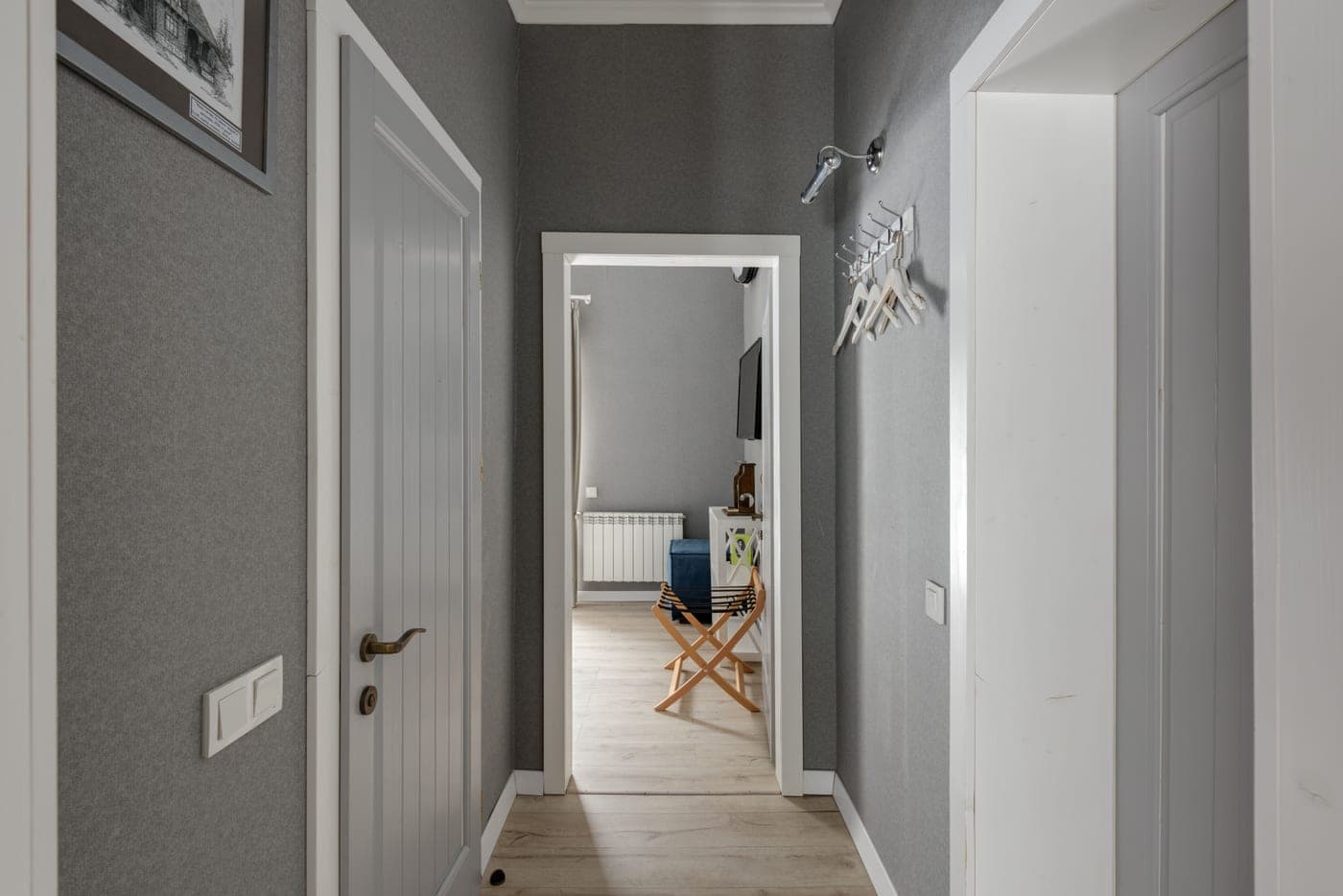
A hallway with wooden interior doors and painted casing. Licensed stock photograph of the category — not the specific product.
What the bar actually presses on
A leverage bar has two contact points on the far side of the door — the hooks that curl over the top of the casing — and two on the near side, the padded arms that press against the wall above the door. When you hang, the bar tries to rotate: the hooks pull up and back on the casing, the arms push into the wall. The structural frame (the jack studs and header inside the wall) never sees the load directly; the casing and the drywall above the door do.
That has two consequences. First, the question “can the frame hold me” is really “is the casing nailed on properly” — casing that is solidly fixed to the jamb and the wall transfers the load into the framing without complaint. Second, the marks a bar leaves are cosmetic, on paint and trim, not structural. That is good news for a deposit and the reason a careful renter can use one.
The load math
| Action | Load on the hooks | Load on the wall pads | Notes |
|---|---|---|---|
| Strict dead hang | ~180 lb up + a horizontal component | Moderate | The design case |
| Pulling hard at the top | Slightly more (acceleration) | More | Fine on sound casing |
| Kipping / swinging | Cyclic, several times body weight | Cyclic | This is what loosens casing — don't |
| Dropping onto the bar | Impact, far above static | Impact | Never |
Makers rate the bars at 300–440 lb. In practice the casing fails long before the bar does, and it fails from cyclic load — swinging — not from a static hang. Strict reps, always.
The six-point inspection
- Casing material. Tap it. Solid wood or dense MDF sounds dull and doesn't flex. Hollow plastic or thin composite trim flexes and sounds tinny — no bar.
- Fixing. Push the top of the casing toward the wall and away from it. Any movement means loose nails; it will dent and shift under a bar. (An owner can fix it with a few brad nails; a renter should skip that door.)
- Width and depth. Casing 2.25–3.5 in. wide fits most bars' hooks; depth from trim face to wall within the bar's tolerance (the telescoping bars need up to 8.3 in.).
- Wall above. At least 12 in. of flat drywall above the door for the pads, with no switch plates, thermostats or picture hooks in the way.
- Frame type. Wood casing yes; a metal frame with a thin steel lip (common in newer high-rises) usually gives the hooks nothing to grip — free-standing bar instead.
- Paint. Fresh paint marks easily under any pad. Wait a couple of weeks after painting, and tape under the pads (below).
Protecting a rental's paint
- Clean the pads every week. A pad that has picked up grit is a polishing tool.
- Painter's tape under each contact point. Blue tape, two layers, replaced monthly; it takes the rubbing so the paint doesn't.
- Seat it fully every time. A bar that isn't fully hooked concentrates load on a corner of the trim.
- Take it down when you're done for the week — it stops the pads compressing the same spot for months.
- Photograph the trim before the first hang and at move-out.
If the casing fails
Don't gamble on it. A free-standing bar ignores the doorway entirely: the BaseBlocks Big Bar folds away, a power tower adds dips. The free-standing roundup compares them, and the decision page puts the whole choice together.
Picks
If your frame passes — and if it doesn't
The gentlest leverage bar, the standard one, and the free-standing bar to buy when the casing fails inspection.

Key specs
- Door width
- Up to 33 in., up to 6 in. deep
- Mounting
- Leverage with padded frame guards
- Rated load
- 300 lb
Scores · editorial, out of 10
- Fit & clearance (door, ceiling, depth)
- 8
- Reversibility (no drill, no marks, takedown)
- 10
- Rated load & build
- 7
- Grip options
- 8
- Value
- 8
Pick 1 · Pull-up bars
Perfect Fitness Multi-Gym Pro
Perfect Fitness
The doorway bar with the gentlest frame contact: flat, foam-padded door guards, fits doors to 33 in. wide and 6 in. deep, 300 lb rating, and it flips to the floor for dips.
Best for
Renters who care most about not marking the door frame
Pros
- Patented flat door-frame guards with thick foam pads spread the load instead of pressing a bar into the trim
- Fits frames up to 6 in. deep — thicker walls than most leverage bars allow
- Padded handles at wide, close and hammer positions; turns over for sit-ups, push-ups and dips
Cons
- At 6.2 lb it is heavier than the bare-steel bars, so hanging it one-handed takes practice
- No telescoping — a doorway over 33 in. is out
Specs from Perfect Fitness — Multi-Gym Pro listing (door width/depth, capacity, dimensions).
Key specs
- Door width
- 24–32 in. (trim to 3.5 in.)
- Mounting
- Leverage, no screws
- Rated load
- 300 lb
Scores · editorial, out of 10
- Fit & clearance (door, ceiling, depth)
- 7
- Reversibility (no drill, no marks, takedown)
- 9
- Rated load & build
- 7
- Grip options
- 8
- Value
- 10
Pick 2 · Pull-up bars
Iron Gym Total Upper Body Workout Bar
Iron Gym
The doorway bar everyone copies: three grips, a 300 lb rating, fits a 24–32 in. door with trim up to 3.5 in., and it leaves with you when the lease ends.
Best for
A first bar in a standard apartment doorway
Pros
- Fits the most common US interior door range and trim depth without tools
- Three grip positions (wide, narrow, neutral) on a bar this cheap is rare
- Flips to the floor for push-ups and dips — one piece of gear, four movements
Cons
- The leverage design needs a door with trim on both sides; flat, trimless frames won't hold it
- Grip width is fixed — taller lifters may find the wide grip a touch narrow
Specs from Iron Gym — Total Upper Body Workout Bar listing (door width, trim, load).
Key specs
- Height
- 81 in. (45 in. low setting)
- Footprint
- 59 × 35 in.; folds to 29 × 35 in.
- Rated load
- 660 lb
Scores · editorial, out of 10
- Fit & clearance (door, ceiling, depth)
- 8
- Reversibility (no drill, no marks, takedown)
- 10
- Rated load & build
- 10
- Grip options
- 5
- Value
- 6
Pick 3 · Pull-up bars
BaseBlocks The Big Bar
BaseBlocks
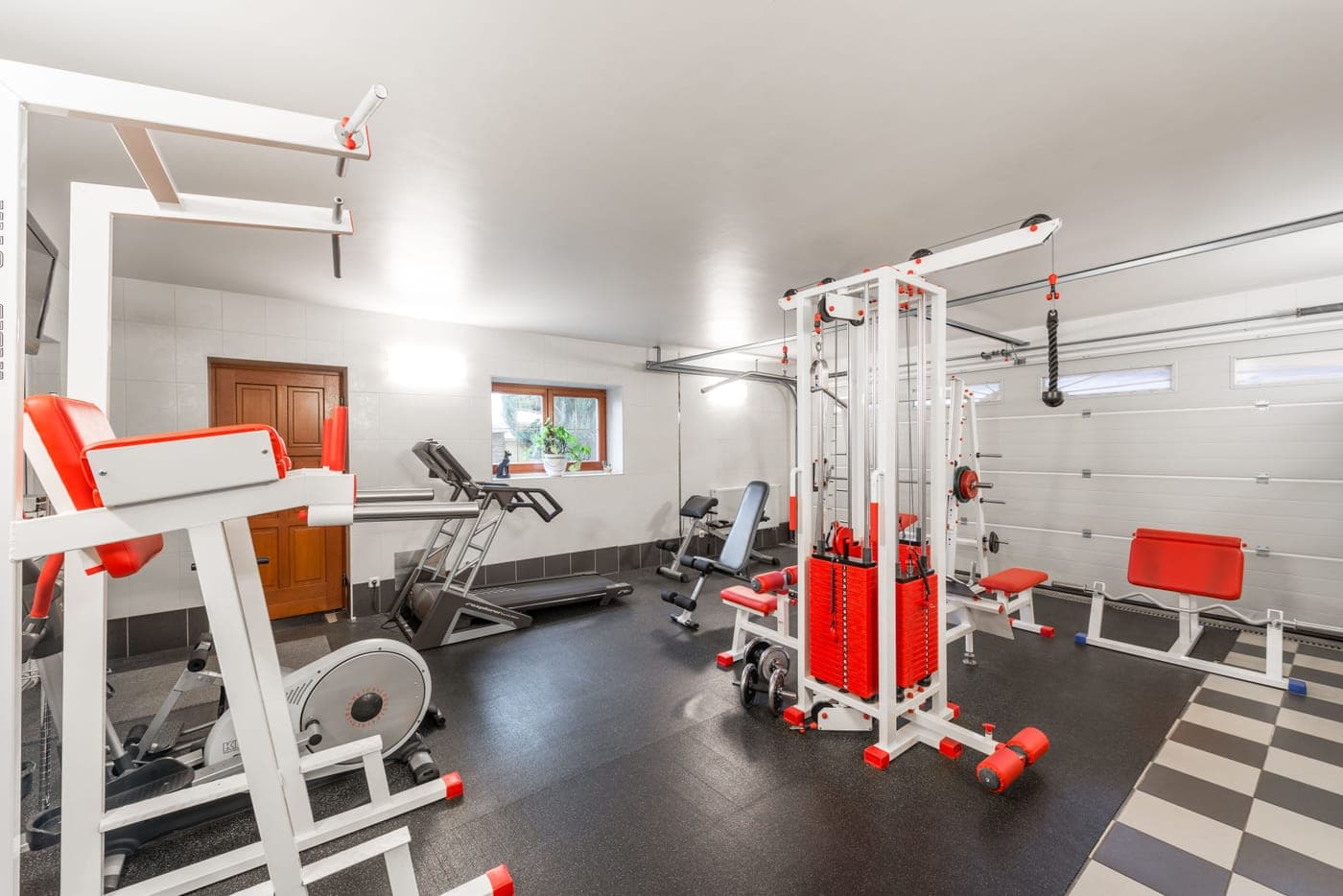
A full-size 81 in. free-standing bar with folding feet: 59 × 35 in. in use, 29 × 35 in. stored, 660 lb capacity, a 2 in. bar, and no bolting — the free-standing bar that actually stores.
Best for
Dead-hang pull-ups in an apartment where the bar has to disappear between sessions
Pros
- Foldable feet halve the footprint for storage — no other full-height bar here does that
- 660 lb capacity and a 2 in. powder-coated steel bar; 15-minute assembly, no bolts
- 45 in. secondary height for rows and dips
Cons
- A single straight bar — no dip handles or multi-grip positions
- Costs more than a power tower; you pay for the folding design
Specs from BaseBlocks — The Big Bar (height, footprint, capacity, assembly).
FAQ
Questions readers ask
Will a pull-up bar damage my door frame?
A leverage bar loads the trim (casing) and the wall above the door, not the structural frame. On solid, well-fixed casing, used strictly, it leaves no lasting mark. Loose, soft or plastic trim can dent.
What is the weight limit for a doorway pull-up bar?
The bars are rated 300–440 lb. The casing is the practical limit, and it fails from swinging, not from a static hang within the rating.
Is a door frame pull-up bar safe?
On casing that passes the six-point check, used without swinging, yes. The failures are loose trim, hollow plastic trim, metal frames and kipping.
How do I protect the door frame from a pull-up bar?
Clean pads, two layers of painter's tape under each contact point, seat the bar fully every time, and take it down between training weeks.
Related
Keep reading
- Best doorway pull-up bars
Six bars by door range, trim tolerance and rating.
- Best pull-up bars for apartments
Ranked for a lease and a deposit.
- Best free-standing pull-up bars
When the casing fails inspection.
- Doorway vs wall-mount vs free-standing
The whole decision.
Sources