Guide · Training
Apartment gym setup: six by four feet, no holes, nobody downstairs complaining
The constraint isn't money, it's floor, ceiling, noise and a security deposit. Here is what fits, what the neighbors will tolerate, and the order to buy it in.
Rope & Rep is reader-supported. Product links go through our affiliate resolver and we may earn a commission from qualifying purchases at no cost to you. Prices are the retailer's and change — every button opens the live price on Amazon rather than showing a stale number.
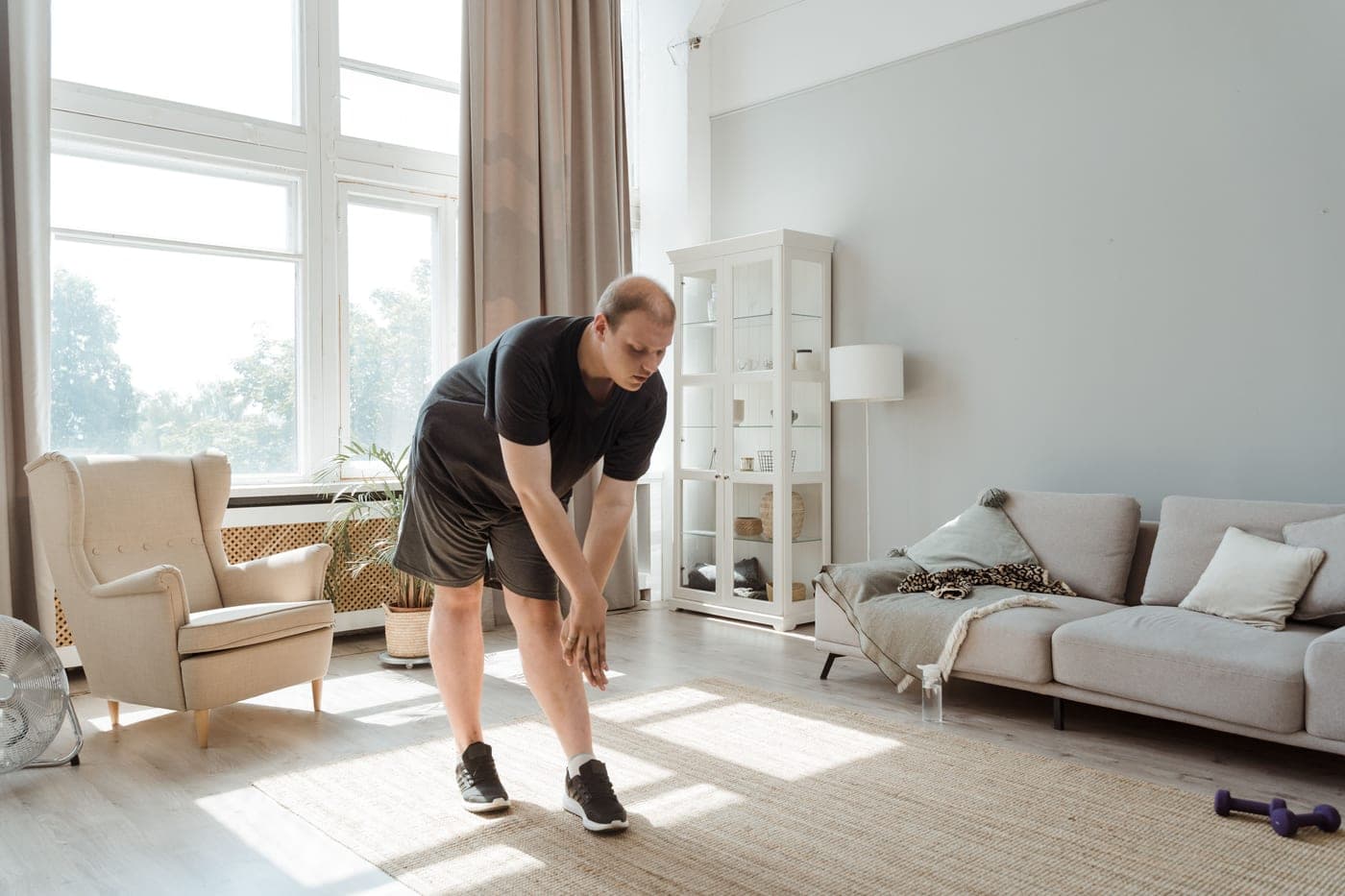
A small home training corner in an apartment with a mat and equipment. Licensed stock photograph of the category — not the specific product.
Start with the four constraints, not the gear
1. Can you drill?
Read the lease before you read any product page. Most standard leases treat anchor holes in a wall or ceiling as damage, and a wall-mounted pull-up bar leaves four large ones in a stud. If the answer is no — and for most renters it is — you are in no-screw territory, and that rules out wall bars, ceiling mounts and hanging rings from a joist. Everything else on this page still works. No-screw pull-up bars covers the options.
2. How much ceiling?
Eight feet is the common apartment ceiling and it is enough to skip rope (just), to use a doorway bar, and to press a kettlebell overhead standing — for most people. Measure before you buy a rope: overhead clearance is the one that surprises people, because the rope passes above your hand, not your head. The ceiling arithmetic for a bar has the numbers by user height.
3. Who is below you?
This is the constraint that gets people evicted from their own routine. Impact noise — a dropped bell, a landing from a jump, a rope hitting a hard floor — travels through the building structure, which is why “I train quietly” does not help and a thick mat does. Ground floor or a slab? Most of this disappears. Third floor of a wood-frame building? Assume every impact is audible and plan around it.
4. Where does it live when you are not training?
The realistic answer for an apartment is a closet shelf, under a bed, or behind a door. Gear that has no storage answer becomes furniture, and furniture in a small apartment becomes resentment. Every item below stores.
What fits in six by four feet
| Item | Space in use | Stored | Noise risk |
|---|---|---|---|
| No-screw doorway bar | The doorway | Lifts off; leans in a closet | Low — a frame creak |
| Exercise / jump rope mat | 6 x 4 ft | Rolls or folds | Reduces it |
| One kettlebell (16–24 kg) | 2 x 2 ft | Sits in a corner | High if dropped; low if set down |
| Jump rope | 6 x 6 ft, 8 ft of ceiling | A pocket | Moderate — mat required upstairs |
| Gymnastic rings (optional) | Hangs from the bar | A bag | Low |
| Parallettes (optional) | 3 x 2 ft | Stand on end | None |
The layout
Put the mat where you will leave it out, not where it looks tidiest. A rolled-up mat in a closet is a mat you use twice. Put the bar in a doorway you walk through a dozen times a day — hallway, bedroom door, kitchen entrance — because the single biggest predictor of pull-up progress in an apartment is how often you pass the bar. The kettlebell lives at the edge of the mat where you can see it.
Two practical notes. Give yourself a full arm span of clearance for kettlebell swings, and check what is behind you — a swing that clips a coffee table ends badly. And leave the rope where you can grab it without moving anything; conditioning that needs setup does not happen.
The noise problem, solved properly
The mat is the whole answer for the rope; a proper jump rope mat both protects the cable and absorbs the landing. For kettlebells, the rule is simpler: you never drop the bell. Swings are set down, not released; snatches and cleans are controlled to the floor. If a movement requires dropping, it does not belong in an apartment — which in practice means no snatch-and-drop work and no barbell. Kettlebells in an apartment goes through it movement by movement.
Time of day is worth respecting even with a mat. Before 8 am and after 9 pm is where complaints come from, in almost every building.
The buying order
- Bar and bands. The most training per dollar and the least space. Nothing else changes your week as much.
- Mat. Buy it before the rope and before the bell. It is what makes everything else neighbor-safe, and it defines the training area.
- One kettlebell. Covers the hinge, the squat, the carry and the press — everything the bar cannot do. What size to start with is the only hard decision here.
- Rope. Cheapest conditioning there is, and now that you have the mat, the quietest available.
- Rings or parallettes, once the first four are used regularly.
What not to buy for an apartment
- A power tower. Four square feet of permanent floor for a bar you could hang in a doorway.
- An adjustable bench. It is the least space-efficient object in home fitness, and this kit has no barbell to use it with.
- A treadmill. Noise, weight, and a footprint bigger than the entire training area above.
- A full dumbbell set. One kettlebell covers most of it; the kettlebell vs dumbbell page covers the trade.
If you have a garage instead
Almost every constraint above disappears and the sensible kit changes completely — you can bolt a bar to a stud, you can drop things, and you have room for a sled or a plyo box. Garage gym essentials is the version of this page for a concrete floor.
Picks
The four-item apartment kit
A bar that leaves no holes, a mat that takes the noise out of the floor, one bell for everything below the waist, and a rope for the days you need a heart rate.
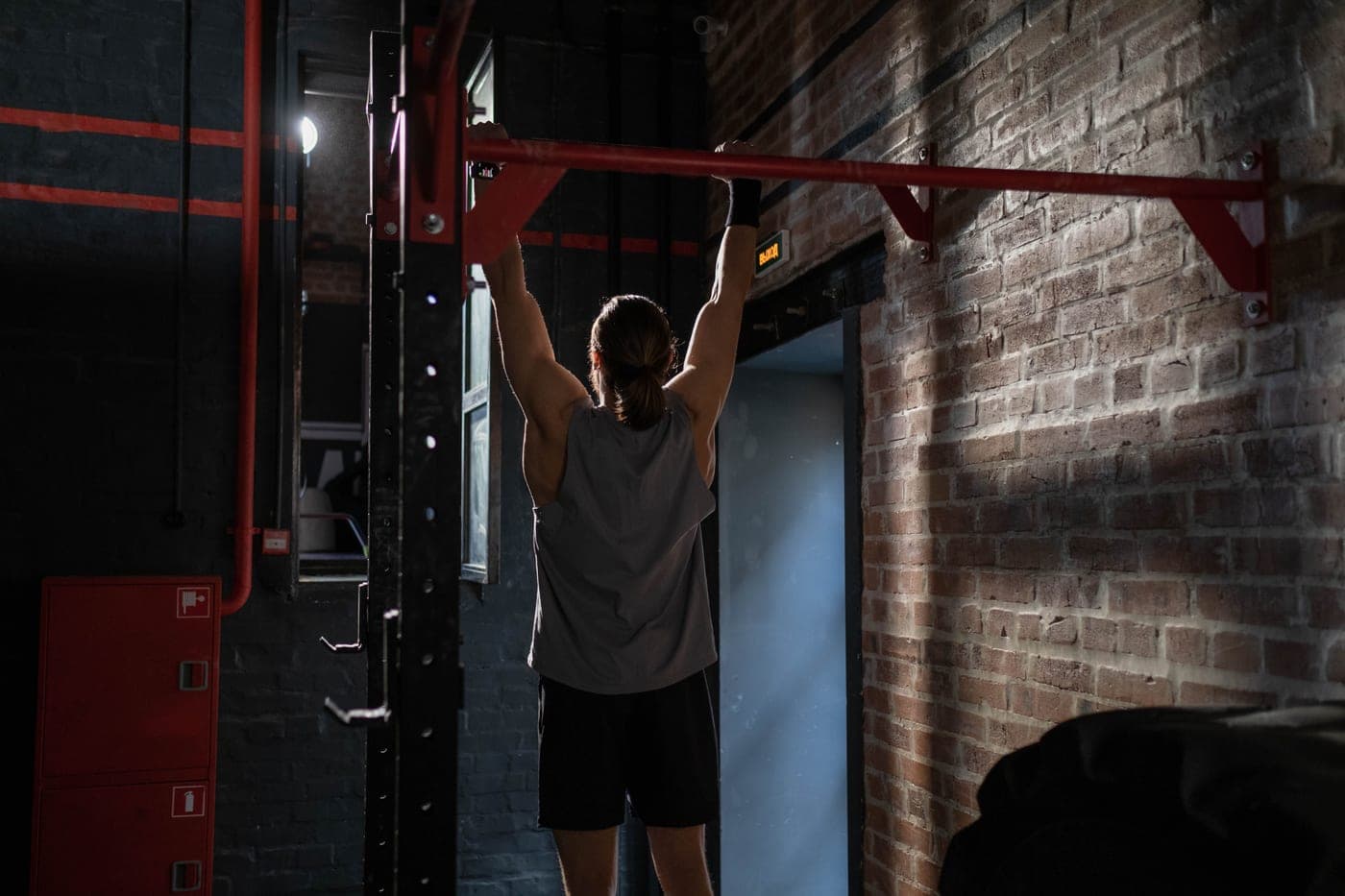
Key specs
- Door width
- 21.7–36.2 in. (trim to 3.5 in.)
- Mounting
- Leverage, no screws
- Rated load
- 440 lb
Scores · editorial, out of 10
- Fit & clearance (door, ceiling, depth)
- 9
- Reversibility (no drill, no marks, takedown)
- 9
- Rated load & build
- 9
- Grip options
- 7
- Value
- 8
Pick 1 · Pull-up bars
KAKICLAY Multi-Grip Pull Up Bar
KAKICLAY
A leverage bar with oversized hooks that fit 21.7 to 36.2 in. doors, 440 lb rating and a foldable option — the widest range plus the highest rating in one bar.
Best for
Narrow closets and wide doorways alike, with a 440 lb margin
Pros
- Fits doors as narrow as 21.7 in. — closets and small-bathroom doors — up to 36.2 in.
- 440 lb rating; foldable version stores flat
- Larger hook faces spread the load over more of the trim
Cons
- Needs 4.7–8.3 in. of door depth depending on the model — check which one you're buying
- Trim tolerance is 3.5 in. on some models, only 2.6 in. on others
Specs from KAKICLAY — Multi-Grip Pull Up Bar listing (door range, depth, trim, capacity).
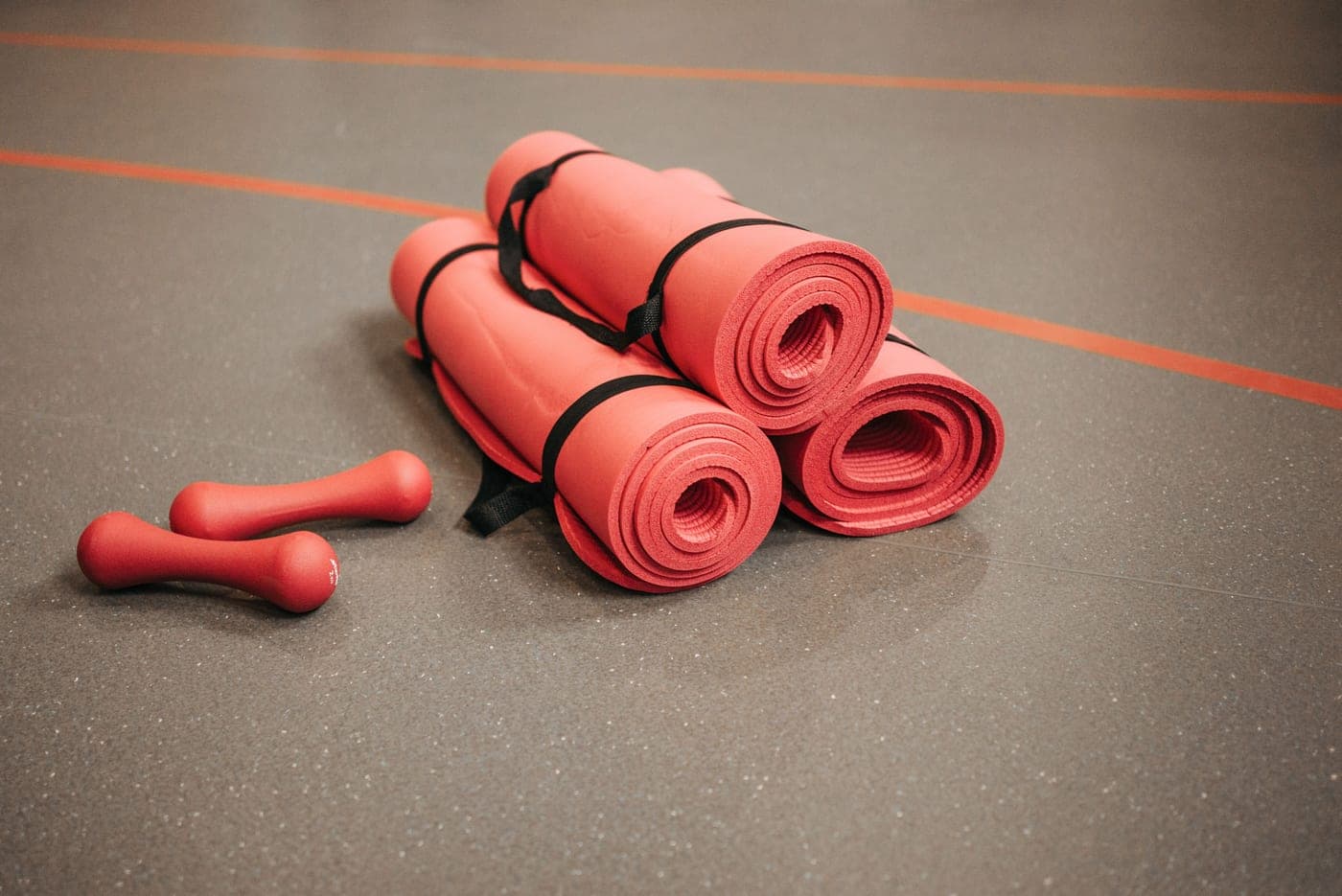
Key specs
- Size
- 54 × 36 in. oval
- Thickness
- 1/4 in. (6.35 mm) PVC
- Weight
- 6.5 lb
Scores · editorial, out of 10
- Floor protection & grip
- 10
- Size for a rope
- 10
- Rolls up & stores
- 7
- Durability
- 9
- Value
- 6
Pick 2 · Jump rope mats
Crossrope Jump Rope Mat
Crossrope
A 54 × 36 in., 1/4 in. PVC oval with a tapered edge so the rope doesn't catch — the mat designed around jumping, and the one to buy if the rope is the whole workout.
Best for
Daily jumpers, especially with weighted ropes, on a floor you don't own
Pros
- Tapered edge — the rope cable slides over it instead of snagging, which is the usual mat failure
- 54 in. length covers a full-height jumper's swing with room to drift
- Dense PVC absorbs impact and rope strikes; protects hardwood and downstairs ears
Cons
- 6.5 lb and not the most compact roll for a small closet
- Costs more than a generic rubber mat of the same size
Specs from Crossrope — Jump Rope Mat (dimensions, thickness, weight, tapered edge).

Key specs
- Weights
- 5–80 lb in 5 lb steps
- Handle
- ~1.25 in. (35 mm), textured
- Base
- Flat
Scores · editorial, out of 10
- Handle & finish
- 7
- Weight increments / adjustability
- 9
- Footprint & floor safety
- 7
- Build (casting, seams)
- 8
- Value
- 10
Pick 3 · Kettlebells
Yes4All Solid Cast Iron Kettlebell
Yes4All
The one-piece cast iron bell sold in 5 lb steps from 5 to 80 lb with a 1.25 in. handle and a flat base — the default first kettlebell because you can buy exactly the size you need.
Best for
A first bell in the exact weight you need without paying for a coating you don't
Pros
- 5 lb increments across the whole range — 15, 20, 25, 30, 35 lb are all there for a beginner's first two bells
- One-piece casting, no welded handle to fail
- Flat base sits still for rows, push-ups and storage
Cons
- Painted (not powder-coated) finish on the basic version chips and can leave marks on a wood floor — use a mat
- 35 mm handle is a bit thick for smaller hands on high-rep snatches
Specs from Yes4All — Solid Cast Iron Kettlebell listing (weights, handle, base).
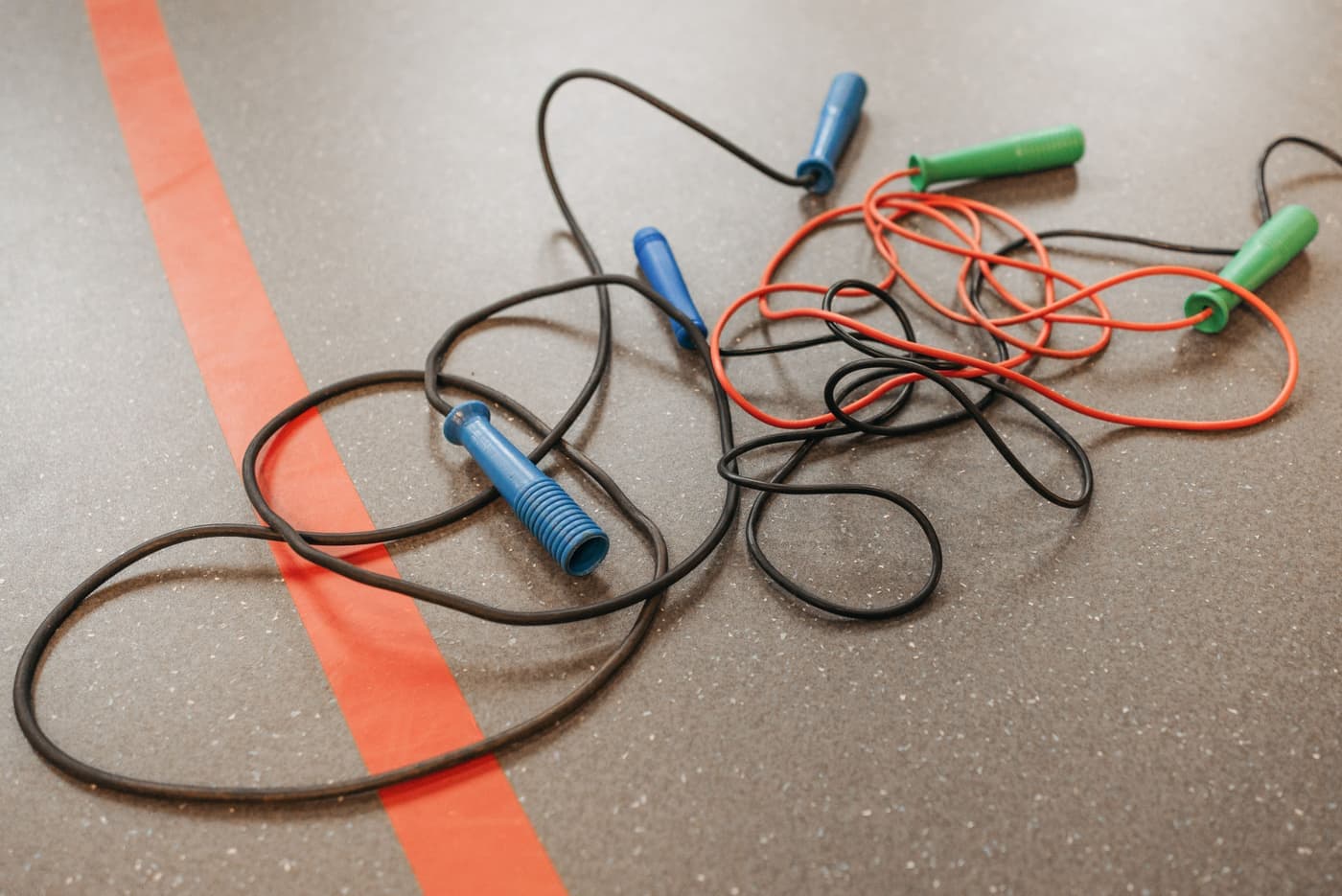
Key specs
- Cable
- 9 ft PVC-coated braided steel
- Bearings
- Dual ball bearing
- Handles
- 6 in. EVA memory foam
Scores · editorial, out of 10
- Rope type fit for the buyer
- 7
- Adjustability & sizing
- 8
- Bearings & handles
- 8
- Apartment-friendliness (floors, noise)
- 6
- Value
- 10
Pick 4 · Jump ropes
DEGOL Skipping Rope with Ball Bearings
DEGOL
The cheapest rope that isn't a toy: a 9 ft PVC-coated steel cable, dual ball bearings, and 6 in. memory-foam handles — the default first rope for an apartment.
Best for
A first rope for someone who has never jumped and wants to spend the least
Pros
- Ball bearings at this price mean the rope turns without twisting — the thing cheap ropes get wrong
- 9 ft cable trims to fit anyone up to about 6 ft 2 in.
- Long foam handles are forgiving for a beginner's grip
Cons
- A thin coated cable stings when you miss and frays on bare concrete — use a mat
- Light cable gives little feedback, so timing takes longer to learn than with a PVC or weighted rope
Specs from DEGOL — Skipping Rope with Ball Bearings listing (cable, bearings, handles).
FAQ
Questions readers ask
How much space do you need for a home gym in an apartment?
About 6 x 4 feet of clear floor plus a usable doorway. That covers a mat, a kettlebell, rope work and everything you can hang from a bar.
Can you have a home gym without drilling into walls?
Yes. A no-screw doorway bar, a mat, a kettlebell and a rope leave no holes at all, and rings can hang from the doorway bar rather than a joist.
How do I work out without disturbing downstairs neighbors?
Use a thick mat, never drop a weight, skip rope on the mat rather than bare floor, and avoid early morning and late night sessions. Impact noise travels through the structure, so absorbing it at the source is what works.
What should I buy first for an apartment gym?
A doorway pull-up bar and assistance bands, then a mat, then one kettlebell. That order gives you a functioning program at every step.
Related
Keep reading
- Best pull-up bars for apartments
The bars that fit a rented frame.
- How to jump rope in an apartment
Ceiling, floor and neighbors.
- Kettlebells in an apartment
Which movements survive a shared floor.
- Best jump rope mats
The single most useful noise fix.
- Best bodyweight training equipment
The five-piece kit, ranked in buying order.
Sources
- —KAKICLAY — Multi-Grip Pull Up Bar listing (door range, depth, trim, capacity) · amazon.com
- —Crossrope — Jump Rope Mat (dimensions, thickness, weight, tapered edge) · crossrope.com
- —Yes4All — Solid Cast Iron Kettlebell listing (weights, handle, base) · amazon.com
- —DEGOL — Skipping Rope with Ball Bearings listing (cable, bearings, handles) · amazon.com