Best Bar Under $100 · Pull-Up Bars
Best pull-up bar under $100: what the cap returns, and what it costs you
The useful surprise about a hundred-dollar budget is that it does not force you into one kind of bar. Every mounting type on this site - doorway, wall, ceiling, free-standing - has a bar inside the cap, and one of them publishes a 500 lb rating. What the cap does not buy is a spec sheet, and that is the trade this page is about.
Rope & Rep is reader-supported. Product links go through our affiliate resolver and we may earn a commission from qualifying purchases at no cost to you. Prices are the brand's and change — every button opens the live price on the brand's own store rather than showing a stale number.
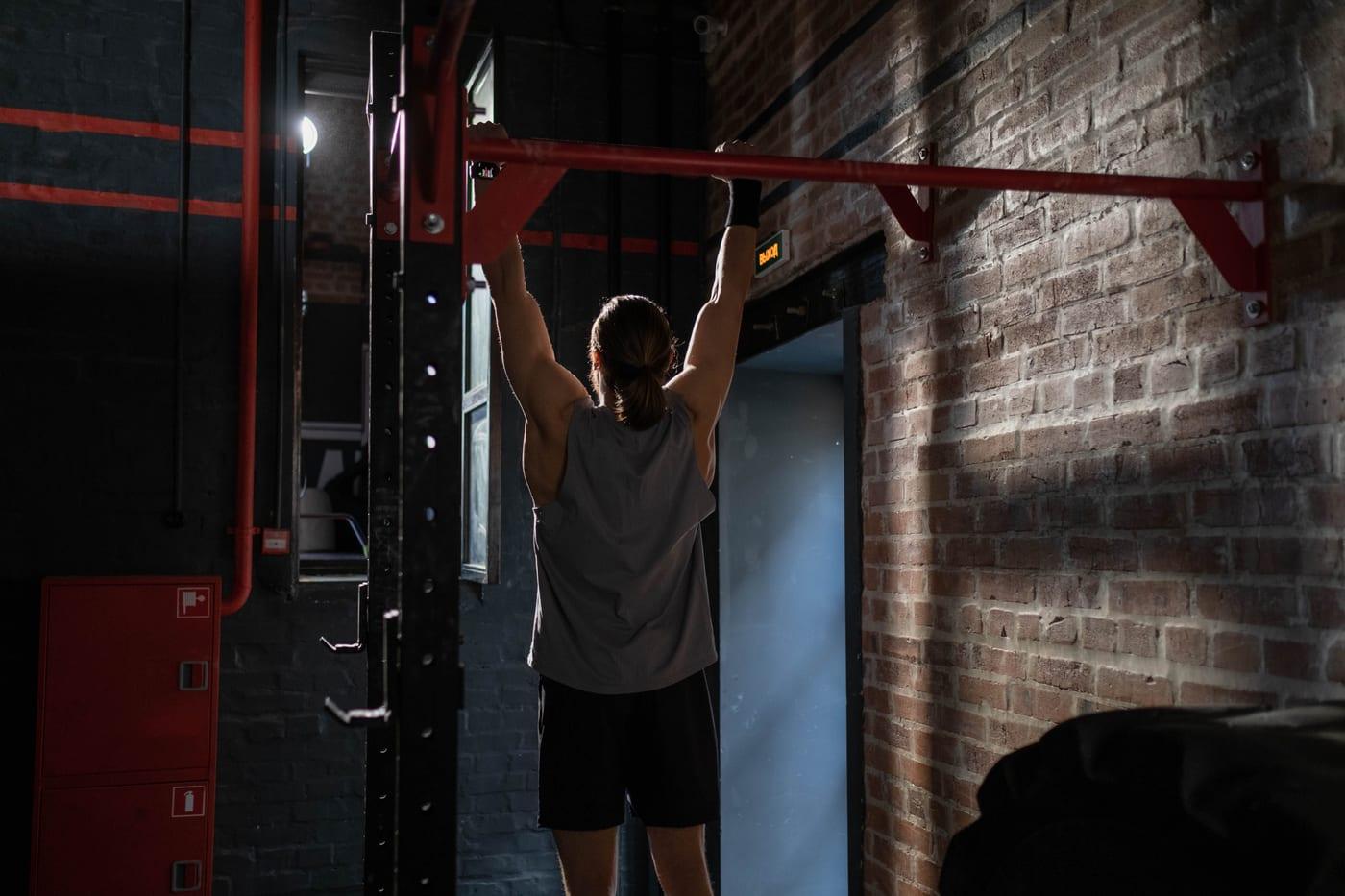
A man in activewear doing pull-ups on an indoor bar. Licensed stock photograph of the category — not the specific product.
Quick picks
| # | Product | Best for | Score | Price |
|---|---|---|---|---|
| 1 | Ally Peaks Pull Up Bar for Doorway A heavier-gauge leverage bar: 1.7 mm thickened chrome steel rated to 500 lb, elastic silicone frame pads, three grips and five width settings — the one to buy if you're big or plan to add a vest. | Heavier lifters or weighted pull-ups in a standard doorway | 9.3 | Sold through third-party marketplaces only — this brand has no store of its own, so there is no link here and we earn nothing on it. Ally Peaks Pull Up Bar for Doorway |
| 2 | 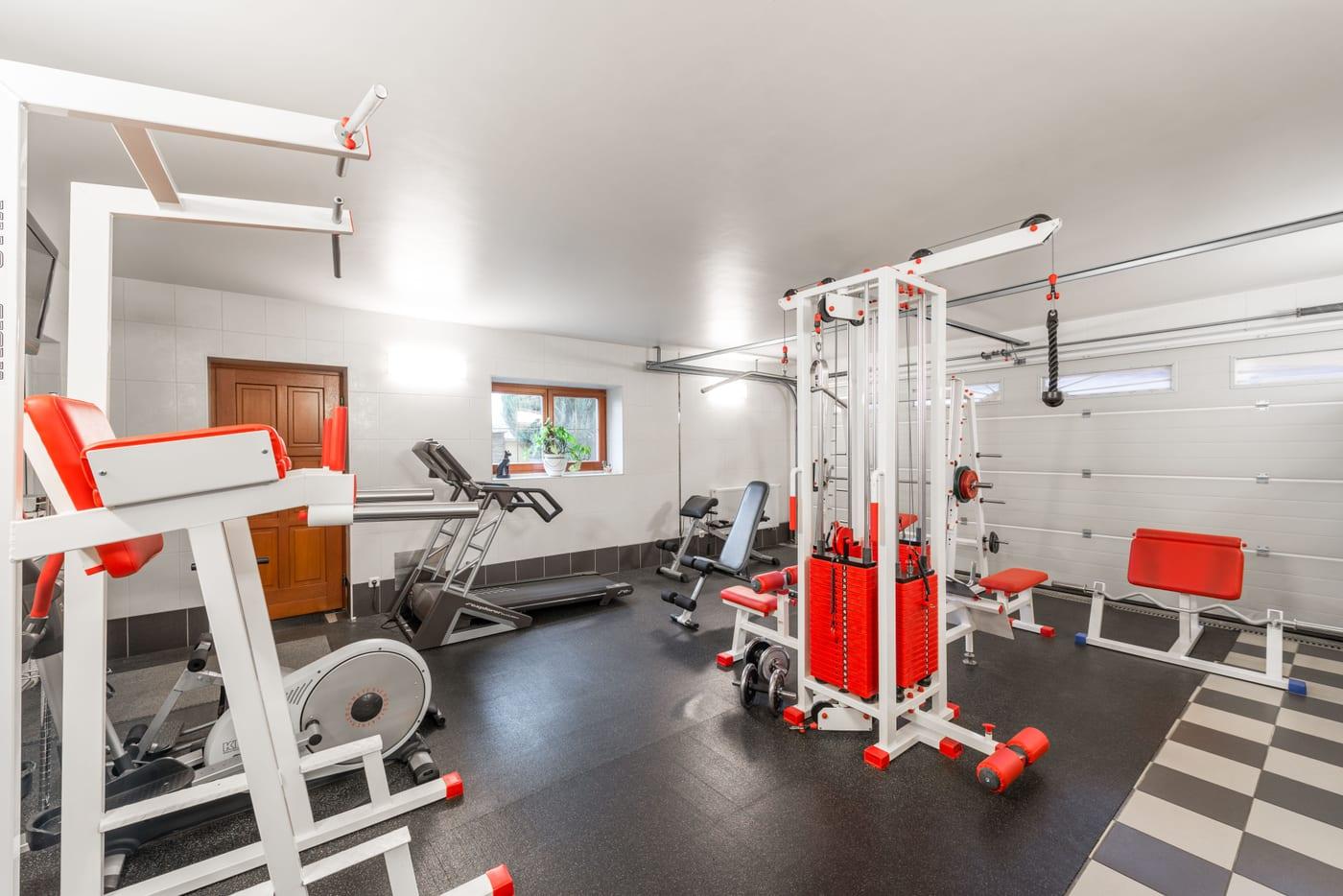 RELIFE REBUILD YOUR LIFE Power Tower A 14-gauge steel tower rated to 450 lb with nine height settings (about 56–86 in.), adjustable dip handles and a four-position backrest — the stronger alternative to the Sportsroyals. | Heavier users who want a free-standing station with a higher rating | 9.3 | |
| 3 |  HWOOUSA Wall-Mount Pull-Up Bar (500 lb) A wall bar whose brackets slide to fit 16, 24 or 32 in. stud centers, in powder-coated alloy steel at a published 500 lb, with an O-ring on each end for bands — the cheapest drilled straight bar that publishes a real number. | A garage wall whose stud centers you will not know until you find them | 8.4 | Sold through third-party marketplaces only — this brand has no store of its own, so there is no link here and we earn nothing on it. HWOOUSA Wall-Mount Pull-Up Bar |
| 4 |  Perfect Fitness Multi-Gym Pro The doorway bar with the gentlest frame contact: flat, foam-padded door guards, fits doors to 33 in. wide and 6 in. deep, 300 lb rating, and it flips to the floor for dips. | Renters who care most about not marking the door frame | 9.3 | |
| 5 | ProsourceFit Multi-Grip Lite Pull-Up Bar The budget version of ProsourceFit's leverage bar — ten foam grips, 300 lb rating, 24–32 in. doors — for someone who needs the basics and nothing else. | The cheapest bar that still fits a standard doorway properly | 9.1 |
Scores are our editorial judgment from each maker's published specs and mounting instructions, weighted for a renter or small-space trainer.
How we handled the price cap
A price-capped list is worthless the day its prices go stale, so here is the rule. Every product row on this page opens the brand's own current price, so the figure you see is the one the brand is charging when it is read - if the refresh ever stops, the number disappears rather than quietly aging. All ten bars named on this page were inside the cap when the page was last updated, and the row above each pick tells you whether that is still true today.
We have also listed the bars that miss the cap, because knowing what the next bracket up buys is half of deciding whether to spend the hundred at all. They are all on the main pull-up bar roundup, where price is not the constraint and the ranking is built on the space you have instead.
The criteria, in the order they matter inside this cap
1. Which mounting routes the cap leaves open. This is the first question and most budget lists skip it. A pull-up bar is not one product; it is four different products that happen to share a name, and they make completely different demands on your home. A hundred dollars turns out to be enough for any of them, which means the cap should not be the thing that decides. Your door frame, your studs, your ceiling height and your lease should decide, and then you spend inside the cap on that route. Doorway versus wall-mount versus free-standing is the full version of that decision.
2. Rated load per dollar. Inside this bracket the published rating is the clearest signal you get, and it does not track price the way you would expect. The cheapest bars here are rated 300 lb; one of the cheapest is rated 500 lb. If you are a heavier lifter, or you plan to hang with a vest on, this criterion outranks everything else on the page - and the heavy-user roundup orders the whole catalog by it, cap or no cap.
3. Whether the listing publishes anything other than a number. This is where the cap bites. A drilled bar under $100 will tell you it holds 500 lb and then decline to tell you how long the bar is, how thick the tube is, or how far it stands off the wall. That is not a reason to refuse to buy one - it is a reason to know you are buying on a rating rather than on a spec sheet, and to check your own clearance before the holes go in.
4. Reversibility. This site is built for people with a lease, so a bar that leaves no trace is worth more than a bar that leaves four lag holes, all else equal. Inside this cap you do not have to choose: the leading pick here is a no-drill bar. The no-screws roundup is the page for readers who cannot drill at all.
5. What else the money does. A doorway bar is a bar. A free-standing tower inside the cap is a bar, a dip station, a knee-raise station and a backrest. Per dollar that is a lot of returned capability, and it is the reason a tower ranks second on a page about a hundred dollars rather than last.
Everything on this site that comes in under $100
| Bar | Mounting route | Published rating | Fit / key limit |
|---|---|---|---|
| Ally Peaks Doorway | Leverage, no screws | 500 lb | 5 width levels, 2 thickness levels |
| KAKICLAY Multi-Grip | Leverage, no screws | 440 lb | 21.7-36.2 in. doors, trim to 3.5 in. |
| AmazeFan Doorway | Leverage, no screws; folds | 400 lb | 23.3-36.2 in. doors, 8.3 in. depth |
| Iron Gym Total Upper Body | Leverage, no screws | 300 lb | 24-32 in. doors, trim to 3.5 in. |
| Perfect Fitness Multi-Gym Pro | Leverage, padded guards | 300 lb | To 33 in. wide, to 6 in. deep |
| ProsourceFit Multi-Grip Lite | Leverage, no screws | 300 lb | 24-32 in. doors |
| HWOOUSA Wall-Mount | Bolts to studs | 500 lb | 16 / 24 / 32 in. centers; solid walls only |
| HWOOUSA Joist-Mounted | Bolts to joists | 500 lb | Almost no drop below the framing |
| Ultimate Body Press Ceiling Mount | Bolts to joists | Not published | 16 or 24 in. OC; 14 in. drop |
| RELIFE Power Tower | Free-standing | 450 lb | 34 x 26.4 in. base, 83 in. tall |
Why a 500 lb doorway bar leads a page about money
It looks like a mistake on paper. The heaviest-rated bar under the cap should be the drilled one, because drilling into structure is how you get load capacity. Two things make the leverage bar the better buy for most people here anyway.
The first is that a leverage bar's rating and its load path are honest about each other. A thickened chrome-steel bar resting across a door frame transfers your weight into the wall above the opening, which in a normal stud-framed house is a header - the strongest horizontal element in the room. The bar is the part that has to be strong, and a published 500 lb on 1.7 mm steel is a wide margin over a 200 lb lifter wearing a 40 lb vest.
The second is that the sub-$100 drilled bars sell you a number without a spec sheet. Both HWOOUSA bars publish 500 lb and then publish no bar length, no grip diameter and no steel gauge. The rating may well be accurate - we have no reason to think otherwise - but a rating with nothing behind it is a different purchase from a rating with a documented tube behind it, and at this price that is what you are accepting. A bolted bar also moves the weakest link out of the product and into your wall, which no listing can rate for you.
What the cap does not buy
Frame mass, if you go free-standing. The tower inside this cap is a real tower with nine height settings and a 450 lb rating, and it still weighs a fraction of what a gym-floor frame weighs. Under load it will tell you it is a hundred-dollar frame. That is a fair trade at this price, but it is a trade, and the fix is not shopping harder - it is spending more, which the tower roundup covers.
Kipping and clearance. The joist bar under the cap bolts flat to the framing with almost no drop, so an 8 ft ceiling puts your head in the joists. The one overhead bar inside the cap with a proper 14 in. drop - the Ultimate Body Press - sits near the top of the bracket for exactly that reason, and neither drilled bar publishes its wall-to-bar projection at all. If you want a bar well off the wall or well below the ceiling, the cap is the wrong constraint and the ceiling-mount roundup is the right page.
Published steel. This is the one we would most like to buy and cannot. Above the cap, bars from brands with real product pages publish gauge, bar length and projection. Under it, you mostly get a rating and a photo.
Accessories that stay attached. No bar here comes with a dip belt, bands or a vest, and two of the four mounting routes need hardware you supply. Budget a few dollars beyond the cap for lag screws and a stud finder if you are drilling.
The bars that miss the cap, and what they add
Naming them is the honest way to show you the whole field. Just above $100 sit the Gronk Fitness ceiling multi-grip bar and its wall-mounted sibling, both of which publish real geometry and an 800 lb rating on the ceiling version - the clearest example of what documentation costs. The Sportsroyals and VEVOR towers, the DlandHome tower with a folding bench and the Stud Bar ceiling bar all sit above the cap as well, as do the FLYBIRD and HARISON heavy towers and the folding JOROTO station. Every one of them is on the main roundup, and the towers specifically are ranked against a bigger budget on the power tower page and its own $200 cap.
If your budget is genuinely fixed at a hundred dollars, none of that matters and you should buy from the table above. If it is a preference rather than a limit, the single most valuable thing the next bracket buys is a published spec sheet on a drilled bar - not a higher rating.
The picks in detail
Every pick, reviewed
Key specs
- Door width
- 5 width levels, 2 thickness levels
- Mounting
- Leverage, no screws
- Rated load
- 500 lb
Scores · editorial, out of 10
- Fit & clearance (door, ceiling, depth)
- 9
- Reversibility (no drill, no marks, takedown)
- 10
- Rated load & build
- 10
- Grip options
- 9
- Value
- 9
Pick 1 · Pull-up bars
Ally Peaks Pull Up Bar for Doorway
Ally Peaks
A heavier-gauge leverage bar: 1.7 mm thickened chrome steel rated to 500 lb, elastic silicone frame pads, three grips and five width settings — the one to buy if you're big or plan to add a vest.
Best for
Heavier lifters or weighted pull-ups in a standard doorway
First, and it is not close on the criterion that matters most inside a cap: this is the highest published rated load of any bar on this page, from 1.7 mm thickened chrome steel, and it needs no screws at all. For a renter who weighs 200 lb and wants to train weighted pull-ups eventually, nothing else here gives that much headroom for that little money, and nothing else here gives it without putting a hole in anything.
Five width settings and two thickness settings mean it fits more door frames than the fixed Iron Gym-style bars, and the double silicone pads on the frame contacts are a meaningful upgrade over bare foam if your deposit depends on the trim. It comes down in seconds and goes in a closet, which is the whole argument for leverage bars on this site.
The costs, stated plainly. It still relies on your door frame rather than on structure, so the rating is about the bar and your header is the real variable - inspect the frame first. The thicker steel also makes it heavier to lift into place every session than a 300 lb bar, which sounds trivial and is mildly annoying by week three. And if you weigh under 200 lb and will never add weight, you are paying for margin you will not use; the cheapest bar on this page is rated 300 lb and will be fine.
Why we picked it
- 500 lb rating from 1.7 mm thickened chrome steel — a big margin over the 300 lb standard bars
- Double silicone pads on the frame contacts instead of bare foam
- Non-slip foam handles at wide, narrow and neutral spacing
Good to know
Five width settings cover narrow and wide frames, but the bar still relies on the frame, not screws
Sold through third-party marketplaces only — this brand has no store of its own, so there is no link here and we earn nothing on it.
Ally Peaks Pull Up Bar for DoorwaySpecs from Ally Peaks — Pull Up Bar for Doorway listing (steel gauge, 500 lb capacity, width and thickness adjustment, silicone pads).
Key specs
- Height
- 9 levels, to 83 in. overall
- Footprint
- 34 × 26.4 in.; 83 in. tall
- Rated load
- 450 lb
Scores · editorial, out of 10
- Fit & clearance (door, ceiling, depth)
- 9
- Reversibility (no drill, no marks, takedown)
- 10
- Rated load & build
- 10
- Grip options
- 9
- Value
- 9
Pick 2 · Pull-up bars
RELIFE REBUILD YOUR LIFE Power Tower
RELIFE
A 14-gauge steel tower rated to 450 lb with nine height settings (about 56–86 in.), adjustable dip handles and a four-position backrest — the stronger alternative to the Sportsroyals.
Best for
Heavier users who want a free-standing station with a higher rating
Second, and the most returned capability per dollar on the page. It spends nearly the whole cap and gives back a pull-up bar, a dip station, a knee-raise station and a four-position backrest in one 450 lb frame, with nine height settings from roughly 56 to 86 in. That low setting is the detail worth noticing: a basement or a garage with 7.5 to 8 ft of ceiling defeats most towers, and this one drops far enough to work under one.
It is also the only route on this page that touches neither your door frame nor your walls. No drilling, no leverage against trim, nothing to explain at the end of a lease - it simply stands on the floor. If you have the floor area, that is the cleanest answer a hundred dollars can buy.
The costs are floor and feel. The base is roughly 34 x 26.4 in. and needs clear space around it, which is genuinely a lot in a one-bedroom - our small-space tower page ranks frames by footprint if that is the binding constraint. At this price the frame flexes more than a heavy gym tower, and it will tell you so under a hard pull; dips are where you notice first. Assembly is about an hour. And at 83 in. tall it needs ceiling height above the bar, not just under it.
Why we picked it
- 450 lb rating from 14-gauge tubing
- Dip handles adjust across three widths; backrest across four positions
- Low setting at 56 in. suits a basement with 7.5–8 ft ceilings
Good to know
Wider base than the Sportsroyals — roughly 38 × 40 in. of floor
Specs from RELIFE — Power Tower listing (height range, capacity, adjustments).
Key specs
- Mount spacing
- Adjustable, fits 16 / 24 / 32 in. stud centers
- Rated load
- 500 lb (published)
- Build
- Alloy steel, black powder coat
Scores · editorial, out of 10
- Fit & clearance (door, ceiling, depth)
- 8
- Reversibility (no drill, no marks, takedown)
- 7
- Rated load & build
- 9
- Grip options
- 8
- Value
- 10
Pick 3 · Pull-up bars
HWOOUSA Wall-Mount Pull-Up Bar (500 lb)
HWOOUSA
A wall bar whose brackets slide to fit 16, 24 or 32 in. stud centers, in powder-coated alloy steel at a published 500 lb, with an O-ring on each end for bands — the cheapest drilled straight bar that publishes a real number.
Best for
A garage wall whose stud centers you will not know until you find them
Third, and the pick if you can drill. A published 500 lb on powder-coated alloy steel with brackets that slide to fit 16, 24 or 32 in. stud centers is a lot of bar for well under the cap, and the sliding brackets solve the problem that sinks most cheap wall bars: you do not know your stud spacing until the stud finder tells you, and by then the bar is already bought. An O-ring on each end takes bands or straps without an adapter, which matters if you are working toward a first pull-up with assistance - the band roundup covers that side.
A bolted bar is also the only kind on this page whose load path is structure rather than trim or a floor footprint, and that is the real reason to pick it over a leverage bar if your walls allow.
The costs are the ones this whole page is about. The listing publishes a rating and essentially nothing else - no bar length, no grip diameter, no steel gauge, no wall-to-bar projection - so kipping clearance is unknown until it is up, and you are buying on a number. It is rated for solid concrete, cement, brick or solid wood only: the listing explicitly rules out drywall and hollow walls, which disqualifies a lot of apartments outright. And it is permanent in the way that matters to a landlord: four holes stay in the wall.
Why we picked it
- Adjustable bracket width covers 16, 24 and 32 in. spacing, so odd framing does not rule it out
- An O-ring on each end takes bands, straps or a bag without an adapter
- A published 500 lb on powder-coated alloy steel at the cheap end of drilled bars
Good to know
The listing publishes no bar length, grip diameter or steel gauge — you are buying on the rating, not a spec sheet
Sold through third-party marketplaces only — this brand has no store of its own, so there is no link here and we earn nothing on it.
HWOOUSA Wall-Mount Pull-Up BarSpecs from HWOOUSA — Wall Mount Pull Up Bar listing (500 lb maximum load, adjustable mounting width for 16/24/32 in. studs, alloy steel, black powder coat, 2 O-rings, solid-wall mounting only).
Key specs
- Door width
- Up to 33 in., up to 6 in. deep
- Mounting
- Leverage with padded frame guards
- Rated load
- 300 lb
Scores · editorial, out of 10
- Fit & clearance (door, ceiling, depth)
- 9
- Reversibility (no drill, no marks, takedown)
- 10
- Rated load & build
- 9
- Grip options
- 9
- Value
- 9
Pick 4 · Pull-up bars
Perfect Fitness Multi-Gym Pro
Perfect Fitness
The doorway bar with the gentlest frame contact: flat, foam-padded door guards, fits doors to 33 in. wide and 6 in. deep, 300 lb rating, and it flips to the floor for dips.
Best for
Renters who care most about not marking the door frame
Fourth, and the one to buy if the door frame is the thing you are protecting. Its patented flat door guards are foam-padded and spread the load across the trim instead of pressing two steel points into it, and it fits frames up to 6 in. deep - thicker walls than most leverage bars will take. If a security deposit is involved and the bar is going on a painted rental door frame, this is the most careful product on the page.
It also flips over for dips, push-ups and sit-ups, so the floor work comes free, and the handles cover wide, close and hammer grips with padding where your hands go rather than bare tube.
The costs: a 300 lb rating, which is the floor of this bracket rather than the ceiling, so a heavier lifter or anyone planning a weighted vest should take the 500 lb bar at the top of this page instead. At 6.2 lb it is heavier than the bare-steel bars and takes practice to hang one-handed. And there is no telescoping, so a doorway over 33 in. rules it out - which is what the wider-fitting KAKICLAY and AmazeFan bars in the table are for, both also under the cap.
Why we picked it
- Patented flat door-frame guards with thick foam pads spread the load instead of pressing a bar into the trim
- Fits frames up to 6 in. deep — thicker walls than most leverage bars allow
- Padded handles at wide, close and hammer positions; turns over for sit-ups, push-ups and dips
Good to know
At 6.2 lb it is heavier than the bare-steel bars, so hanging it one-handed takes practice
Specs from Perfect Fitness — Multi-Gym Pro listing (door width/depth, capacity, dimensions).
Key specs
- Door width
- 24–32 in.
- Mounting
- Leverage, no screws
- Rated load
- 300 lb
Scores · editorial, out of 10
- Fit & clearance (door, ceiling, depth)
- 9
- Reversibility (no drill, no marks, takedown)
- 10
- Rated load & build
- 8
- Grip options
- 9
- Value
- 10
Pick 5 · Pull-up bars
ProsourceFit Multi-Grip Lite Pull-Up Bar
ProsourceFit
The budget version of ProsourceFit's leverage bar — ten foam grips, 300 lb rating, 24–32 in. doors — for someone who needs the basics and nothing else.
Best for
The cheapest bar that still fits a standard doorway properly
Fifth, and the budget pick: the cheapest bar in our registry that still fits a standard doorway properly and still publishes 300 lb on an alloy steel frame. Ten cushioned grips cover pull-ups, chin-ups, hammer grip and floor work, and it lifts off the frame in seconds. If the question is "what is the least I can spend and still own a real pull-up bar", this is the answer, and it leaves most of the cap unspent.
For a reader starting from zero pull-ups, that unspent money is better used on a band set than on a stronger bar - the bar is not your limiting factor yet. The first pull-up guide is the plan that goes with this purchase.
The costs are real and we are not going to soften them. "Lite" means thinner tubing than the full Multi-Grip, and it flexes more under a heavy lifter - our own registry entry tells anyone over 250 lb or planning to add a vest to buy a higher-rated bar, and that advice stands here. The foam grips wear faster than rubber or knurled steel. And it fits 24-32 in. doors only, with no adjustment to rescue an odd frame.
Why we picked it
- Ten cushioned grips cover pull-ups, chin-ups, hammer grip and floor work
- Alloy steel frame rated to 300 lb, the same as bars costing twice as much
- Comes off the frame in seconds — nothing to explain to a landlord
Good to know
'Lite' means thinner tubing than the full Multi-Grip; it flexes a little more under a heavy lifter
Specs from ProsourceFit — Multi-Grip Lite Pull-Up Bar (door range, capacity).
Buying guide
Pick in two questions
Can you drill? If no - lease, concrete you do not own, a partner who will notice - you are choosing between a leverage bar and the free-standing tower, and the question becomes whether you have about three square feet of permanent floor. Floor space: buy the tower. No floor space: buy the 500 lb leverage bar, or the padded-guard bar if the trim is what you are protecting.
If yes, where is the framing? Solid masonry or solid wood walls take the adjustable-bracket wall bar. Accessible joists with 8 ft or more of ceiling take a joist bar, but check the drop - the one under this cap bolts flat with almost no drop, which is fine at 9 ft and useless at 8. Drywall over hollow framing takes neither, and you are back to the no-drill options.
Spend the rest of the hundred well
If you buy the budget bar you have most of the cap left, and there are better places to put it than a stronger bar. A band set is the single highest-return purchase for anyone who cannot yet do five pull-ups, because it lets you train the actual movement today instead of waiting for it. A stud finder if you are drilling - a cheap one costs a fraction of the bar and removes the only part of the job that can go badly wrong. A dip belt if you can already do ten, because adding weight is cheaper than adding reps. The dip belt roundup and belt versus vest cover that choice. What we would not spend it on is a second bar.
The specs worth paying for inside this bracket
Published rated load, every time. It is the one number everyone in this bracket publishes, so it is the only one you can compare. Treat your bodyweight plus any vest as the floor and buy margin above it.
Adjustable fit. On a leverage bar, width and thickness settings are what make the difference between a bar that fits your door and a return. On a drilled bar, sliding brackets are what make the difference between fitting your framing and fitting someone else's.
Frame contact. Padded or silicone contacts on a leverage bar are worth more than an extra grip position if you are renting.
What you can ignore. Grip count past three or four positions, foam color, and any listing superlative in the product title. None of them changes what the bar does.
How this list was built
Every bar named here is already in our registry, with ratings, fit ranges and mounting requirements read from the maker's own page or listing - cited under each product - and every one was re-confirmed as a live, purchasable listing through our price pipeline on 12 November 2026. The cap was applied to the live price on that date, which is also why the page tells you to trust the row rather than the prose.
The ordering here is deliberately not our registry's weighted overall and not the ordering of any other pull-up bar page on this site. It is what the cap returns per dollar - rated load first, then capability returned, with ties broken toward the bar that leaves no trace - which puts a doorway bar above a drilled one and a free-standing tower second, an order no other page here produces. Our methodology page sets out exactly what our scores are and are not. We have not tested these bars; the numbers are the makers' own and are cited as such.
FAQ
Questions readers ask
What is the best pull-up bar under $100?
The Ally Peaks doorway bar, on the criterion that matters most in this bracket: it publishes the highest rated load of any bar under the cap - 500 lb from 1.7 mm thickened chrome steel - and it needs no screws, so it suits a lease. If you have about three square feet of permanent floor, the RELIFE power tower is the better buy per dollar, because the same money returns a dip station, a knee-raise station and a backrest as well as a bar.
Can you get a good pull-up bar for under $100?
Yes, and you get more choice than you would expect. Every mounting route is available inside the cap: six leverage bars that hang on a door frame, two bars that bolt to studs or joists with a published 500 lb rating, a ceiling bar with a 14 in. drop, and a complete free-standing tower. What the cap does not buy is documentation - the cheap drilled bars publish a rating and little else - and frame mass if you go free-standing.
Is a doorway bar or a wall-mounted bar better under $100?
Under this cap, the doorway bar wins for most people. The best-rated leverage bar here publishes the same 500 lb as the wall bars while costing less and leaving no holes, and the sub-$100 wall bars publish no bar length, grip diameter or steel gauge to justify the switch. Choose the wall bar anyway if you own the place, have solid masonry or solid wood walls, and want the load going into structure rather than into door trim - our page on doorway versus wall-mount versus free-standing is the full comparison.
What rated load do I need on a pull-up bar?
Start from your bodyweight, add anything you will ever hang on yourself - a 20 or 40 lb vest, a dip belt and plates - and then buy well above that total rather than at it. Dynamic loading during a hard pull or a kip is higher than your static weight, and ratings describe ideal installations. A 300 lb bar is genuinely fine for a 180 lb lifter doing strict reps; it is not where a 250 lb lifter should be shopping. Our heavy-user roundup orders every bar on the site by published rating.
Will a cheap pull-up bar damage my door frame?
It can, and the design of the contact pads is what decides. A leverage bar transfers load into the wall above the opening through two contact points on the trim; bare steel or thin foam on a painted frame can mark it, and a frame with soft or loose moulding can be damaged outright. Bars with wide flat guards or silicone pads spread that load, which is why the padded-guard bar on this page is ranked specifically for renters. Inspect the frame first - our page on exactly this covers what to look for.
Is a power tower worth it for under $100?
If you have the floor space, it is the most capability per dollar on this page - a bar, dips, knee raises and a backrest in one frame, with nine height settings that include a low setting for a 7.5 to 8 ft ceiling. The honest trade is frame mass: at this price the frame will flex under a hard pull and especially under dips, and nothing you shop for inside the cap fixes that. If the frame feeling solid matters more than the price, save for the next bracket - the $200 tower page is the next step up.
Do cheap pull-up bars fit a 36-inch doorway?
Some do. Most sub-$100 leverage bars top out at 32 or 33 in., but two bars in the table above are published to fit up to 36.2 in. - the AmazeFan and the KAKICLAY - and both also need around 8.3 in. of door depth (frame plus wall) to sit properly, which is the specification people miss. Measure both the opening and the depth before ordering. The wide door frame roundup goes through the fit ranges in detail.
What should I buy with a $100 pull-up bar?
If you cannot yet do five pull-ups, a resistance band set - it is the only purchase that lets you train the movement itself today, and it costs a fraction of the bar. If you are drilling, a stud finder. If you can already do ten, a dip belt or a weighted vest, because adding load is a cheaper route to progress than adding reps. The first pull-up guide and the pull-up progression are the plans those purchases belong to.
Our recommendation
What we'd buy
Best Bar Under $100
Ally Peaks Pull Up Bar for Doorway
Heavier lifters or weighted pull-ups in a standard doorway
Sold through third-party marketplaces only — this brand has no store of its own, so there is no link here and we earn nothing on it.
Ally Peaks Pull Up Bar for DoorwayAlso worth buying
RELIFE REBUILD YOUR LIFE Power Tower
Heavier users who want a free-standing station with a higher rating
Brands: want your product tested? For Brands.
Related
Keep reading
- Best pull-up bars
The main roundup, ranked by the space you have rather than by price.
- Best pull-up bars with no screws
If drilling is off the table entirely.
- Best power tower under $200
The same price-cap question one bracket up, inside one product class.
- Best pull-up bars for heavy people
Every bar on the site ordered by published rated load.
- Doorway vs wall-mount vs free-standing
Decide the mounting route first - the cap will follow you there.
Sources
- —Ally Peaks — Pull Up Bar for Doorway listing (steel gauge, 500 lb capacity, width and thickness adjustment, silicone pads)
- —RELIFE — Power Tower listing (height range, capacity, adjustments)
- —HWOOUSA — Wall Mount Pull Up Bar listing (500 lb maximum load, adjustable mounting width for 16/24/32 in. studs, alloy steel, black powder coat, 2 O-rings, solid-wall mounting only)
- —Perfect Fitness — Multi-Gym Pro listing (door width/depth, capacity, dimensions)
- —ProsourceFit — Multi-Grip Lite Pull-Up Bar (door range, capacity) · prosourcefit.com