Guide · Training
Garage gym essentials: the half you can build beside a parked car
A garage buys you three things an apartment can't — a wall you can drill, a floor you can drop things on, and a driveway. Here is the kit that uses all three, and what the concrete and the cold will do to it.
Rope & Rep is reader-supported. Product links go through our affiliate resolver and we may earn a commission from qualifying purchases at no cost to you. Prices are the retailer's and change — every button opens the live price on Amazon rather than showing a stale number.
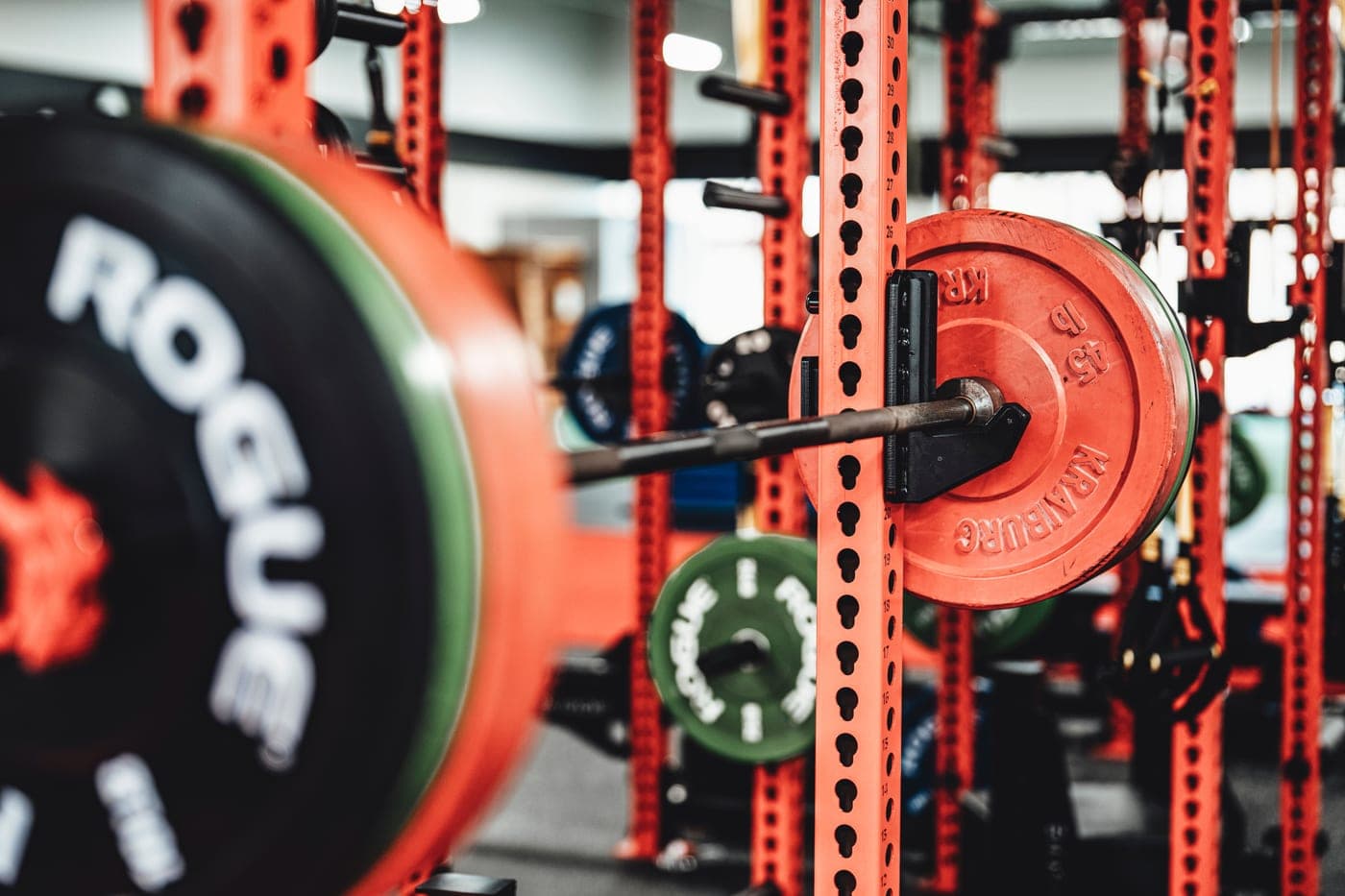
A home garage gym with equipment along one wall. Licensed stock photograph of the category — not the specific product.
What a garage actually gives you
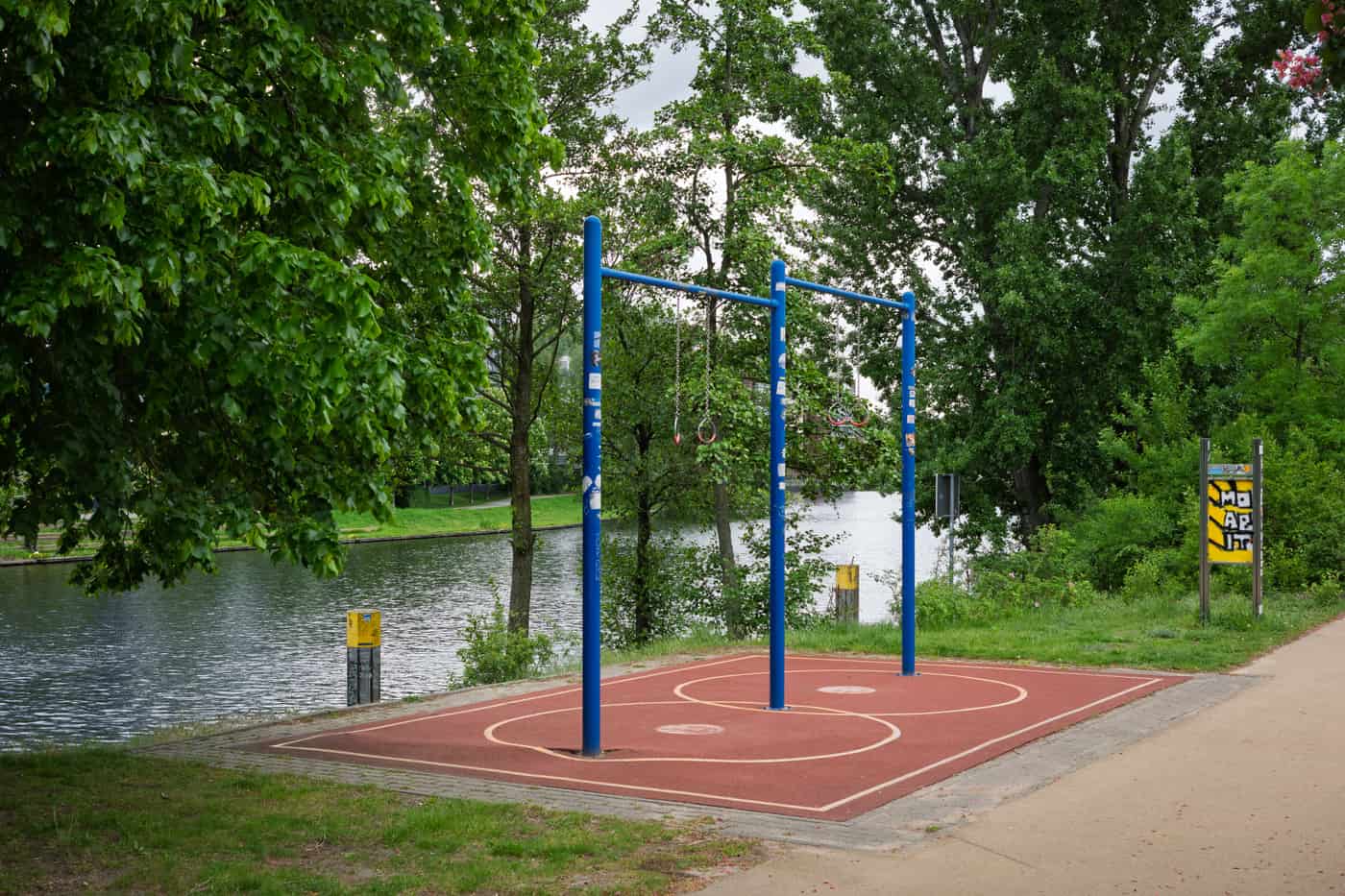
Three things, and they should decide the whole kit. A wall with studs, which means a bolted pull-up bar and rings that hang from a joist rather than a door frame. A floor you can drop things on, which means kettlebell work and box jumps stop being a noise negotiation. A driveway, which means a sled — the single best conditioning tool most people never consider because nowhere else in home training has room for it.
What a garage does not give you is much floor, once a car is in it. Plan for the strip along one wall, roughly 8 by 6 feet, and choose gear that lives against that wall.
The kit, in buying order
1. A wall-mounted pull-up bar
This is the first purchase because it is the one the garage uniquely enables. A bar bolted into two studs takes weighted work, kipping, hanging leg raises and rings — none of which a doorway bar should be asked to do. Find the studs with a magnet or a stud finder and mark them before you buy anything, because their spacing decides which bars will fit. The wall-mount picks cover stud spacing and reach-from-wall, and the joist-mounting guide covers the overhead version if your wall is block or your studs will not cooperate.
2. A plyo box
Jumps, step-ups, box squats, elevated push-ups, dips off the edge, and a bench when you need one. It is the most versatile object per square foot in the whole garage, and unlike almost everything else it doubles as furniture you can put things on. Soft-sided boxes are the right call in a garage with concrete — a missed jump on a wooden box takes skin off a shin. Foam vs wood is the argument in full, and what size to get is the sizing.
3. A sled
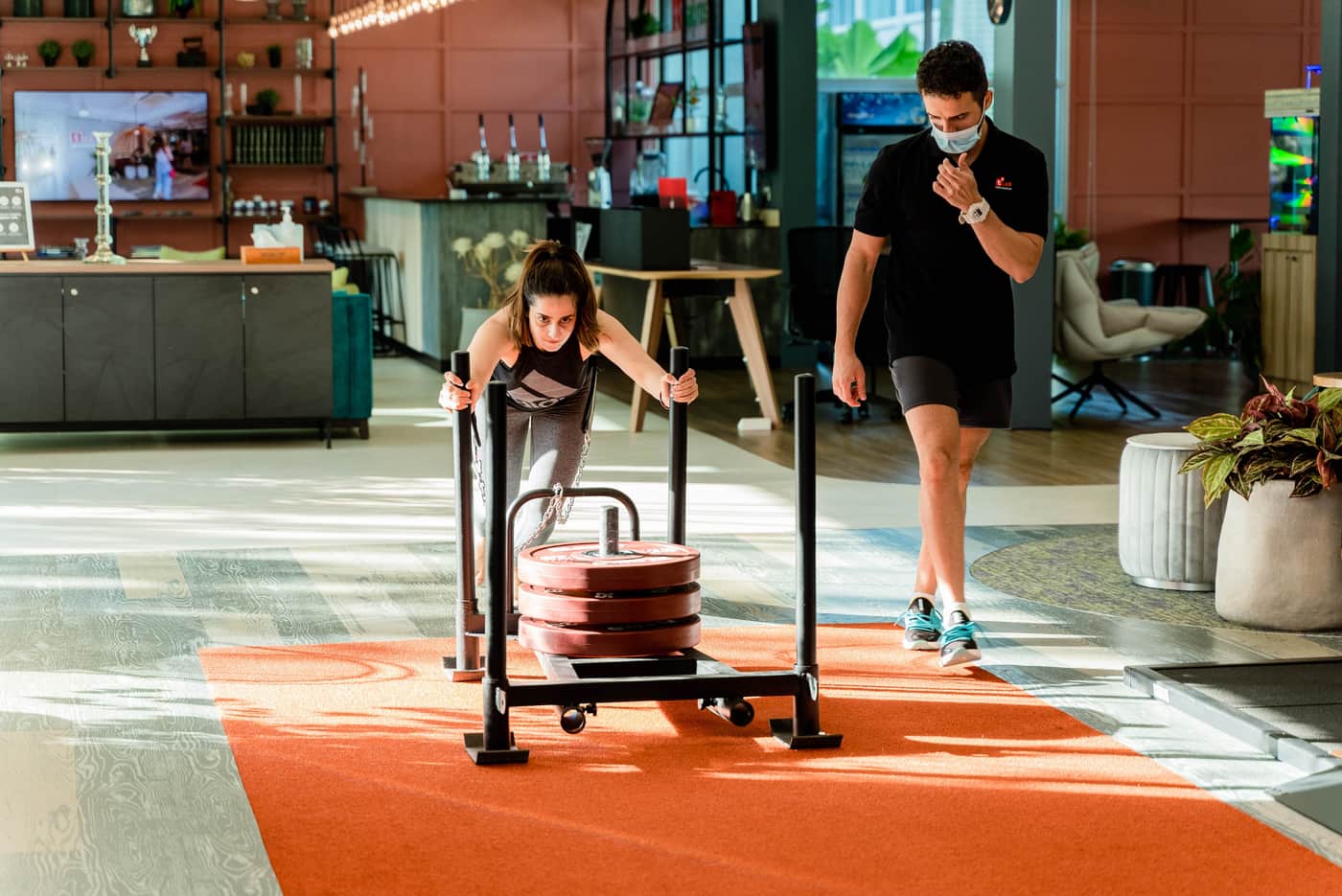
The conditioning tool the driveway pays for. Sled pushes and drags build legs and lungs with almost no eccentric load, which means they do not make you sore and you can do them often. The catch is surface: concrete and asphalt chew through steel skids, so check what the sled is designed to run on before you buy. Concrete vs grass is the whole decision, and how much to load it is the follow-up.
4. A kettlebell (or two)
Swings, squats, presses, carries, and the first loaded hinge most home gyms ever get. In a garage you can actually set a bell down hard, which opens up snatches and heavy carries. Size advice is here; a garage makes a second, heavier bell more worthwhile than an apartment does.
What concrete does to your gear, and to you
| Problem | What it affects | Fix |
|---|---|---|
| Impact on joints | Jumps, skipping, running in place | A stall mat or a 3/4 in. rubber mat under the training area |
| Abrasion | Sled skids, rope ends, mat corners | Plastic-based sled; keep cable ropes off bare concrete |
| Dust and grit | Bearings in ropes, ring straps, band latex | Store small gear in a bin, not on the floor |
| Chipping | Dropped cast iron on unprotected slab | Mat where the bell lands; never drop on bare concrete |
| Cold | Steel handles, rubber cable, latex bands | Keep ropes and bands indoors; warm up longer |
Layout for a garage with a car in it
Put the bar on the wall you can reach with the car parked — usually the end wall or the wall the car door does not open toward. Stack the box under the bar; it becomes the step for band setups and the bench for pressing. Keep the sled by the door so it takes four seconds to get onto the driveway. Bells go against the wall in a line, heaviest at the back.
One square of mat, roughly 6 by 4 feet, does the work of a whole rubber floor. Put it where you land and where you set bells down, not everywhere.
What we would not buy first
- A full rack and barbell. Excellent, and a completely different budget and footprint. If it fits and you want it, it is the best strength purchase in home training — but it is not an essential, and everything above still applies around it.
- A treadmill. You have a driveway and a sled.
- Battle ropes, at first. Genuinely good conditioning, but they need a solid anchor and 25 to 50 feet of length to work with — see the length and anchor guide before you assume the space is there.
If you are renting instead
None of the drilling above is available to you, and the sensible kit is different. The apartment version of this page is built around no-screw mounting and a shared floor.
Picks
The four that use what a garage gives you
A bar bolted to studs, a box you can land on, a sled for the driveway, and a bell you are allowed to set down hard.
Key specs
- Mounting
- Wall studs; 14 or 26 in. projection
- Bar
- 50 in. wide, 46 in. usable, 1.25 in.
- Rated load
- 700 lb (properly installed)
Scores · editorial, out of 10
- Fit & clearance (door, ceiling, depth)
- 7
- Reversibility (no drill, no marks, takedown)
- 3
- Rated load & build
- 10
- Grip options
- 10
- Value
- 8
Pick 1 · Pull-up bars
REP Fitness Wall-Mounted Multi-Grip Pull-Up Bar
REP Fitness
The wall bar with the most grips: 46 in. of usable 1.25 in. bar with neutral, close, wide and angled handles, mountable at 14 or 26 in. from the wall, rated 700 lb into studs.
Best for
A garage or basement wall where you can hit two studs and want every grip
Pros
- Traditional, neutral, close, wide and angled grips on one bar
- Two projection options — 26 in. lets you swing for kipping or muscle-ups, 14 in. saves space
- 700 lb rating with a 2 in. back bar; nonslip powder coat
Cons
- Needs lag bolts into two studs — not a rental-friendly install unless the landlord agrees
- At 50 in. wide it takes real wall space; check the stud spacing matches before ordering
Specs from REP Fitness — Wall-Mounted Multi-Grip Pull-Up Bar (dimensions, projection, rating).

Key specs
- Heights
- 20 / 24 / 30 in.
- Surface
- EVA foam over wood core, vinyl cover
- Rated load
- 440 lb
Scores · editorial, out of 10
- Heights offered
- 10
- Surface (shin-safe vs load-bearing)
- 10
- Footprint & stackability
- 7
- Rated load
- 9
- Value
- 8
Pick 2 · Plyo boxes
Yes4All 3-in-1 Soft Plyo Box (30 × 24 × 20 in.)
Yes4All
A foam-padded box with a wood core: three heights (20, 24, 30 in.) in one 64 lb unit, vinyl cover, 440 lb rating — the box that won't take skin off a shin when you miss.
Best for
Box jumps at home where a missed rep on a wood edge is the real risk
Pros
- Shin-safe foam edges; a wood core keeps it from squashing under step-ups
- Three heights from one box — 20 in. for beginners, 30 in. later
- Vinyl grips shoes and wipes clean; no assembly
Cons
- 64 lb and a 30 × 24 in. footprint — this is a permanent resident of a garage corner
- Foam rounds the top edge, so it's slightly less precise for box squats than wood
Specs from Yes4All — 3-in-1 Soft-Padded Plyo Box listing (heights, construction, capacity).
Key specs
- Size
- 36 × 24.5 × 11.25 in., 29 lb
- Loading
- Olympic/standard plates, 8 in. post
- Rated load
- 500 lb
Scores · editorial, out of 10
- Surface compatibility
- 6
- Footprint & storage
- 9
- Loading & handles
- 8
- Value
- 9
Pick 3 · Sleds
Titan Fitness Low Bar Push Pull Drag Sled (with harness)
Titan Fitness
A 29 lb steel sled, 36 × 24.5 in., with a 20.5 × 18 in. plate platform, a low push bar and a drag harness, rated 500 lb — the compact sled for a driveway or a strip of grass.
Best for
A first sled that pushes, pulls and drags and stores against a garage wall
Pros
- Low bar puts you in a drive position that hammers the quads; harness included for drags
- 29 lb — one person carries it to the driveway
- Takes Olympic or standard plates you may already own
Cons
- Bare steel runners chew up asphalt and scuff concrete; use it on grass, turf or a plywood strip
- Single low bar only — no upright handles for sprint pushes
Specs from Titan Fitness — Low Bar Push Pull Drag Sled (dimensions, weight, capacity, harness).

Key specs
- Weights
- 5–80 lb in 5 lb steps
- Handle
- ~1.25 in. (35 mm), textured
- Base
- Flat
Scores · editorial, out of 10
- Handle & finish
- 7
- Weight increments / adjustability
- 9
- Footprint & floor safety
- 7
- Build (casting, seams)
- 8
- Value
- 10
Pick 4 · Kettlebells
Yes4All Solid Cast Iron Kettlebell
Yes4All
The one-piece cast iron bell sold in 5 lb steps from 5 to 80 lb with a 1.25 in. handle and a flat base — the default first kettlebell because you can buy exactly the size you need.
Best for
A first bell in the exact weight you need without paying for a coating you don't
Pros
- 5 lb increments across the whole range — 15, 20, 25, 30, 35 lb are all there for a beginner's first two bells
- One-piece casting, no welded handle to fail
- Flat base sits still for rows, push-ups and storage
Cons
- Painted (not powder-coated) finish on the basic version chips and can leave marks on a wood floor — use a mat
- 35 mm handle is a bit thick for smaller hands on high-rep snatches
Specs from Yes4All — Solid Cast Iron Kettlebell listing (weights, handle, base).
FAQ
Questions readers ask
What do you need for a garage gym?
A wall-mounted pull-up bar, a plyo box, a sled for the driveway and at least one kettlebell cover strength and conditioning in about 8 x 6 feet. Add a mat where you land and set weights down.
Do you need rubber flooring in a garage gym?
Not wall to wall. One mat, roughly 6 x 4 feet, where you jump and set weights down does almost all the work of a full rubber floor for a fraction of the cost.
Can you use a sled on a concrete driveway?
Yes, but check the sled first — steel skids wear quickly on concrete and are loud. Plastic-based sleds are designed for hard surfaces.
Is a garage too cold to train in?
Usually not for the training itself, but gear suffers: latex bands and rubber jump rope cable get stiff and crack in the cold, so store those indoors. Warm up longer than you would inside.
Related
Keep reading
- Apartment gym setup
The no-drill version of this page.
- Best wall-mounted pull-up bars
Stud spacing and reach-from-wall.
- Best plyo boxes
The most useful object per square foot.
- Best weight sleds
What the driveway is for.
- Sleds for concrete vs grass
The surface decision before you buy.
Sources
- —REP Fitness — Wall-Mounted Multi-Grip Pull-Up Bar (dimensions, projection, rating) · repfitness.com
- —Yes4All — 3-in-1 Soft-Padded Plyo Box listing (heights, construction, capacity) · amazon.com
- —Titan Fitness — Low Bar Push Pull Drag Sled (dimensions, weight, capacity, harness) · titan.fitness
- —Yes4All — Solid Cast Iron Kettlebell listing (weights, handle, base) · amazon.com