Guide · Training
Bodyweight training for beginners: six patterns, three days a week
Push, pull, hinge, squat, brace, carry. Pick one exercise per pattern at a level you can actually do, run it three times a week, and make it harder on a schedule instead of a feeling.
Rope & Rep is reader-supported. Product links go through our affiliate resolver and we may earn a commission from qualifying purchases at no cost to you. Prices are the retailer's and change — every button opens the live price on Amazon rather than showing a stale number.
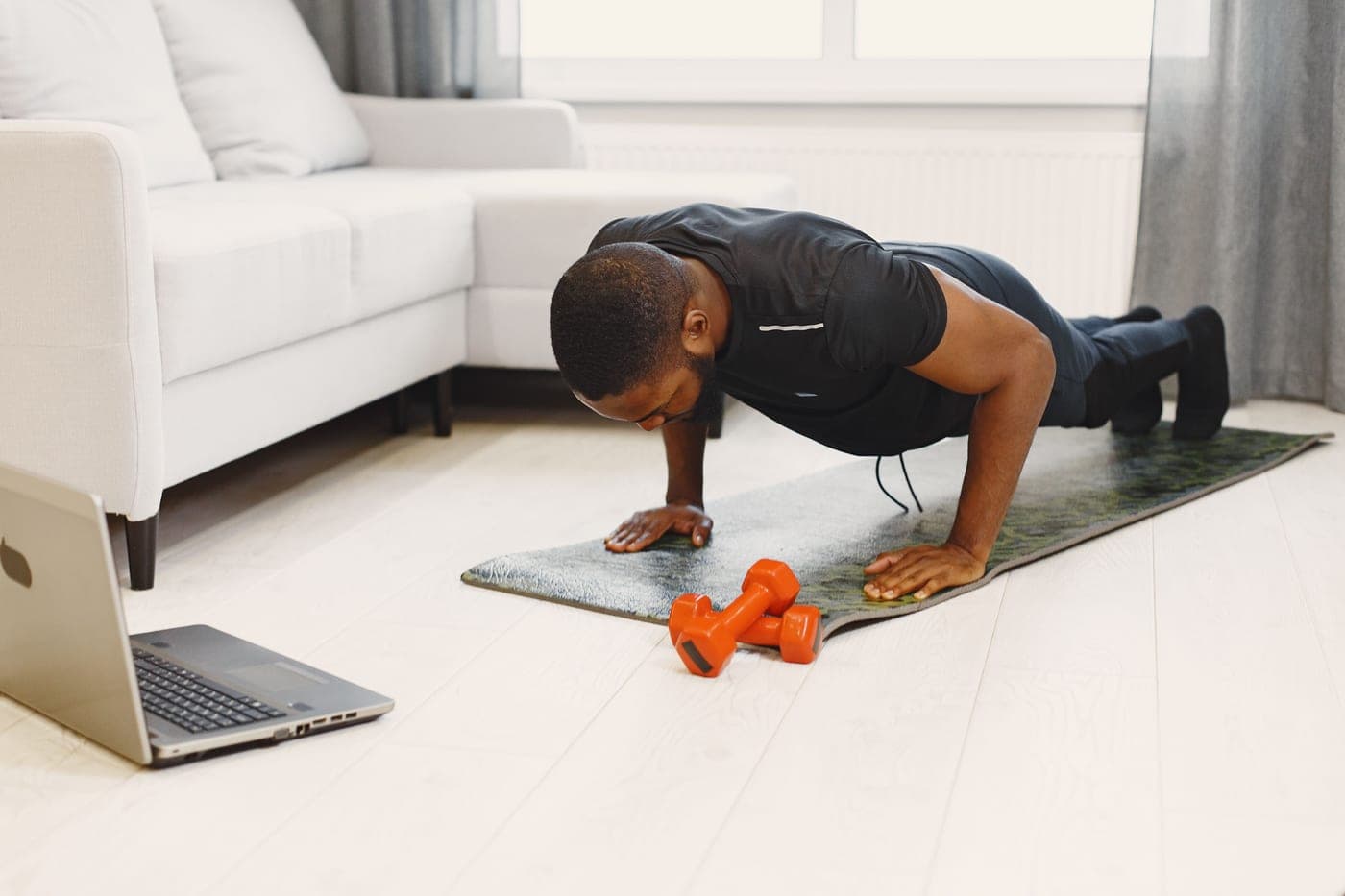
A person training with bodyweight exercises in a home space. Licensed stock photograph of the category — not the specific product.
The six patterns
Beginner programs fail for one of two reasons: they list twenty exercises nobody can remember, or they prescribe one variation that is either impossible or trivial for the person reading. Organizing by pattern fixes both. There are six things a body does under load, each has a ladder of variations, and you stand on the rung you can actually reach.
| Pattern | Easiest | Standard | Harder |
|---|---|---|---|
| Push | Wall or incline push-up | Floor push-up | Parallette or ring push-up, feet elevated |
| Pull | Inverted row, feet forward | Band-assisted pull-up | Strict pull-up, then weighted |
| Hinge | Hip bridge | Single-leg hip bridge | Nordic curl eccentric, kettlebell swing |
| Squat | Box squat to a chair | Bodyweight squat | Split squat, then pistol progression |
| Brace | Plank on knees | Plank, hollow hold | Hanging knee raise, L-sit on parallettes |
| Carry | Suitcase carry, light | Farmer carry | Overhead or front-rack carry |
The three-day plan
Same session, three times a week, on non-consecutive days. Yes, the same one — at this stage repetition is what builds the skill, and a movement done three times a week improves roughly three times faster than one done weekly.
| Order | Exercise | Sets × reps |
|---|---|---|
| 1 | Pull variation | 4 × 5–8 |
| 2 | Push variation | 4 × 8–12 |
| 3 | Squat variation | 3 × 10–15 |
| 4 | Hinge variation | 3 × 10–12 |
| 5 | Brace variation | 3 × 30–45 sec. |
| 6 | Carry | 3 × 40 m, or 3 × 45 sec. |
Pull goes first because it is the pattern most beginners are weakest at and the one that benefits most from being trained fresh. If you can only do part of this session on a given day, do the first three items.
The progression rule
Progress on a rule, not on a feeling. When you hit the top of the rep range on every set for two sessions in a row, take the next harder variation and start again at the bottom of the range. Expect the jump to feel like going backwards — it is. That is what a real progression looks like, and it is why people who add reps forever plateau at forty push-ups and no pull-ups.
For the pull pattern specifically, the progression has its own page: getting the first pull-up, then the rep ladder after it.
What you actually need to buy
Nothing, for the first month. Four of the six patterns need only a floor. But the pull pattern is the one that changes a physique fastest and it genuinely needs something to hang from or pull against — a bar, a set of rings, or at minimum a sturdy table to row under. Bands make the pull possible at any strength. Parallettes arrive when floor push-ups stop being hard and L-sits start being interesting.
The five-piece version of this shopping list, in buying order, is the bodyweight equipment roundup. If you are setting up in a rental, the apartment setup guide covers where it all goes.
Common beginner mistakes
- Changing the program every two weeks. The program is not the variable; the variation and the reps are.
- Training to failure on everything. Leave one or two reps in reserve on every set. You are building a habit and a skill, not testing yourself.
- Skipping the pull. It is the hardest and least visible in a mirror, and it is the one that matters most for posture and shoulder health.
- Ignoring the legs because bodyweight squats feel easy. That is a signal to move to split squats, not to stop.
- No conditioning at all. Two short rope or walking sessions a week does more for how you feel than any amount of extra push-ups — conditioning workouts at home has options that fit a small space.
What to expect, month by month
| Month | Typical change | What to watch |
|---|---|---|
| 1 | Movements stop feeling awkward; soreness fades | Consistency, not load. Three sessions every week. |
| 2 | Rep ranges top out; first variation changes | Resist adding exercises. Change variations instead. |
| 3 | First strict pull-up is common around here | Elbows and shoulders. Match pulls with rows. |
| 4–6 | Harder variations; visible strength gains | Add a conditioning day, and one kettlebell if you want loaded legs. |
Picks
What makes this program work at any strength level
A bar so the pull patterns exist at all, bands so they exist on day one, and parallettes so the push patterns keep scaling once push-ups get easy.
Key specs
- Door width
- 24–32 in. (trim to 3.5 in.)
- Mounting
- Leverage, no screws
- Rated load
- 300 lb
Scores · editorial, out of 10
- Fit & clearance (door, ceiling, depth)
- 7
- Reversibility (no drill, no marks, takedown)
- 9
- Rated load & build
- 7
- Grip options
- 8
- Value
- 10
Pick 1 · Pull-up bars
Iron Gym Total Upper Body Workout Bar
Iron Gym
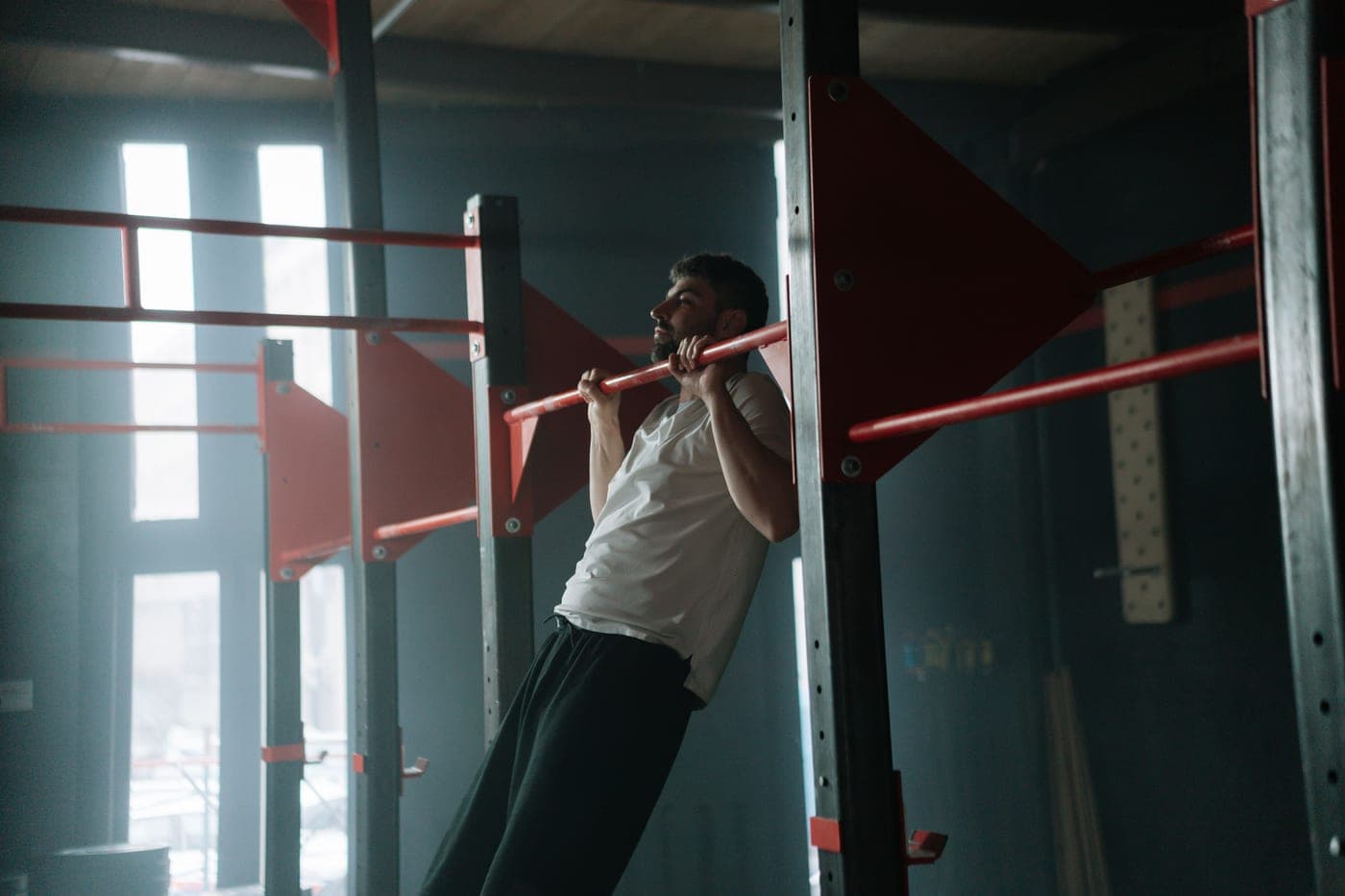
The doorway bar everyone copies: three grips, a 300 lb rating, fits a 24–32 in. door with trim up to 3.5 in., and it leaves with you when the lease ends.
Best for
A first bar in a standard apartment doorway
Pros
- Fits the most common US interior door range and trim depth without tools
- Three grip positions (wide, narrow, neutral) on a bar this cheap is rare
- Flips to the floor for push-ups and dips — one piece of gear, four movements
Cons
- The leverage design needs a door with trim on both sides; flat, trimless frames won't hold it
- Grip width is fixed — taller lifters may find the wide grip a touch narrow
Specs from Iron Gym — Total Upper Body Workout Bar listing (door width, trim, load).
Key specs
- Length
- 41 in. loop
- Assistance
- #1 red 10–35 lb to #5 blue 65–175 lb
- Widths
- 1/2 in. to 2.5 in.
Scores · editorial, out of 10
- Assistance range
- 10
- Material & safety
- 8
- Sizing clarity
- 9
- Bar compatibility
- 10
- Value
- 8
Pick 2 · Assistance bands
WODFitters Pull-Up Assistance Bands (set)
WODFitters
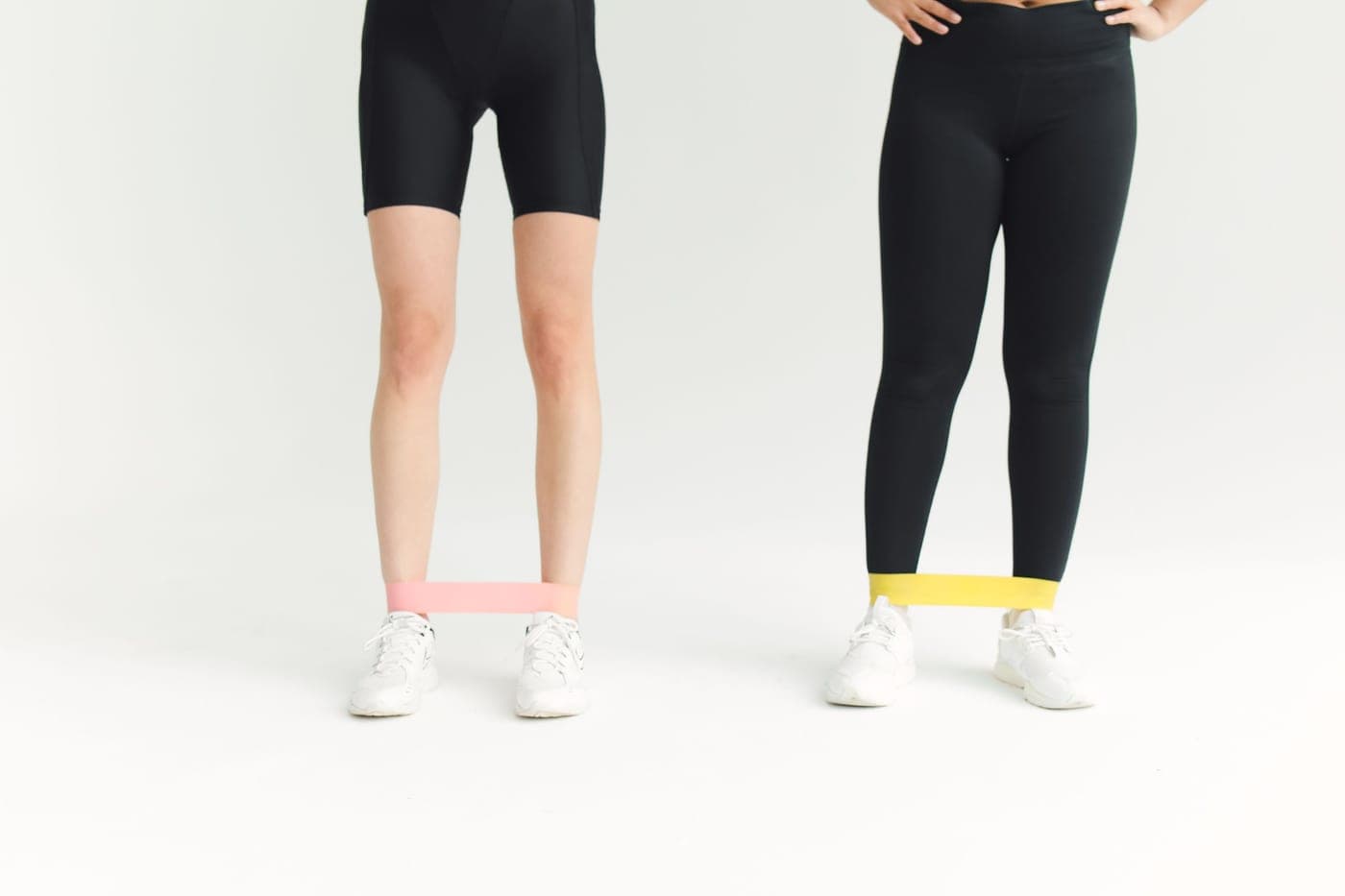
The standard 41 in. loop bands with a clearly published range — red 10–35 lb up to blue 65–175 lb — sold as sets so you can step down assistance as you get stronger.
Best for
Anyone working toward a first pull-up who wants a progression, not one band
Pros
- Published resistance per color, so you can plan the step-down from green to red
- Sets of 4 or 5 cover a 200 lb beginner through to a light-assist finisher
- Natural latex, 41 in. — fits any doorway bar or tower
Cons
- Latex — not for latex allergies, and it degrades in sunlight
- The thickest bands can snap a foot out from under you if you slip; step in carefully
Specs from WODFitters — Resistance Bands (length, resistance by color, widths).
Key specs
- Size
- 11.8 × 5.4 × 4.3 in.
- Handles
- 1.5 in. acacia
- Rated load
- 300 lb
Scores · editorial, out of 10
- Height & stability
- 8
- Grip & material
- 9
- Footprint & storage
- 9
- Rated load
- 6
- Value
- 9
Pick 3 · Parallettes
Yes4All Wooden Parallettes (12 in.)
Yes4All
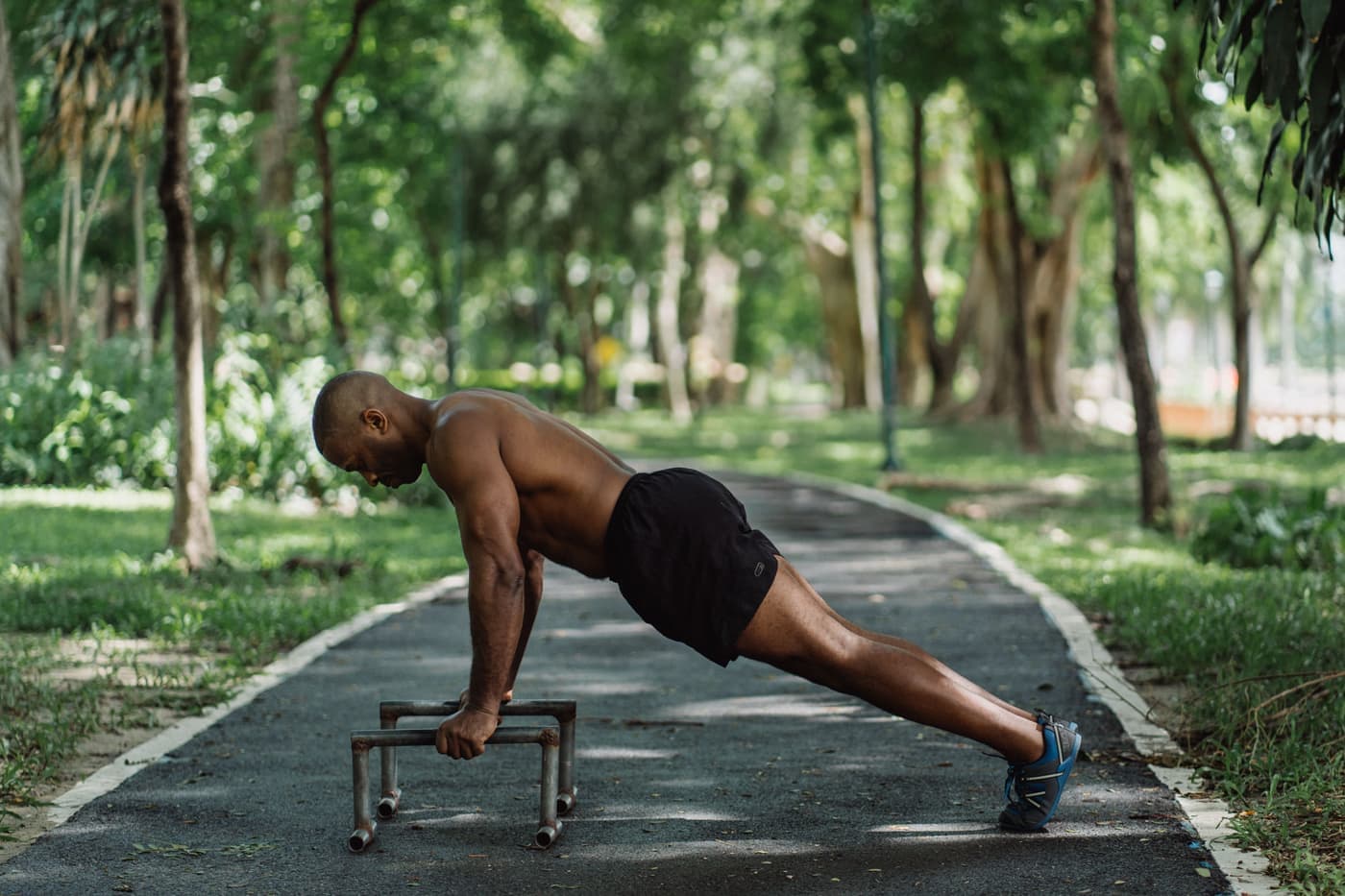
Acacia hardwood parallettes about 11.8 in. long, 4.3 in. high, 1.5 in. handles, 300 lb capacity, with anti-skid pads — a solid-wood alternative to plastic push-up bars.
Best for
Push-ups, L-sits and handstand practice on a budget, in wood
Pros
- Solid acacia with a hexagon-braced base — lighter than steel, stiffer than plastic
- 1.5 in. handle diameter builds grip
- 20 in. and 24 in. lengths also sold for wider hand positions
Cons
- 300 lb rating is the lowest here — fine for bodyweight, not for a vest
- Wood and sweat: wipe them down or the finish dulls
Specs from Yes4All — Wooden Parallettes listing (dimensions, handle, capacity).
FAQ
Questions readers ask
Is bodyweight training enough for a beginner?
More than enough. For the first six to twelve months, scaling variations of six movement patterns provides all the progression most people can absorb, with no equipment beyond something to pull on.
How many days a week should a beginner do bodyweight training?
Three non-consecutive days, running the same session each time. Frequency on the same movements builds skill faster than spreading different exercises across more days.
How do you progress bodyweight exercises without adding weight?
Change leverage: raise the feet, lower the hands, move to one limb, or slow the tempo. Each of those makes the same pattern harder without a single plate.
What bodyweight exercises should a beginner start with?
One per pattern: an incline push-up, an inverted row, a box squat, a hip bridge, a plank and a suitcase carry. That is a complete session for someone starting from nothing.
How long until you see results from bodyweight training?
Strength changes are usually noticeable within four to six weeks — more reps, harder variations. Visible changes depend on far more than training and take longer.
Related
Keep reading
- Best bodyweight training equipment
The five pieces, in buying order.
- How to get your first pull-up
The pull pattern, in detail.
- Conditioning workouts at home
The other half of a week.
- Gymnastic rings for beginners
Where rows and dips get comfortable.
- Apartment gym setup
Where to put all of it in a rental.
Sources