Guide · Conditioning
What size plyo box should I get? Lower than you think — here's the test
The right box is the one you land on with a flat foot and a quarter squat, not the one you can barely reach. The landing test, the two 3-in-1 sizes, step-up and box-squat heights by your height, and why a 30-inch box is a ceiling, not a target.
Rope & Rep is reader-supported. Product links go through our affiliate resolver and we may earn a commission from qualifying purchases at no cost to you. Prices are the retailer's and change — every button opens the live price on Amazon rather than showing a stale number.
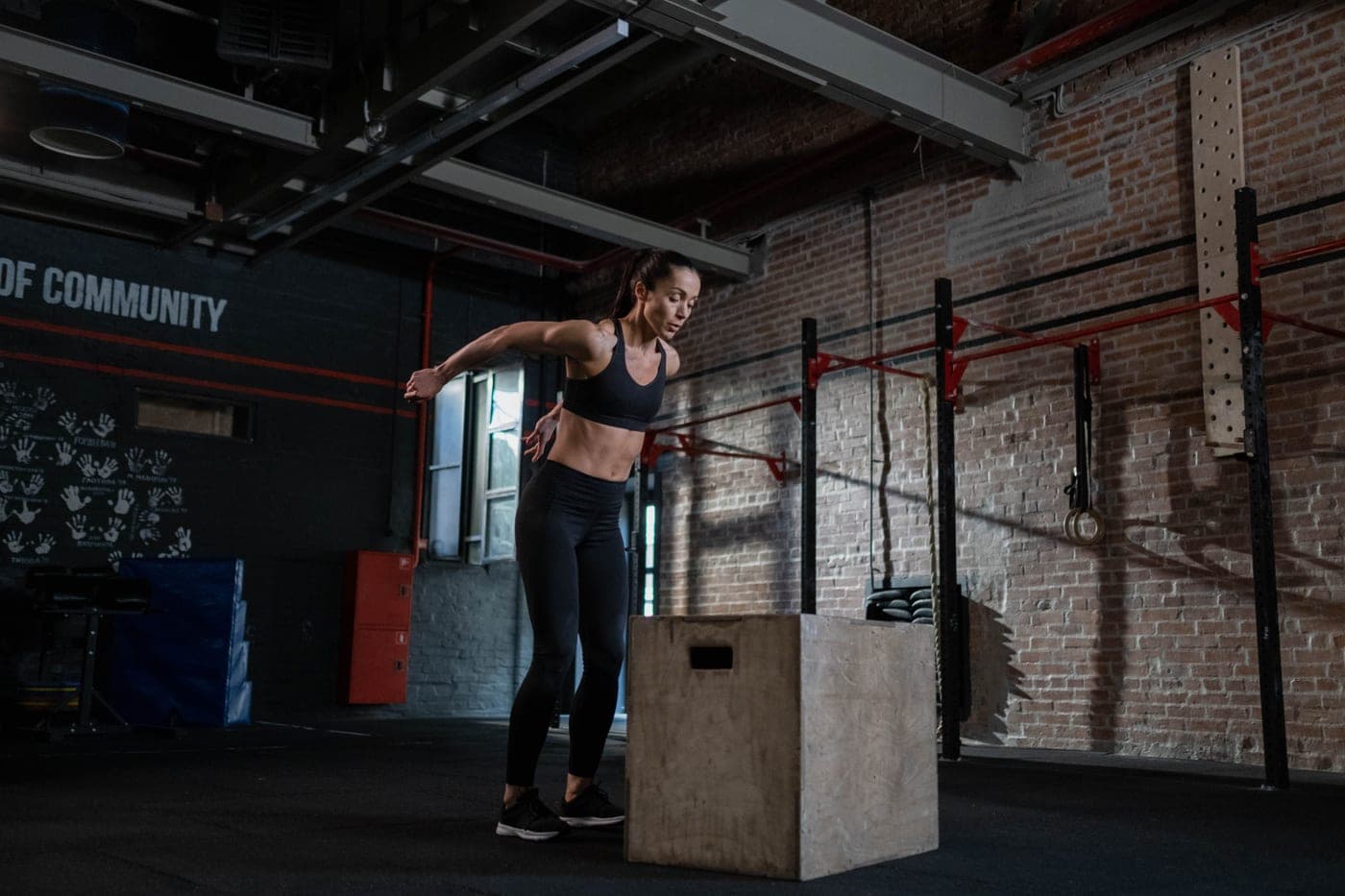
A woman performing a box jump in an industrial-style gym. Licensed stock photograph of the category — not the specific product.
The landing test
A box jump trains the hips and legs to produce power. The measure of that power is how high your hips rise, not how high your feet get — and feet can be tucked to reach a box the hips never got near. That is why the highest box you can “make” is the wrong box: you land in a deep squat with your knees at your chest, and the landing is a fall. The right box is the one you can land on with a flat foot, hips no lower than a quarter squat, and stand up out of easily. For most adults new to jumping, that is 16–20 in. For someone athletic, 24. For a trained jumper, 30.
Which 3-in-1 box
| Box | Sides | Jumps for | Step-ups / box squats | Bench |
|---|---|---|---|---|
| 16 / 20 / 24 in. | 3 | Beginners (16–20) to athletic (24) | Ideal — 16 and 20 are the useful heights | Low |
| 20 / 24 / 30 in. | 3 | Athletic (20–24) to trained (30) | 20 works; 24 and 30 are too tall for most | Standard |
If you don't already jump 24 in. cleanly, buy the 16/20/24 — it has the heights you'll use for a year, and the 16 in. side is the right step-up and box-squat height for most people. The 20/24/30 is the box for someone who has outgrown it. The plyo box roundup covers both, and foam vs wood covers the edge.
Step-up and box-squat heights by your height
| Your height | Step-up (knee height) | Box squat (parallel) | Bench for split squats |
|---|---|---|---|
| 5 ft 2 in. | 16 in. | 14–16 in. | 16 in. |
| 5 ft 6 in. | 16–18 in. | 16 in. | 16–18 in. |
| 5 ft 10 in. | 18–20 in. | 16–18 in. | 18–20 in. |
| 6 ft 2 in. | 20 in. | 18–20 in. | 20 in. |
Progression, without buying a taller box
- Land softer and quieter at the same height.
- Jump from a still start (no arm swing), then from a seated start.
- Add a weighted vest for step-ups, not for jumps.
- Move to single-leg step-ups and lateral step-ups.
- Only then, the next side of the box.
Why not a 36 in. box
Because the marginal training effect from 30 to 36 in. is small and the cost of a miss is a shin on a 36 in. edge. At home, alone, a 30 in. box is a sensible ceiling; the power you want comes from jumping better at 24, not from reaching 36.
Picks
The two sizes
The 16/20/24 box most beginners should buy, and the 20/24/30 soft box for people who already jump.
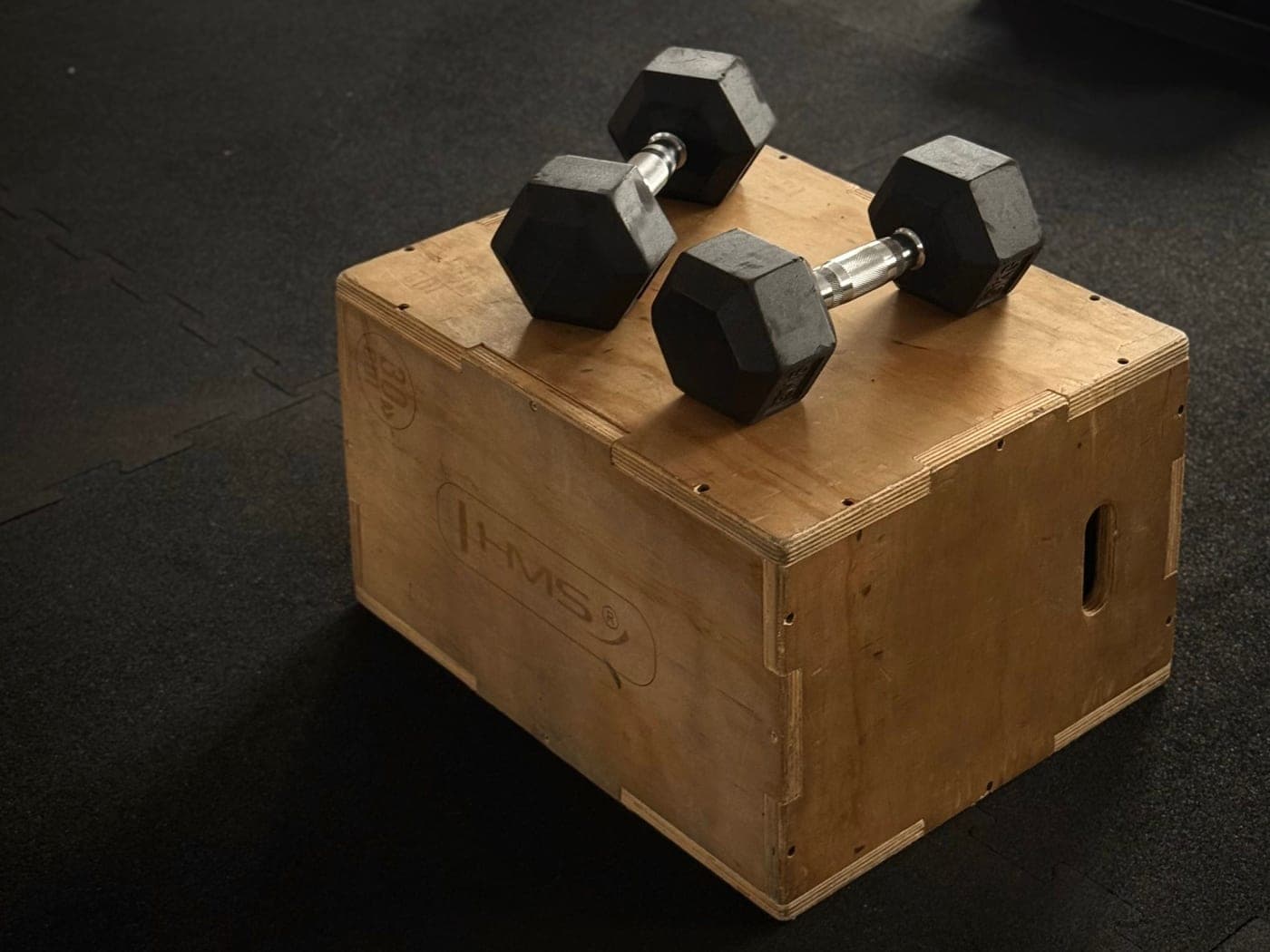
Key specs
- Heights
- 16 / 20 / 24 in.
- Surface
- Non-slip plywood
- Rated load
- 450 lb
Scores · editorial, out of 10
- Heights offered
- 8
- Surface (shin-safe vs load-bearing)
- 6
- Footprint & stackability
- 9
- Rated load
- 9
- Value
- 10
Pick 1 · Plyo boxes
Yes4All 3-in-1 Wooden Plyo Box (24 × 20 × 16 in.)
Yes4All
A plywood puzzle-joint box in 16, 20 and 24 in. heights, 450 lb rating, about 34 lb — the cheapest real plyo box and the right heights for someone starting box jumps.
Best for
A first box for step-ups, box squats and low jumps on a budget
Pros
- 16 in. low side is the honest starting height most beginners need
- Puzzle joints and internal bracing assemble without tools; ships flat
- Doubles as a bench for dips and a platform for elevated push-ups
Cons
- A wood edge will cut a shin on a missed jump — jump conservatively
- Plywood on a concrete floor slides; put it on a mat
Specs from Yes4All — 3-in-1 Wooden Plyo Box 24×20×16 listing (heights, capacity, weight).
Key specs
- Heights
- 20 / 24 / 30 in.
- Surface
- EVA foam over wood core, vinyl cover
- Rated load
- 440 lb
Scores · editorial, out of 10
- Heights offered
- 10
- Surface (shin-safe vs load-bearing)
- 10
- Footprint & stackability
- 7
- Rated load
- 9
- Value
- 8
Pick 2 · Plyo boxes
Yes4All 3-in-1 Soft Plyo Box (30 × 24 × 20 in.)
Yes4All
A foam-padded box with a wood core: three heights (20, 24, 30 in.) in one 64 lb unit, vinyl cover, 440 lb rating — the box that won't take skin off a shin when you miss.
Best for
Box jumps at home where a missed rep on a wood edge is the real risk
Pros
- Shin-safe foam edges; a wood core keeps it from squashing under step-ups
- Three heights from one box — 20 in. for beginners, 30 in. later
- Vinyl grips shoes and wipes clean; no assembly
Cons
- 64 lb and a 30 × 24 in. footprint — this is a permanent resident of a garage corner
- Foam rounds the top edge, so it's slightly less precise for box squats than wood
Specs from Yes4All — 3-in-1 Soft-Padded Plyo Box listing (heights, construction, capacity).
FAQ
Questions readers ask
What size plyo box should a beginner get?
A 16/20/24 in. 3-in-1 box. Start jumping at 16 or 20 with a flat-foot landing, and use 16 for step-ups and box squats.
Is a 24 inch box jump good?
For most adults, 24 in. with a flat-foot, quarter-squat landing is a solid athletic standard. Landing on a 24 in. box in a deep squat isn't.
What height plyo box for step-ups?
Knee height — 16–20 in. for most adults. Higher than the knee shifts the work to a hip hike and loses the point.
Is a plyo box worth it for a home gym?
If you jump, do step-ups and split squats, or want a bench-height platform in a garage, yes. In an apartment the stairs or a sturdy step cover most of it.
Related
Keep reading
- Best plyo boxes
Both sizes, soft and wood, ranked.
- Foam vs wood plyo boxes
What a miss costs on each.
- Conditioning workouts at home
Box jumps in a weekly plan.
- Garage gym essentials
The box as the garage bench.
Sources