Comparison · Conditioning
Foam vs wood plyo box: foam for the jump you miss, wood for everything else
A wood box is cheaper, lighter, stackable and precise. A foam box forgives the missed jump that a wood edge punishes. Which one depends on whether you jump — here is the comparison and one of each.
Rope & Rep is reader-supported. Product links go through our affiliate resolver and we may earn a commission from qualifying purchases at no cost to you. Prices are the retailer's and change — every button opens the live price on Amazon rather than showing a stale number.
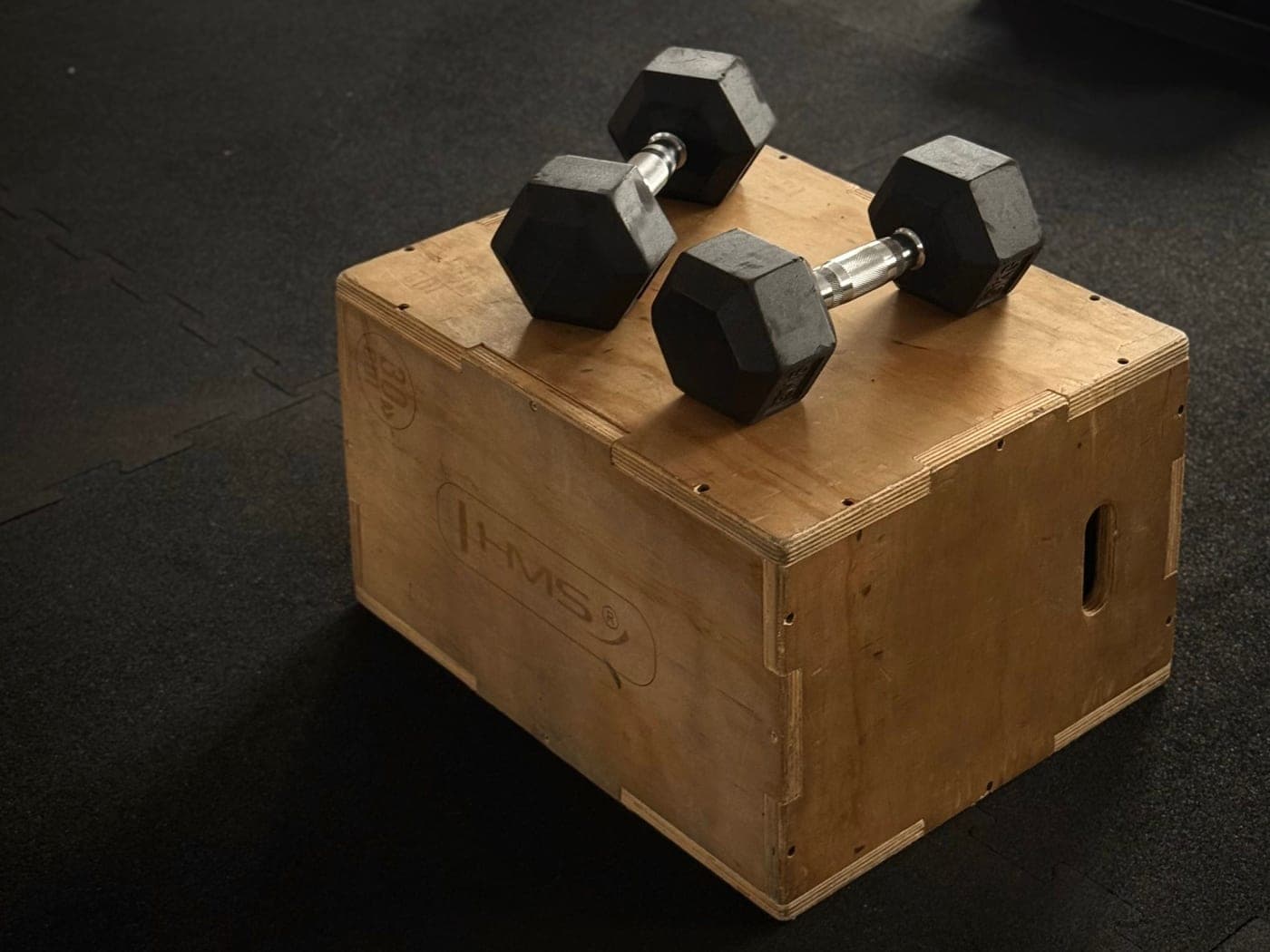
Hex dumbbells resting on a wooden plyo box in a gym. Licensed stock photograph of the category — not the specific product.
The missed jump
This is the comparison. A box jump you don't quite make means a shin meeting the top edge of the box at speed. On a plywood box that is a cut and a bruise that lasts a month; on a foam-over-wood box it is a bruise; on an all-foam box it is nothing. Nobody plans to miss, and everyone who jumps near their limit eventually does. If jumping is the point of the box, that edge is worth the extra weight and money.
Side by side
| Soft (foam over wood core) | Wood (plywood) | |
|---|---|---|
| Missed jump | Bruise at worst | Cut shin |
| Heights (as sold) | 20 / 24 / 30 in. | 16 / 20 / 24 in. (and 30/24/20) |
| Rated | 440 lb | 450 lb |
| Weight | 64 lb | ~34 lb |
| Step-up / box squat precision | Good; foam rounds the edge slightly | Exact |
| Stability under a heavy step-up | Wood core holds | Solid |
| Stacking | Slides; don't jump onto a stack | Stacks cleanly |
| Assembly | None | Puzzle joints, no tools |
| Bench use | Fine, soft top | Fine, hard top |
| Price | More | Less |
Precision: where wood wins
A box squat needs a consistent height to sit to; a step-up needs an edge you can feel with your foot. Foam compresses a little under load and rounds the edge, which is exactly what makes it safe to miss and slightly vaguer to stand on. For a lifter using the box as a bench-height reference and rarely jumping, wood is the better tool and half the price.
All-foam vs foam-over-wood
A third option: dense foam with no wood core (Titan's heavy foam box). Softest landing, no edge at all, heavier and lower rated (330 lb), and it compresses more under a step-up. It is the box for a nervous first-time jumper on a concrete floor. The plyo box roundup ranks all three types.
Height is the other safety decision
The box type decides what a miss costs; the box height decides how often you miss. Most people should be jumping lower than they think — the rule is in what size plyo box should I get. A conservative jumper on a wood box is safer than a reckless one on foam.
Picks
One of each, same maker
Yes4All's soft box and its wood box — the price and edge difference is the whole story.
Key specs
- Heights
- 20 / 24 / 30 in.
- Surface
- EVA foam over wood core, vinyl cover
- Rated load
- 440 lb
Scores · editorial, out of 10
- Heights offered
- 10
- Surface (shin-safe vs load-bearing)
- 10
- Footprint & stackability
- 7
- Rated load
- 9
- Value
- 8
Pick 1 · Plyo boxes
Yes4All 3-in-1 Soft Plyo Box (30 × 24 × 20 in.)
Yes4All
A foam-padded box with a wood core: three heights (20, 24, 30 in.) in one 64 lb unit, vinyl cover, 440 lb rating — the box that won't take skin off a shin when you miss.
Best for
Box jumps at home where a missed rep on a wood edge is the real risk
Pros
- Shin-safe foam edges; a wood core keeps it from squashing under step-ups
- Three heights from one box — 20 in. for beginners, 30 in. later
- Vinyl grips shoes and wipes clean; no assembly
Cons
- 64 lb and a 30 × 24 in. footprint — this is a permanent resident of a garage corner
- Foam rounds the top edge, so it's slightly less precise for box squats than wood
Specs from Yes4All — 3-in-1 Soft-Padded Plyo Box listing (heights, construction, capacity).
Key specs
- Heights
- 16 / 20 / 24 in.
- Surface
- Non-slip plywood
- Rated load
- 450 lb
Scores · editorial, out of 10
- Heights offered
- 8
- Surface (shin-safe vs load-bearing)
- 6
- Footprint & stackability
- 9
- Rated load
- 9
- Value
- 10
Pick 2 · Plyo boxes
Yes4All 3-in-1 Wooden Plyo Box (24 × 20 × 16 in.)
Yes4All
A plywood puzzle-joint box in 16, 20 and 24 in. heights, 450 lb rating, about 34 lb — the cheapest real plyo box and the right heights for someone starting box jumps.
Best for
A first box for step-ups, box squats and low jumps on a budget
Pros
- 16 in. low side is the honest starting height most beginners need
- Puzzle joints and internal bracing assemble without tools; ships flat
- Doubles as a bench for dips and a platform for elevated push-ups
Cons
- A wood edge will cut a shin on a missed jump — jump conservatively
- Plywood on a concrete floor slides; put it on a mat
Specs from Yes4All — 3-in-1 Wooden Plyo Box 24×20×16 listing (heights, capacity, weight).
FAQ
Questions readers ask
Are foam plyo boxes better than wood?
For jumping, yes — a missed rep hits foam instead of a plywood edge. For step-ups, box squats and bench use, wood is cheaper, lighter and more precise.
Can you do box jumps on a wooden box?
Yes, at conservative heights with a full-foot landing. Near your max height, a foam edge is the safer choice.
Do soft plyo boxes hold weight?
Foam-over-wood boxes have a wood core rated 400–440 lb; all-foam boxes are rated around 330 lb and compress a little under a heavy step-up.
Which plyo box is best for beginners?
A 16/20/24 wood box if you'll step up and jump low; a soft 20/24/30 box if jumping is the goal and you'll push the height.
Related
Keep reading
- Best plyo boxes
Soft, wood and foam, ranked.
- What size plyo box should I get?
Height by ability.
- Garage gym essentials
The box as the garage bench.
- Conditioning workouts at home
Box work in a weekly plan.
Sources