Guide · Training
Conditioning workouts at home, including the quiet ones
Five sessions, each with an honest work-to-rest ratio and a version that doesn't shake the ceiling below you. Pick by what you own and how much noise you can afford.
Rope & Rep is reader-supported. Product links go through our affiliate resolver and we may earn a commission from qualifying purchases at no cost to you. Prices are the retailer's and change — every button opens the live price on Amazon rather than showing a stale number.

A person doing a conditioning workout in a home garage space. Licensed stock photograph of the category — not the specific product.
The two jobs, and why people only do one
Home conditioning almost always collapses into “do something hard for twenty minutes,” three times a week, forever. It feels productive and it plateaus fast, because it trains one quality at one intensity. The two things worth building are different:
An aerobic base is built by long, genuinely easy work — 25 to 45 minutes where you could hold a conversation. It is boring, it is most of the benefit, and it is the part people skip. It raises the ceiling on everything else and costs almost nothing in recovery.
High-intensity capacity is built by short, hard intervals with real rest. Two sessions a week is plenty; three is where sleep and strength training start to suffer.
Five sessions
1. The rope base session — 20 to 30 minutes, quiet-ish
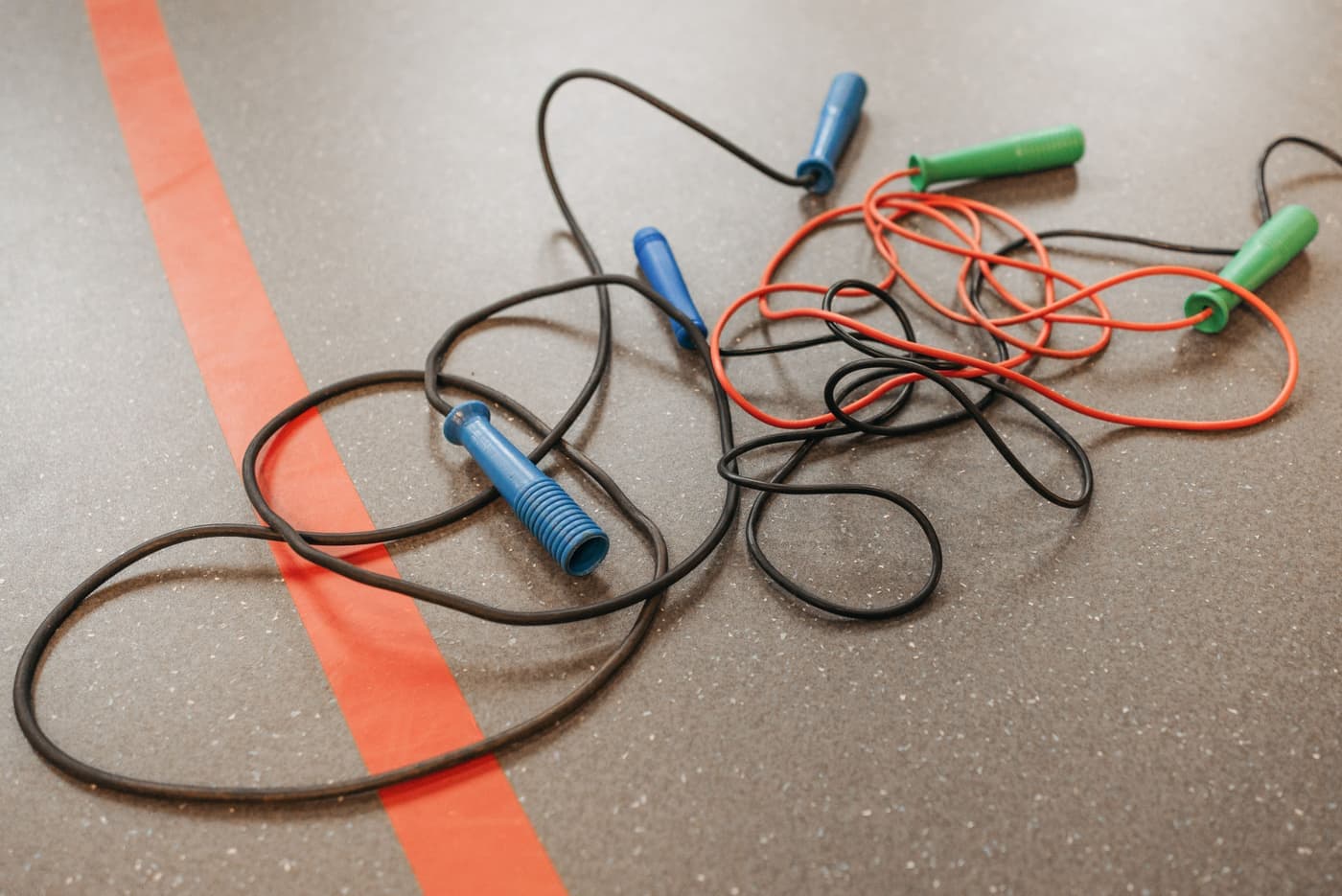
Skip at an easy pace for 3 minutes, rest 30 seconds, repeat 6 to 8 times. The pace should be one you could hold for ten minutes if you had to. On a mat this is the quietest impact work available, and it is the single best return on a $15 piece of equipment in home fitness. New to it? The beginner rope workout starts shorter.
2. The kettlebell session — 15 minutes, zero jumping
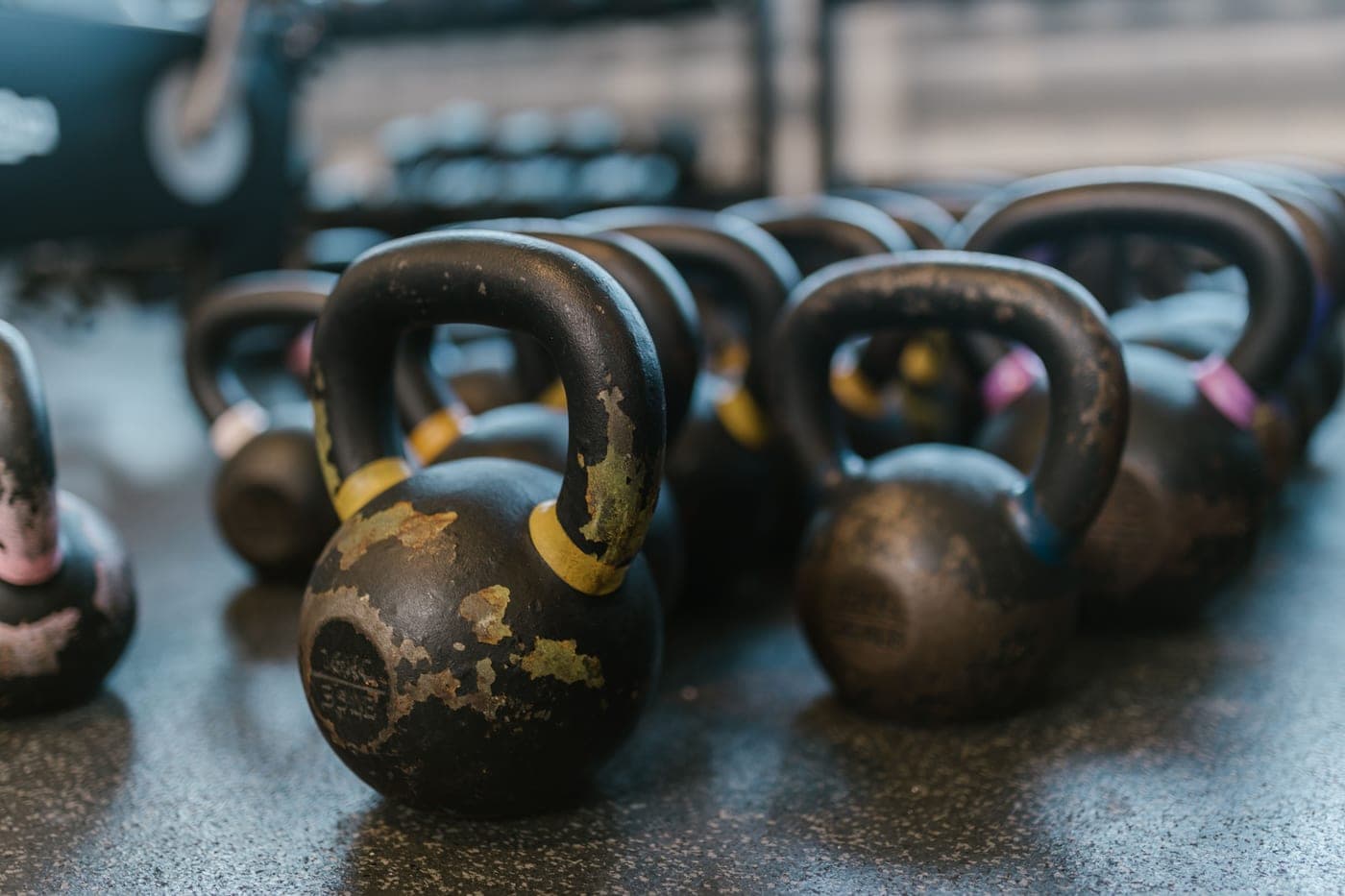
On the minute, every minute, for 15 minutes: 10 swings, then rest for whatever is left of the minute. That rest shrinks as you tire, which is the whole design. It is the most conditioning-per-minute in this list and it makes no impact noise at all as long as you set the bell down rather than drop it. Heavier bell, fewer reps; lighter bell, more.
3. The battle rope session — 10 minutes, maximal effort, no impact
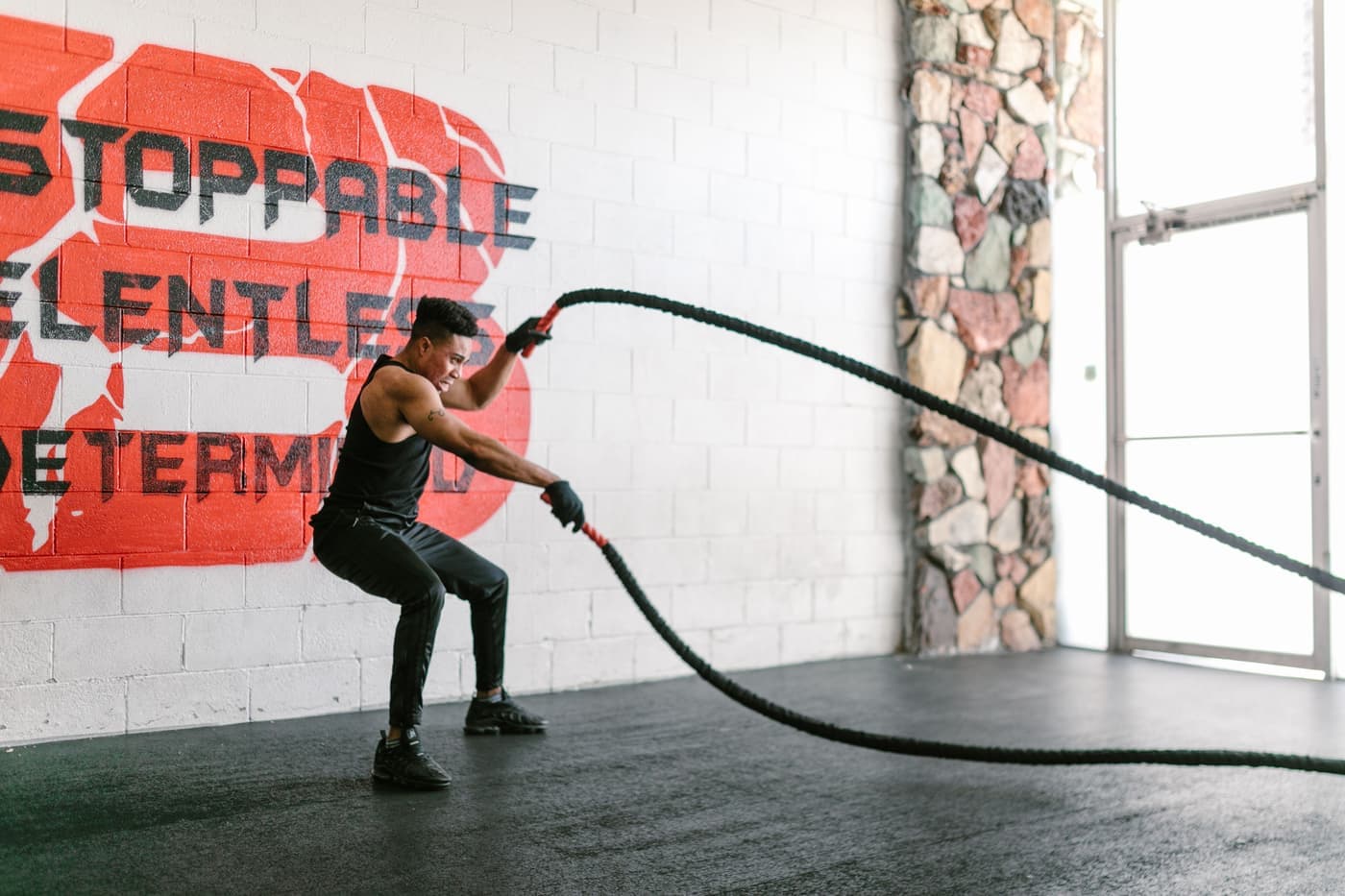
20 seconds of alternating waves, 40 seconds rest, 10 rounds. A 1:2 work-to-rest ratio at genuinely maximal effort. Battle ropes are the strange case in home conditioning: they produce a heart rate normally reserved for sprinting, with no landing, no eccentric load and no soreness. The constraint is space and an anchor — the length and anchor guide covers both before you buy.
4. The bodyweight circuit — 20 minutes, no equipment
Five movements, 40 seconds each, 20 seconds transition, four rounds: squats, push-ups, reverse lunges, mountain climbers, and a plank. Pace the first round so the fourth looks like the first. Everything here can be done on a mat on carpet, which makes it the fallback when you own nothing at all.
5. The footwork session — 12 minutes, athletic rather than exhausting
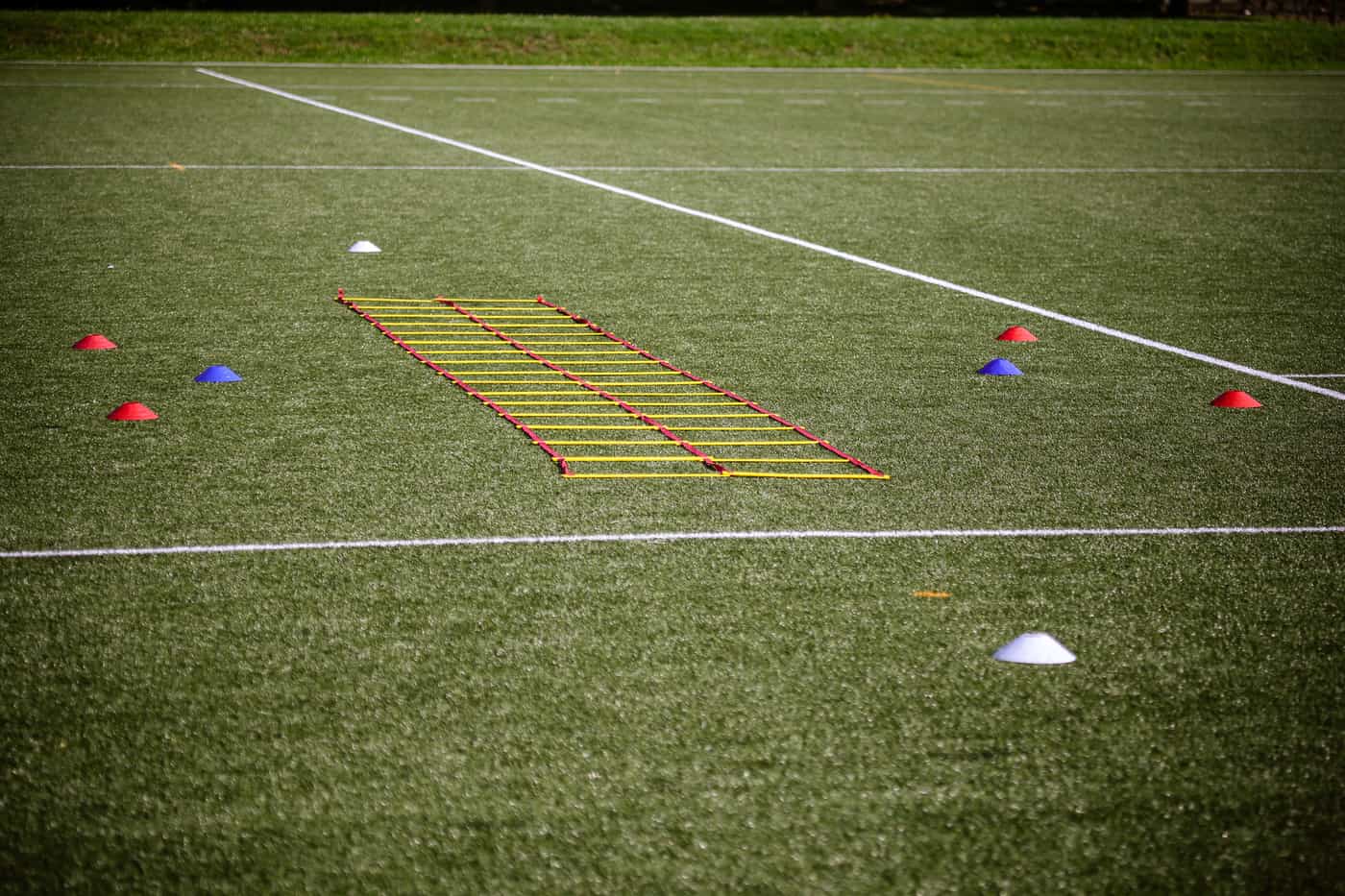
Agility ladder drills — in-outs, lateral shuffles, icky shuffle — 30 seconds on, 30 seconds off, for 12 rounds. This one trains foot speed and coordination more than the engine, and it is the best warm-up on the list. It needs about 15 feet of clear floor or a driveway. The ladder picks cover rung spacing and what survives concrete.
Choosing the work-to-rest ratio
| Ratio | Example | Trains | How often |
|---|---|---|---|
| 1:3 | 15 sec. hard, 45 sec. rest | Power, repeat sprint ability | 1–2 × week |
| 1:2 | 20 sec. hard, 40 sec. rest | High-intensity capacity | 2 × week |
| 1:1 | 30 sec. on, 30 sec. off | Capacity and lactate tolerance | 1–2 × week |
| 3:1 or continuous | 3 min. easy, 30 sec. rest | Aerobic base | 2–4 × week |
Making it quiet
If someone lives below you, rank the sessions by impact: battle ropes and kettlebells make essentially none, rope skipping on a mat makes a little, and anything with jumping or mountain climbers makes the most. A mat under everything solves more than technique does, because the noise travels through the floor structure rather than the air. Kettlebells in an apartment and skipping in an apartment go through the specifics.
How to know it is working
Track one repeatable test every four weeks and nothing else. Unbroken skips in three minutes, or swings in ten minutes, or how fast your heart rate drops in the minute after a hard interval. Any of them is a better progress signal than how tired a session made you feel — which is mostly a measure of how recently you slept.
Picks
Four tools, four kinds of session
A rope for the cheapest heart rate in the house, a bell for the sessions that also build strength, a battle rope for maximal effort with zero impact, and a ladder for the footwork days.
Key specs
- Cable
- 9 ft PVC-coated braided steel
- Bearings
- Dual ball bearing
- Handles
- 6 in. EVA memory foam
Scores · editorial, out of 10
- Rope type fit for the buyer
- 7
- Adjustability & sizing
- 8
- Bearings & handles
- 8
- Apartment-friendliness (floors, noise)
- 6
- Value
- 10
Pick 1 · Jump ropes
DEGOL Skipping Rope with Ball Bearings
DEGOL
The cheapest rope that isn't a toy: a 9 ft PVC-coated steel cable, dual ball bearings, and 6 in. memory-foam handles — the default first rope for an apartment.
Best for
A first rope for someone who has never jumped and wants to spend the least
Pros
- Ball bearings at this price mean the rope turns without twisting — the thing cheap ropes get wrong
- 9 ft cable trims to fit anyone up to about 6 ft 2 in.
- Long foam handles are forgiving for a beginner's grip
Cons
- A thin coated cable stings when you miss and frays on bare concrete — use a mat
- Light cable gives little feedback, so timing takes longer to learn than with a PVC or weighted rope
Specs from DEGOL — Skipping Rope with Ball Bearings listing (cable, bearings, handles).
Key specs
- Weights
- 5–80 lb in 5 lb steps
- Handle
- ~1.25 in. (35 mm), textured
- Base
- Flat
Scores · editorial, out of 10
- Handle & finish
- 7
- Weight increments / adjustability
- 9
- Footprint & floor safety
- 7
- Build (casting, seams)
- 8
- Value
- 10
Pick 2 · Kettlebells
Yes4All Solid Cast Iron Kettlebell
Yes4All
The one-piece cast iron bell sold in 5 lb steps from 5 to 80 lb with a 1.25 in. handle and a flat base — the default first kettlebell because you can buy exactly the size you need.
Best for
A first bell in the exact weight you need without paying for a coating you don't
Pros
- 5 lb increments across the whole range — 15, 20, 25, 30, 35 lb are all there for a beginner's first two bells
- One-piece casting, no welded handle to fail
- Flat base sits still for rows, push-ups and storage
Cons
- Painted (not powder-coated) finish on the basic version chips and can leave marks on a wood floor — use a mat
- 35 mm handle is a bit thick for smaller hands on high-rep snatches
Specs from Yes4All — Solid Cast Iron Kettlebell listing (weights, handle, base).
Key specs
- Rope
- 1.5 in. poly dacron, 30 / 40 / 50 ft
- Handles
- 8.66 in. heat-shrink, non-slip
- Anchor
- Strap kit included
Scores · editorial, out of 10
- Length vs space needed
- 8
- Material & sleeve
- 8
- Anchor solution for renters
- 9
- Value
- 9
Pick 3 · Battle ropes
Perantlb Poly Dacron Battle Rope 1.5 in. (30 / 40 / 50 ft)
Perantlb
A 1.5 in. poly-dacron rope in 30, 40 or 50 ft with a protective sleeve, 8.66 in. heat-shrink handles and an anchor kit in the box — the complete starter rope; buy the 30 ft for a small space.
Best for
A first battle rope with the anchor included, sized to a garage or yard
Pros
- Anchor strap kit included — loop it round a post, a tree or a rack foot without drilling
- Sleeved version resists the fraying that kills battle ropes on concrete
- 30 ft (15 ft of working room) is the right length for a one-car garage
Cons
- Poly dacron sheds fibers over time; keep it sleeved
- Rope weight isn't published by the maker — assume 15–25 lb by length
Specs from Perantlb — Poly Dacron Battle Rope with sleeve listing (lengths, handles, anchor kit).
Key specs
- Length
- 15 ft, 12 rungs (20-rung 25 ft also sold)
- Rung spacing
- Adjustable to 15 in.
- Included
- Carry bag
Scores · editorial, out of 10
- Fit for purpose
- 8
- Adjustability
- 10
- Durability
- 7
- Value
- 10
Pick 4 · Agility gear
Yes4All Agility Ladder (12 rungs, 15 ft)
Yes4All
A 12-rung, 15 ft nylon-strap ladder with plastic rungs you can slide up to 15 in. apart, carry bag included — the standard ladder, sized for a driveway.
Best for
A first ladder for footwork drills in a driveway or hallway
Pros
- Adjustable rung spacing — tighten for quick feet, widen for bounding
- 15 ft fits a two-car driveway or a long hallway
- Sold in combo sets with cones, hurdles and stakes
Cons
- Loose rungs slide out of position if you catch one
- Nylon straps tangle in the bag — roll it, don't stuff it
Specs from Yes4All — Agility Ladder listing (length, rungs, spacing, bag).
FAQ
Questions readers ask
What is the best conditioning workout at home?
For most people, easy rope skipping for the aerobic base plus one hard interval session a week — kettlebell swings on the minute or battle rope intervals. Both need almost no space and neither requires jumping if noise is a concern.
How often should you do conditioning?
Two to four easy base sessions and one or two hard sessions a week. More hard sessions than that usually costs you strength progress and sleep quality.
How can I do cardio in an apartment without disturbing neighbors?
Kettlebell swings and battle rope waves make essentially no impact noise. Rope skipping on a thick mat is the next quietest. Avoid jumping movements on bare floor entirely.
Is a jump rope enough for cardio?
Yes for the aerobic base and for intervals, as long as you vary the pace rather than skipping at one speed. It does not load the legs the way a sled or hill does.
Related
Keep reading
- Jump rope workout for beginners
Where the rope sessions start.
- One kettlebell workout for beginners
The swing session, taught properly.
- Best battle ropes
Maximal effort with zero impact.
- Battle ropes vs jump rope
Which one to buy if you only buy one.
- Bodyweight training for beginners
The strength half of the week.
Sources
- —DEGOL — Skipping Rope with Ball Bearings listing (cable, bearings, handles) · amazon.com
- —Yes4All — Solid Cast Iron Kettlebell listing (weights, handle, base) · amazon.com
- —Perantlb — Poly Dacron Battle Rope with sleeve listing (lengths, handles, anchor kit) · amazon.com
- —Yes4All — Agility Ladder listing (length, rungs, spacing, bag) · amazon.com