Best Jump Rope Mat · Jump Ropes
The best jump rope mats save the floor, the rope and the neighbor
Three mats — 1/4 in. PVC with a tapered edge, 1/4 in. foam sized for a corner, 5 mm rubber for concrete — compared on grip, size and what they do to landing noise. And why the yoga mat you already own isn't one of them.
Rope & Rep is reader-supported. Product links go through our affiliate resolver and we may earn a commission from qualifying purchases at no cost to you. Prices are the retailer's and change — every button opens the live price on Amazon rather than showing a stale number.
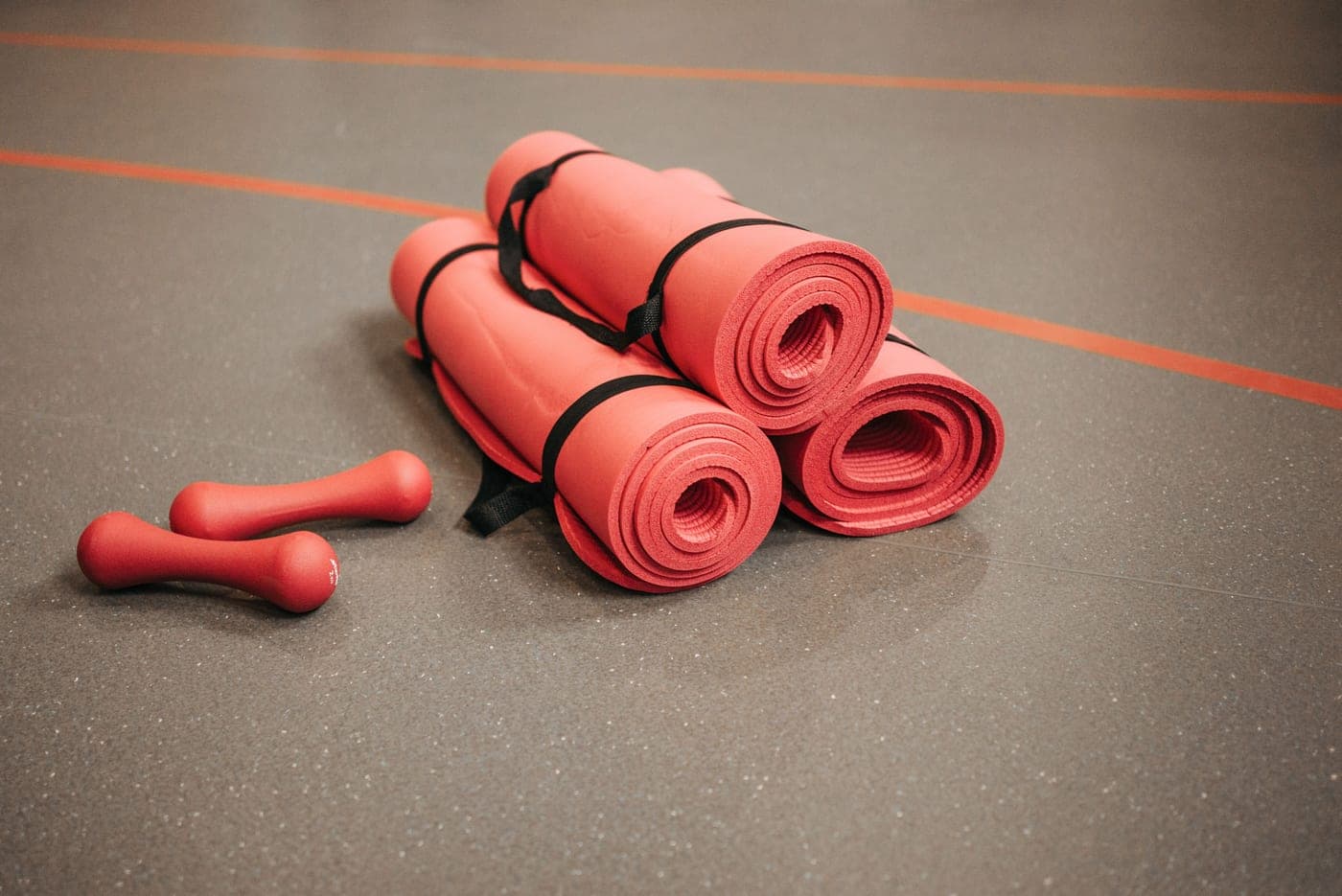
Rolled exercise mats and dumbbells on a gym floor. Licensed stock photograph of the category — not the specific product.
Quick picks
| # | Product | Best for | Score | Price |
|---|---|---|---|---|
| 1 | Crossrope Jump Rope Mat A 54 × 36 in., 1/4 in. PVC oval with a tapered edge so the rope doesn't catch — the mat designed around jumping, and the one to buy if the rope is the whole workout. | Daily jumpers, especially with weighted ropes, on a floor you don't own | 8.7 | |
| 2 | Elite Jumps Jump Rope Mat (Standard) A 48 × 36 in., 1/4 in. high-density vinyl-foam mat with a non-slip base — the right size for an apartment corner, with a Jumbo 86 × 43 in. version for a garage. | An apartment jumper who needs a mat that fits a small footprint and rolls away | 8.4 | |
| 3 | Cheete Jump Rope Mat 48 × 36 in. (5 mm) A 48 × 36 in. oval rubber mat, 5 mm thick, with a fabric top and a tire-pattern base — the budget mat that grips concrete and takes rope strikes without marking. | Jumping on a garage floor or balcony concrete on a budget | 8.6 |
Scores are our editorial judgment from published specs and mounting instructions, weighted for a renter or small-space trainer — not lab measurements. We have not tested these units.
What a jump rope mat is for
Three things, in the order most people discover them. It protects the rope — a PVC cord or a coated cable on bare concrete frays in weeks. It protects the floor — a rope strikes the ground every turn, and a weighted rope will mark laminate and dent a soft wood floor. And it protects the neighbor: landing noise travels through the floor structure more than through the air, and a dense 1/4 in. mat under the landing spot is the single most effective thing you can do about it.
Size, thickness and edge
| Mat | Size | Thickness | Material | Edge | Weight |
|---|---|---|---|---|---|
| Crossrope Jump Rope Mat | 54 × 36 in. oval | 1/4 in. (6.35 mm) | PVC | Tapered | 6.5 lb |
| Elite Jumps Mat (Standard) | 48 × 36 in. | 1/4 in. | High-density vinyl foam | Square | — |
| Cheete Jump Rope Mat | 48 × 36 in. oval | 5 mm | 3-layer rubber, fabric top | Rounded | — |
Size: 48 in. long covers a single-under swing for most people; 54 in. gives room to drift during double-unders. 36 in. wide is standard. Thickness: 1/4 in. (6–7 mm) is the sweet spot — enough to cushion and quiet a landing without feeling spongy; 5 mm is the minimum that still helps. Edge: the one spec people miss. A square edge catches a cable if you drift; the Crossrope's tapered edge lets the rope slide over it, which is why it is first.
Why not a yoga mat?
A yoga mat is 3–6 mm of soft foam designed for a stationary body. Under a rope it is too soft (the foot sinks and the ankle works harder), too narrow (24 in. — the rope hits the floor either side), too light (it walks across the floor), and the rope cuts its surface. It also does little for noise: what quiets a landing is density, not squish. A jump rope mat is denser, wider and heavier for exactly those reasons.
How much noise does a mat cut?
We haven't measured it, and the makers don't publish numbers, so here is the honest mechanical picture: a dense mat spreads the landing impulse over a longer time and a larger area, which lowers the peak force the floor structure sees — and it is peak force, not sound in the air, that a downstairs neighbor hears. A 1/4 in. dense mat plus low jumps plus a lighter rope is the combination that works; a mat alone under a 2 lb rope on a joisted floor is still a thump. The apartment guide has the whole strategy.
How this list was built
We compared published size, thickness, material and edge design, and scored on the mat rubric — floor protection and grip 30%, size for a rope 25%, storage 20%, durability 10%, value 15%. The Crossrope leads on edge design and size; the Elite Jumps is the apartment-corner pick and has a Jumbo version; the Cheete is the budget rubber mat for concrete. No mats tested.
The picks in detail
Every pick, reviewed
Key specs
- Size
- 54 × 36 in. oval
- Thickness
- 1/4 in. (6.35 mm) PVC
- Weight
- 6.5 lb
Scores · editorial, out of 10
- Floor protection & grip
- 10
- Size for a rope
- 10
- Rolls up & stores
- 7
- Durability
- 9
- Value
- 6
Pick 1 · Jump rope mats
Crossrope Jump Rope Mat
Crossrope
A 54 × 36 in., 1/4 in. PVC oval with a tapered edge so the rope doesn't catch — the mat designed around jumping, and the one to buy if the rope is the whole workout.
Best for
Daily jumpers, especially with weighted ropes, on a floor you don't own
Why it is #1. The tapered edge is the difference between a mat that snags the rope and one that doesn't; at 54 × 36 in. and 6.5 lb it also covers the most swing and stays put. The mat to own if the rope is the workout.
Pros
- Tapered edge — the rope cable slides over it instead of snagging, which is the usual mat failure
- 54 in. length covers a full-height jumper's swing with room to drift
- Dense PVC absorbs impact and rope strikes; protects hardwood and downstairs ears
Cons
- 6.5 lb and not the most compact roll for a small closet
- Costs more than a generic rubber mat of the same size
Specs from Crossrope — Jump Rope Mat (dimensions, thickness, weight, tapered edge).
Key specs
- Size
- 48 × 36 in. (Jumbo 86.5 × 43.5 in.)
- Thickness
- 1/4 in. high-density vinyl foam
- Base
- Non-slip
Scores · editorial, out of 10
- Floor protection & grip
- 8
- Size for a rope
- 9
- Rolls up & stores
- 9
- Durability
- 7
- Value
- 8
Pick 2 · Jump rope mats
Elite Jumps Jump Rope Mat (Standard)
Elite Jumps
A 48 × 36 in., 1/4 in. high-density vinyl-foam mat with a non-slip base — the right size for an apartment corner, with a Jumbo 86 × 43 in. version for a garage.
Best for
An apartment jumper who needs a mat that fits a small footprint and rolls away
The apartment size. 48 × 36 in. of 1/4 in. vinyl foam fits a corner and rolls away; the Jumbo (86.5 × 43.5 in.) covers a garage bay or two jumpers. Quieter under a PVC rope than hard rubber.
Pros
- The 48 in. standard is the smallest mat here that still covers a single-under swing
- Vinyl foam is quieter under a PVC rope than hard rubber
- Two sizes — buy the Jumbo for a garage or two jumpers
Cons
- Foam compresses under a 2 lb rope over time faster than PVC or rubber
- Square edges can catch a cable if you drift off the mat
Specs from Elite Jumps — Jump Rope Mat (sizes, thickness, material).
Key specs
- Size
- 48 × 36 in. oval
- Thickness
- 5 mm, three-layer rubber
- Base
- Tire-pattern grip
Scores · editorial, out of 10
- Floor protection & grip
- 9
- Size for a rope
- 8
- Rolls up & stores
- 8
- Durability
- 8
- Value
- 10
Pick 3 · Jump rope mats
Cheete Jump Rope Mat 48 × 36 in. (5 mm)
Cheete
A 48 × 36 in. oval rubber mat, 5 mm thick, with a fabric top and a tire-pattern base — the budget mat that grips concrete and takes rope strikes without marking.
Best for
Jumping on a garage floor or balcony concrete on a budget
For garage concrete. Tire-pattern rubber base that grips smooth concrete, a fabric top that takes cable strikes, 5 mm. The cheapest of the three and the one for outdoors.
Pros
- Tire-pattern rubber base stays put on smooth concrete better than foam
- Fabric top layer takes cable strikes; rubber middle absorbs landings
- Oval shape matches the rope's arc, so less mat goes unused
Cons
- 5 mm is thinner than the 1/4 in. mats — less cushion for a heavy rope
- Rubber has a smell out of the box; air it out a day
Specs from Cheete — Jump Rope Mat 48×36 (5 mm) listing (size, thickness, layers).
Buying guide
Which mat for which floor
- Apartment wood/laminate, neighbor below: Crossrope or Elite Jumps, 1/4 in., plus low jumps.
- Garage or balcony concrete: Cheete rubber, or the Crossrope if you jump heavy ropes.
- Carpet: a mat still helps — carpet grabs the rope. Any of the three.
Care
Wipe with water and mild soap, dry flat, store rolled with the top surface out. Keep PVC and foam mats out of direct sun.
FAQ
Questions readers ask
Do you need a mat to jump rope?
On concrete, on a wood or laminate floor you care about, or over a neighbor — yes. On a rubber gym floor or grass, no.
Can I jump rope on a yoga mat?
Not well: too soft, too narrow, too light, and the rope cuts it. A jump rope mat is denser, 36 in. wide and heavier for a reason.
What size jump rope mat do I need?
48 × 36 in. for single-unders in a corner; 54 × 36 in. or larger if you do double-unders and drift.
Does a jump rope mat reduce noise for downstairs neighbors?
It lowers the peak force the floor sees, which is what neighbors hear. Combined with low jumps and a lighter rope it works; a mat alone under a 2 lb rope on a joisted floor is still a thump.
Related
Keep reading
- Jump rope in an apartment
Noise, the hour, the rope and the mat, together.
- Best jump ropes
The rope to put on the mat.
- Kettlebells in an apartment
The same floor problem, with iron.
- Apartment gym setup
Where the mat lives in a 40 sq ft corner.
Sources