Guide · Jump Ropes
A jump rope workout for beginners: four weeks from three minutes to fifteen
Three sessions a week, six feet of floor, and a plan that starts embarrassingly small on purpose. The calves and shins set the pace — here is the week-by-week, the form cues, and the honest weight-loss note.
Rope & Rep is reader-supported. Product links go through our affiliate resolver and we may earn a commission from qualifying purchases at no cost to you. Prices are the retailer's and change — every button opens the live price on Amazon rather than showing a stale number.
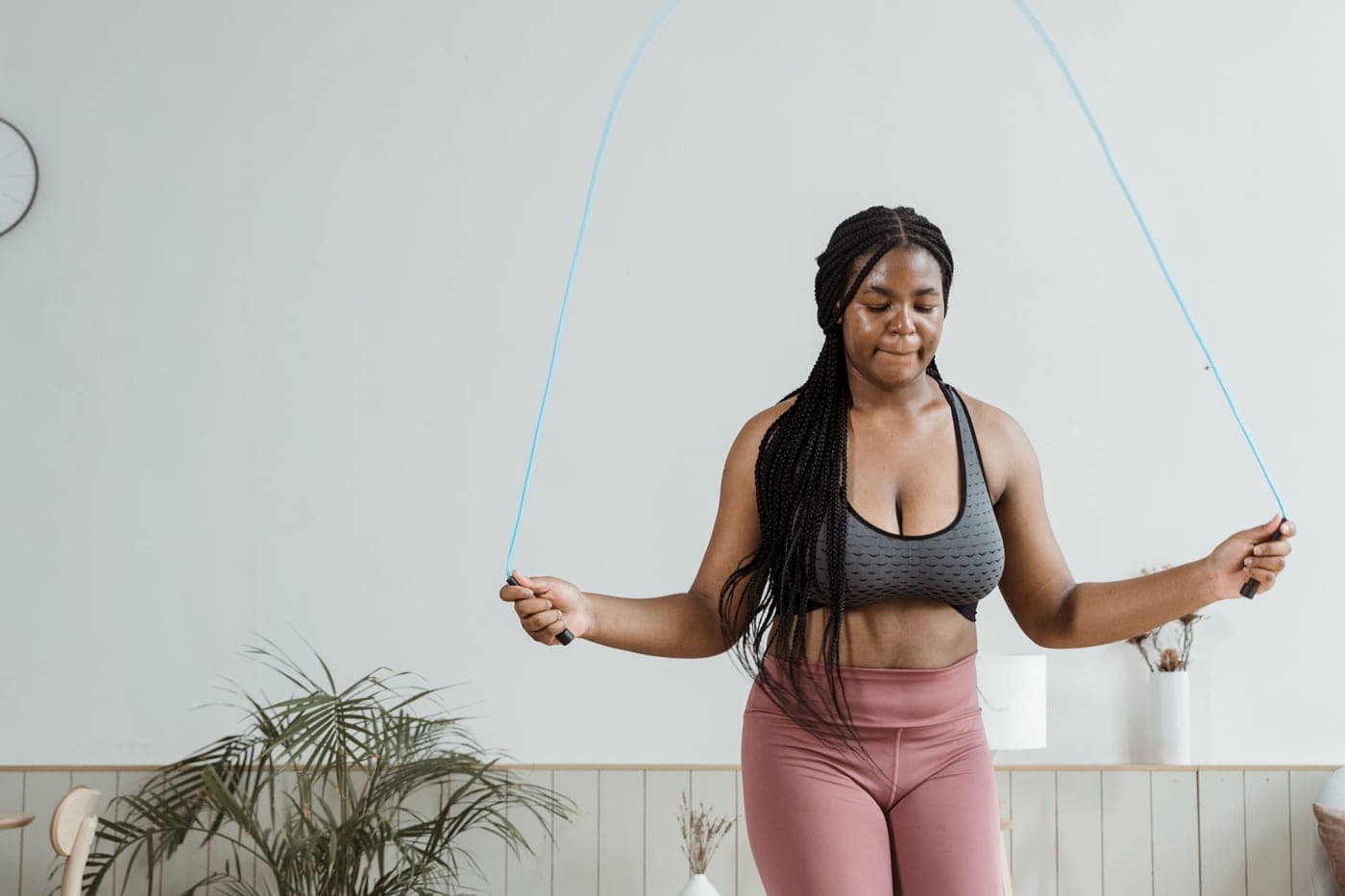
A woman in activewear jumping rope indoors. Licensed stock photograph of the category — not the specific product.
The four-week beginner plan · 4 steps
1
Week 1 — learn the turn (3 min/session)
Days 1–2: handles in one hand, turn the rope at your side and bounce to the rhythm. Days 3–7: single jumps in sets of 10, rest as needed, 3 minutes total per session, three sessions.
2
Week 2 — rounds (6 min)
30 seconds jumping, 30 seconds walking, six rounds. Misses are fine — reset and continue the clock. Three sessions.
3
Week 3 — longer rounds (9 min)
45 seconds on, 30 off, seven rounds. Add the boxer skip (weight shifts foot to foot) in two of the rounds. Three sessions.
4
Week 4 — the real workout (12–15 min)
60 seconds on, 30 off, eight to ten rounds. One round of high knees, one of side-to-side. Three sessions. This is the session you keep.
Why it starts so small
Skipping is two hundred small landings a minute on the calves and the Achilles tendon. Muscle adapts in days; tendon adapts in weeks. Almost every beginner who quits a rope quits because of shin or calf pain in week two, and almost all of that pain comes from doing fifteen minutes on day one. Three minutes on day one feels silly and is correct. Fifteen minutes on day twenty-one feels like a workout and is safe.
Form cues that fix most misses
- Elbows in, close to the ribs. The rope turns from the wrists, not the shoulders — big arm circles shorten the rope and it hits your feet.
- One inch off the floor. The rope is 5 mm thick. Jumping six inches is why you land hard and tire fast.
- Balls of the feet, heels kissing the mat. Never a flat-footed landing.
- Eyes ahead, not at your feet. Watching the rope makes you late.
- Size the rope. Handles to the armpits when you stand on the middle — see the length chart. Too long is the number-one cause of tripping.
The plan at a glance
| Week | Work / rest | Rounds | Total | Add |
|---|---|---|---|---|
| 1 | Sets of 10 jumps, rest as needed | — | 3 min | Rhythm drill days 1–2 |
| 2 | 30 s / 30 s | 6 | 6 min | — |
| 3 | 45 s / 30 s | 7 | 9 min | Boxer skip |
| 4 | 60 s / 30 s | 8–10 | 12–15 min | High knees, side-to-side |
After week four
Keep the 60/30 session and change one variable a week: more rounds (to 12), less rest (20 s), or a heavier rope for two rounds. When you can do 60 seconds without a miss, the double-under drills are the next skill; when you want it harder without more time, a weighted rope is the tool. Where the rope fits in a whole week of training is in conditioning workouts at home.
Flat feet, shins and knees
Flat feet don't stop you skipping; they mean the arch does less of the shock absorption, so the mat, cushioned shoes and low jumps do more of it. Start even smaller (two minutes) and add slower. Shin pain that arrives during the session and fades by morning is normal adaptation; shin pain that's there when you wake up is a sign to take three days off and halve the volume. Knees rarely complain about a low forefoot landing; if yours do, the jump is too high or the floor too hard.
Jump rope for weight loss — the honest note
Rope skipping is rated at 11.0 METs in the Adult Compendium — comparable to running a 6–7 mph pace — so fifteen minutes is a genuine chunk of daily energy expenditure. It is not a fat-loss trick: it is fifteen hard minutes, three times a week, that you can do in a hallway. Over months that consistency is the whole result. The comparison with running is in jump rope vs running.
Picks
The three things this plan needs
A rope you can feel, an easier rope if you keep tripping, and a mat.

Key specs
- Rope
- 5 mm PVC, string core, 10 ft
- Handles
- 5.5 in. polymer, dowel action
- Sizing
- Snap-lock cord ends
Scores · editorial, out of 10
- Rope type fit for the buyer
- 9
- Adjustability & sizing
- 9
- Bearings & handles
- 8
- Apartment-friendliness (floors, noise)
- 8
- Value
- 9
Pick 1 · Jump ropes
Elite Jumps Boxer Jump Rope 3.0
Elite Jumps
The classic boxer's rope done well: a 5 mm PVC cord with a string core, 10 ft to trim, 5.5 in. polymer handles with a smooth dowel, snap-lock ends for resizing — the rope that teaches rhythm.
Best for
Learning footwork and rhythm; a rope you can size yourself and use outdoors
Pros
- String-core PVC gives a steady, audible turn — the best feedback of any non-weighted rope here
- 10 ft cord fits anyone up to about 6 ft 3 in. before trimming
- Snap-lock ends make resizing reversible, unlike a cut PVC rope
Cons
- A dowel turns slower than a bearing; double-unders are possible but not its strength
- PVC on bare concrete wears — jump on a mat
Specs from Elite Jumps — Boxer Jump Rope 3.0 listing (cord, handles, sizing).
Key specs
- Ropes
- 1/4 lb + 1/2 lb, coated
- Handles
- Slim, fast-clip
- Sizing
- By height (S/M/L/XL)
Scores · editorial, out of 10
- Rope type fit for the buyer
- 10
- Adjustability & sizing
- 7
- Bearings & handles
- 8
- Apartment-friendliness (floors, noise)
- 10
- Value
- 6
Pick 2 · Jump ropes
Crossrope Get Lean Set (1/4 lb + 1/2 lb)
Crossrope
Two lightly weighted ropes (1/4 lb and 1/2 lb) on quick-clip handles, sold by height — the easiest rope to learn on because the weight keeps it taut, and it works on any surface.
Best for
A beginner who keeps tripping, or anyone who wants a rope they can feel without going heavy
Pros
- A 1/4 lb rope is slow and taut enough that beginners learn the timing in days, not weeks
- Fast-clip handles swap ropes in seconds; ropes are rated for any surface including concrete
- Lifetime warranty on the handles
Cons
- Sold in fixed lengths by height — not trimmable, so pick the size carefully
- Costs several times a PVC rope; the Get Strong set is the better value if you want heavy
Specs from Crossrope — Get Lean Jump Rope Set (contents, rope weights, sizing).
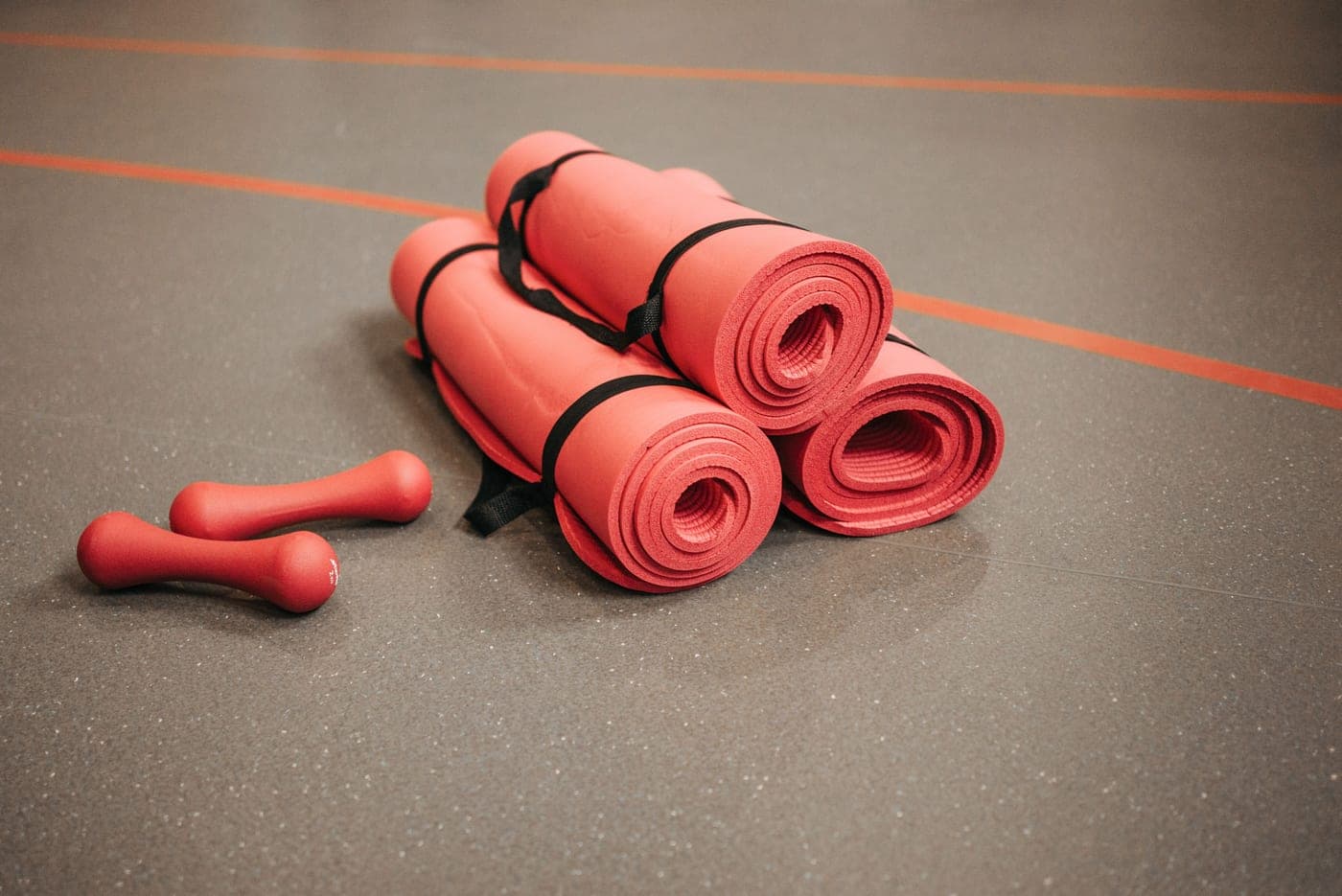
Key specs
- Size
- 54 × 36 in. oval
- Thickness
- 1/4 in. (6.35 mm) PVC
- Weight
- 6.5 lb
Scores · editorial, out of 10
- Floor protection & grip
- 10
- Size for a rope
- 10
- Rolls up & stores
- 7
- Durability
- 9
- Value
- 6
Pick 3 · Jump rope mats
Crossrope Jump Rope Mat
Crossrope
A 54 × 36 in., 1/4 in. PVC oval with a tapered edge so the rope doesn't catch — the mat designed around jumping, and the one to buy if the rope is the whole workout.
Best for
Daily jumpers, especially with weighted ropes, on a floor you don't own
Pros
- Tapered edge — the rope cable slides over it instead of snagging, which is the usual mat failure
- 54 in. length covers a full-height jumper's swing with room to drift
- Dense PVC absorbs impact and rope strikes; protects hardwood and downstairs ears
Cons
- 6.5 lb and not the most compact roll for a small closet
- Costs more than a generic rubber mat of the same size
Specs from Crossrope — Jump Rope Mat (dimensions, thickness, weight, tapered edge).
FAQ
Questions readers ask
How long should a beginner jump rope for?
Three minutes total in week one, six in week two, nine in week three, twelve to fifteen by week four — three sessions a week with a day between.
How many days a week should a beginner jump rope?
Three, with a rest day between. Calves and Achilles tendons need the day off more than lungs do.
Is 10 minutes of jump rope a day enough?
For conditioning, yes — ten hard minutes at 11 METs is a real session. For a beginner, build to it over three to four weeks rather than starting there.
Can you jump rope with flat feet?
Yes. Use a mat and cushioned shoes, keep jumps to an inch, start at two minutes and add slowly — the arch does less shock absorption, so everything else has to do more.
Related
Keep reading
- Best jump ropes for beginners
The rope this plan assumes.
- Jump rope length by height
Size it before day one.
- Jump rope in an apartment
Doing this plan over a neighbor.
- Conditioning workouts at home
The rope in a full weekly plan.
Sources
- —2024 Adult Compendium of Physical Activities — Conditioning exercise (rope skipping MET value) · pacompendium.com
- —Elite Jumps — Boxer Jump Rope 3.0 listing (cord, handles, sizing) · amazon.com
- —Crossrope — Get Lean Jump Rope Set (contents, rope weights, sizing) · crossrope.com
- —Crossrope — Jump Rope Mat (dimensions, thickness, weight, tapered edge) · crossrope.com