Best Slam Ball · Conditioning
The best slam balls, and the floor that decides which one you can buy
A slam ball is the cheapest way to train real power at home, and the single worst tool to own in a second-floor apartment. Four balls ranked on shell, weight range and floor manners, with the surface question answered first.
Rope & Rep is reader-supported. Product links go through our affiliate resolver and we may earn a commission from qualifying purchases at no cost to you. Prices are the retailer's and change — every button opens the live price on Amazon rather than showing a stale number.
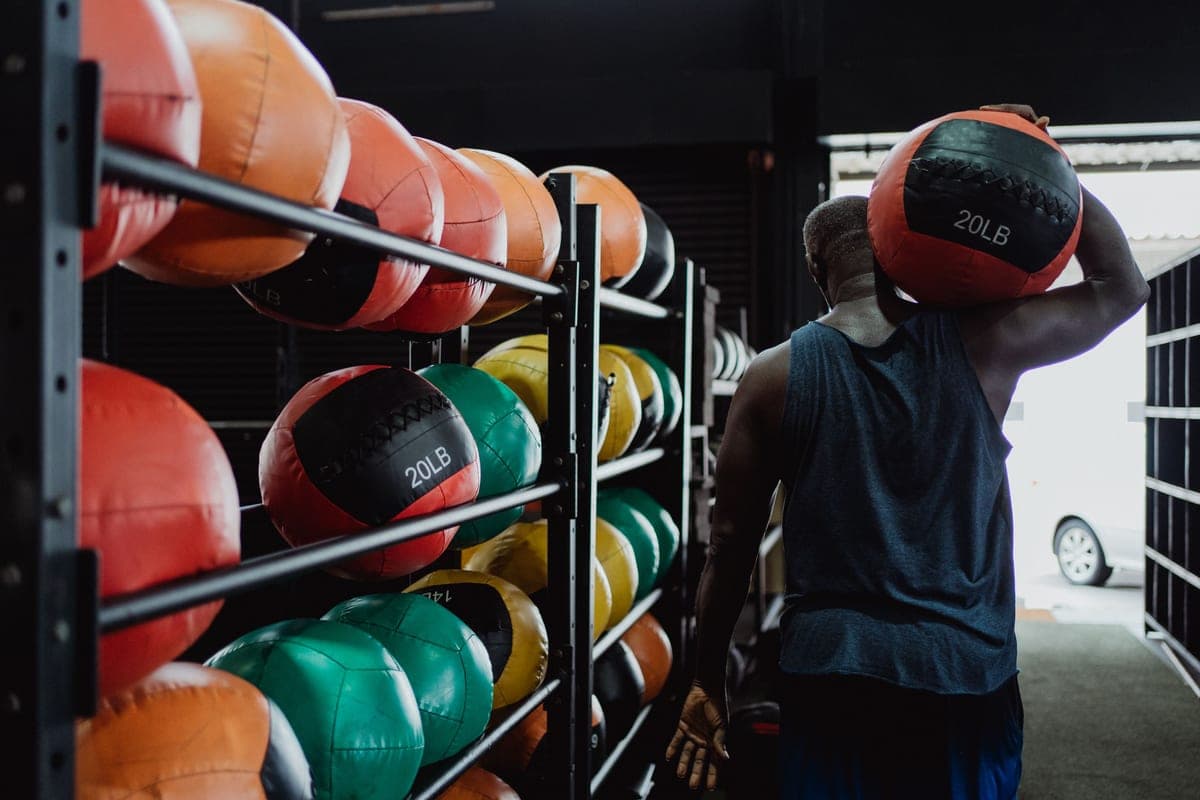
A man carrying a weighted ball past a rack of medicine balls in a gym. Licensed stock photograph of the category — not the specific product.
Quick picks
| # | Product | Best for | Score | Price |
|---|---|---|---|---|
| 1 | REP Fitness Slam Ball (5–70 lb) A sand-filled rubber-shelled ball in twelve weights from 5 to 70 lb with a stated 1-year home warranty — the widest range on this page and the shell least likely to give up on a concrete floor. | Buying one ball you will not outgrow, and slamming it on bare concrete | 8.8 | |
| 2 | 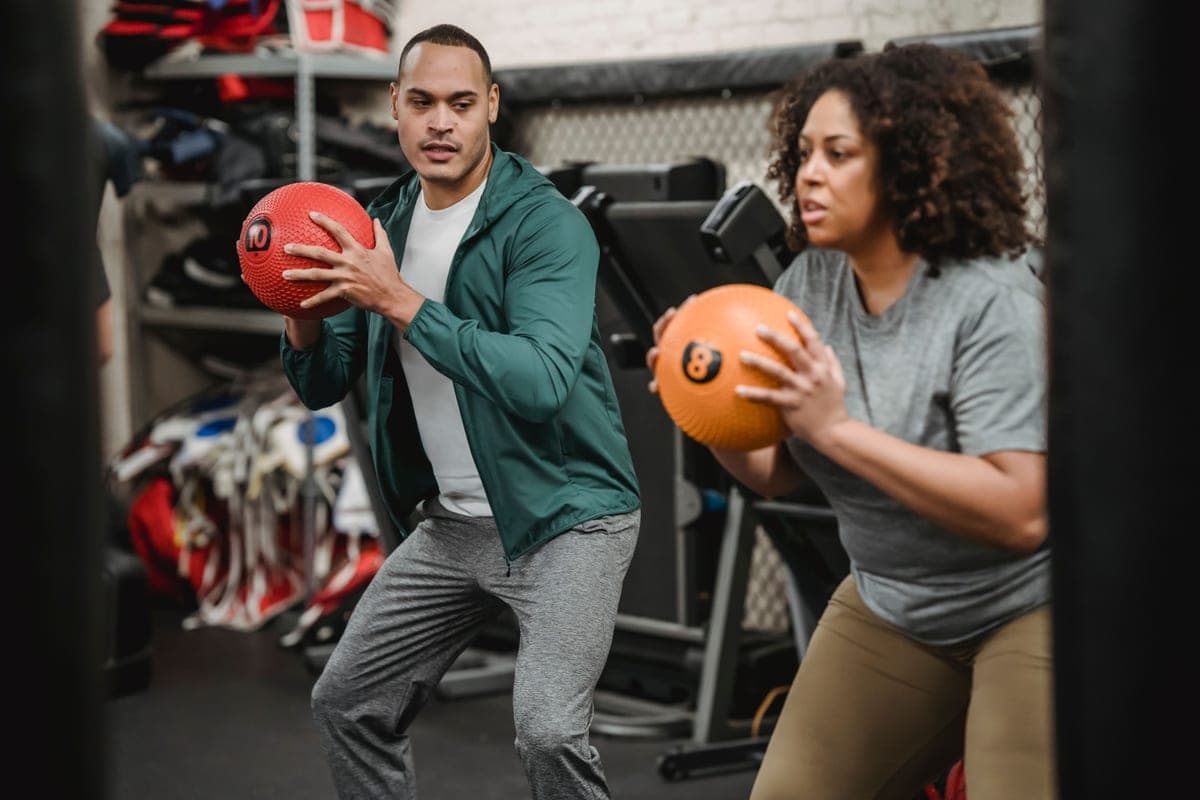 Yes4All Slam Ball (10–40 lb, 9.5 in.) A rotationally molded, seamless PVC shell filled with iron sand, 9.5 in. across in every weight from 10 to 40 lb — the cheapest ball here with no glued seam to split. | A first slam ball, and the one most people should buy two of | 8.5 | |
| 3 | 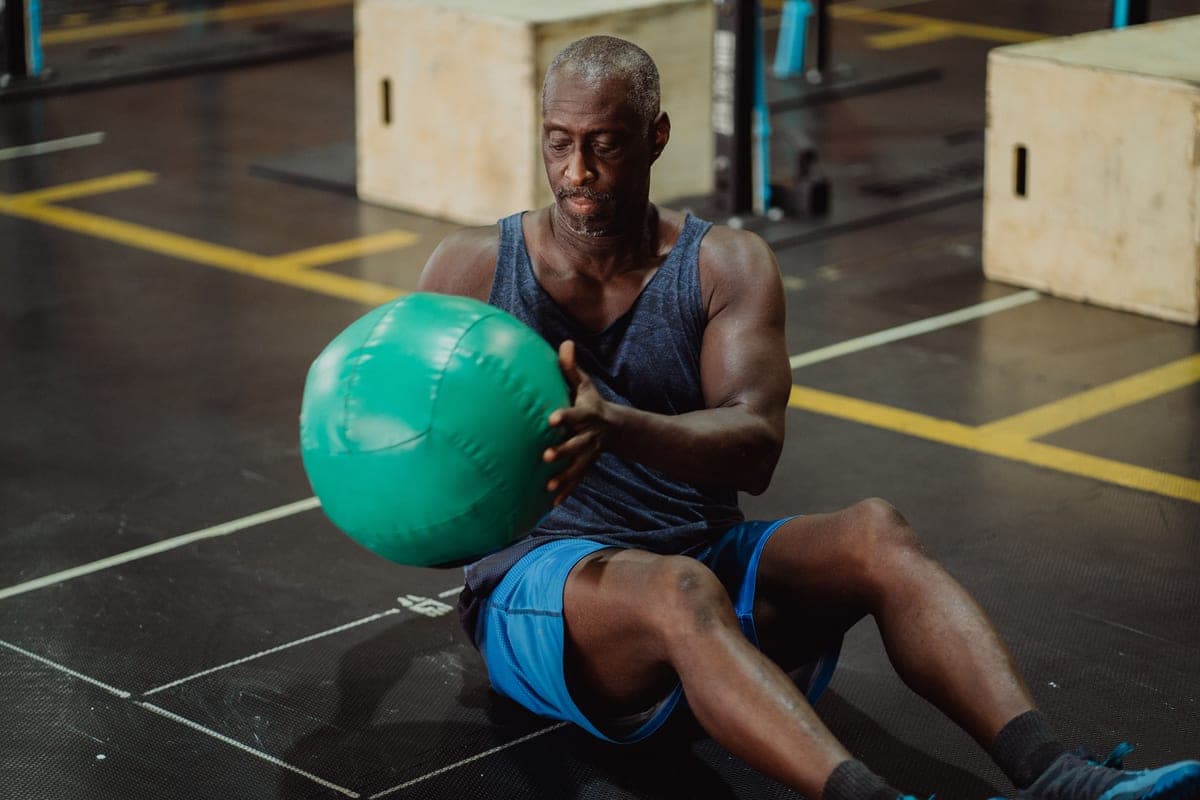 Titan Fitness Rubber Tread Slam Ball (10–150 lb) A hard rubber tread shell over a sand fill, with a published diameter at every weight and a range that runs to 150 lb — the ball for a concrete floor and for loads no PVC ball reaches. | A garage or driveway slab, and anyone who wants to go past 40 lb | 8.1 | |
| 4 | 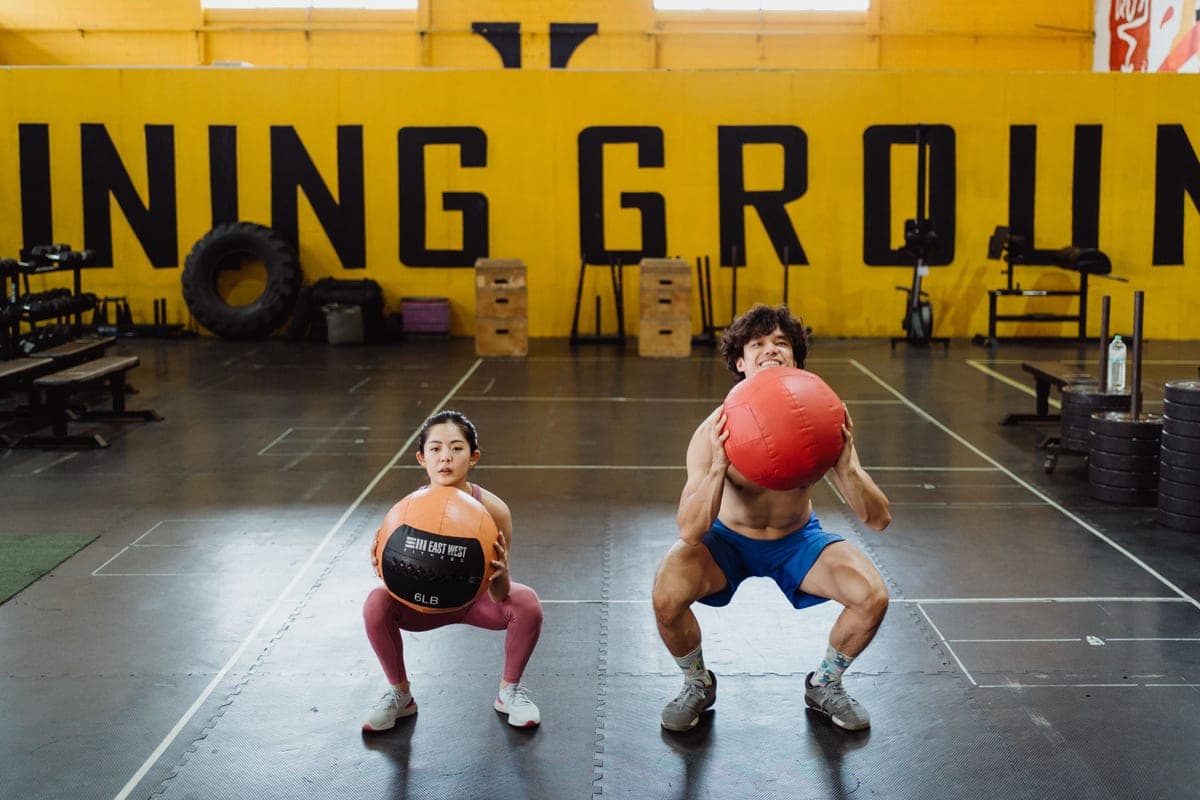 Amazon Basics Training Exercise Slam Ball A sand-filled heavy-duty PVC ball sold in three grip patterns — arrow, square and smooth — with a 1-year limited warranty and the fastest delivery of anything here. | The cheapest way into slams when you only ever want one ball | 7.5 |
Scores are our editorial judgment from published specs and mounting instructions, weighted for a renter or small-space trainer — not lab measurements. We have not tested these units.
Settle the floor question before you settle the ball
A slam ball does one thing nothing else in a home gym does: it lets you accelerate a load all the way through the movement and then let go. Every other lift asks you to decelerate at the end so you do not throw the weight. That terminal braking is exactly what blunts power training, and a ball you are allowed to release removes it. Twelve honest slams will raise your heart rate further than most people expect, and the whole tool costs less than a pair of decent shoes.
The catch is the landing. A 20 lb ball dropped from overhead arrives as a short, low-frequency thud, and low-frequency thuds travel through a building structure better than almost any other noise. Carpet does not absorb it. A yoga mat does not absorb it. If you live above someone, this is the one piece of gear on this site that we will tell you outright not to buy — the kettlebell in an apartment page and jumping rope in an apartment both cover the alternatives that actually work through a shared floor.
On a ground-floor slab, in a garage, or on a driveway, none of that applies and a slam ball becomes an obvious buy. What you want under it is a thick rubber mat or a stall mat: not for the neighbors, but because bare concrete abrades a shell far faster than anything else, and because a ball that lands on a gritty slab picks up the grit and carries it into the next rep. Our four picks below assume that floor.
What actually separates one slam ball from another
There are only four real variables, and price tracks them closely.
The shell and how it was made. Cheap balls are formed in halves and joined, and the join is where they split — usually a few months in, usually at the equator, usually all at once. Rotationally molded shells have no seam at all, which is the single most useful construction detail in this category. Above that sit rubber shells, which cost more, survive outdoor slabs and cold garages better, and grip well when your hands are wet.
The fill. Sand, in every ball here. What varies is the density: iron sand packs heavier into the same volume, which is why one manufacturer can hold a single diameter across a whole weight range. Whatever the fill, the point is the same — it kills the rebound, so the ball stays where it lands instead of coming back at your face. That is the entire difference between a slam ball and a bouncing medicine ball, and it is not a difference you can fudge.
The grip. Slams are performed with sweaty hands on a round object, and the texture is what stops it from squirting out sideways on the catch. Aggressive tread grips best and is hardest on bare palms; smooth shells are kinder and slipperier. Most people are better served by tread, and everyone should chalk or dry their hands before a heavy set.
The diameter. This is the spec that gets ignored and then annoys you daily. A 9 in. ball lives on a shelf. A 13 in. ball lives on the floor forever, and in a one-car garage that is a real cost. It also changes the movement: a bigger ball sits further from your chest on the catch and is genuinely harder to control overhead.
The four, side by side
| Ball | Weights | Shell | Diameter | Warranty |
|---|---|---|---|---|
| REP Fitness Slam Ball | 5–70 lb (12 sizes) | Sand-filled rubber | Not published | 1 yr home / 6 mo commercial |
| Yes4All Slam Ball | 10–40 lb (6 sizes) | Seamless rotomolded PVC, iron sand | 9.5 in. at every weight | Not published |
| Titan Rubber Tread Slam Ball | 10–150 lb | Hard rubber tread, sand fill | 10 in. at 20 lb; 11.5 in. at 40 lb | 1 yr |
| Amazon Basics Slam Ball | Sold weight by weight | Heavy-duty PVC, sand fill | Not published | 1 yr limited |
What weight to buy
Slams are a power movement, not a strength movement, so the load that feels correct is lighter than people expect. The ball has to move fast. If you are grinding it overhead, it is too heavy and you are training something else badly.
- 10–15 lb. Where most adults should start, and where most people should stay for conditioning work. Light enough to keep a neutral spine on rep twenty of a circuit.
- 20–25 lb. The general-purpose bracket for a reasonably trained adult doing mixed strength and conditioning. If you buy one ball and never buy another, buy this one.
- 30–40 lb. Low-rep power work, heavy rotational throws, and the point at which the ball starts to demand a proper floor underneath it.
- 50 lb and up. Loaded carries, over-the-shoulder throws and strongman-flavored work. This is a different exercise from a slam and needs space, a slab and a plan.
The honest two-ball answer, if you can stretch to it, is a 15 and a 30: one for volume, one for effort. The honest one-ball answer is 20 lb for most men and 15 lb for most women, which is where we would put a first purchase without knowing anything else about you.
Diameter is the spec nobody checks
Only two of these four makers publish a diameter, which tells you how little attention the spec gets. It is worth your attention. A ball that holds 9.5 in. across the whole weight range — as the Yes4All does — means the 40 lb feels the same in your hands as the 10 lb, which is good for consistency and slightly odd on the heaviest size, because the density is extreme. A ball that grows with weight, as the Titan does, feels more natural to hold but takes more room and is harder to catch as it gets heavier.
Measure your storage before you order. A 9 to 10 in. ball fits a standard garage shelf. Anything over 12 in. is going to sit on the floor, and in a shared garage bay that puts it in the way of a car door. This is the same arithmetic the plyo box roundup runs on footprint, and it matters more in a small space than any spec on the box.
How this list was built
We compared published shell construction, fill, weight ranges, diameters, grip patterns and warranty terms from each maker's own product pages, then scored each ball on the slam-ball rubric: shell and seam durability 30%, weight range offered 20%, floor manners 20%, grip with wet hands 15%, value 15%. The weights favor the buyer this site is written for — someone slamming in a garage corner or on a driveway, who needs the ball to survive a concrete slab and then get out of the way.
These are editorial judgments from published specifications, not lab measurements. We own no test units and have not destroyed any of these balls to find out which seam goes first. Where a maker does not publish a number, the table says so rather than guessing. Our methodology page sets out the whole approach.
The picks in detail
Every pick, reviewed
Key specs
- Weights
- 5–70 lb (12 sizes)
- Shell
- Sand-filled rubber, little to no bounce
- Warranty
- 1 year home / 6 months commercial
Scores · editorial, out of 10
- Shell & seam durability
- 9
- Weight range offered
- 10
- Floor manners (dead bounce, diameter)
- 9
- Grip with wet hands
- 9
- Value
- 6
Pick 1 · Slam balls
REP Fitness Slam Ball (5–70 lb)
REP Fitness
A sand-filled rubber-shelled ball in twelve weights from 5 to 70 lb with a stated 1-year home warranty — the widest range on this page and the shell least likely to give up on a concrete floor.
Best for
Buying one ball you will not outgrow, and slamming it on bare concrete
Why it is #1. Twelve weights from 5 to 70 lb, a rubber shell rather than PVC, and the only stated home-use warranty in this group. If you expect to still be slamming in three years, or you are slamming on bare concrete, this is the shell that gets you there. You pay for it, and a light-plus-heavy pair is two full-price purchases.
Pros
- Twelve weights from 5 to 70 lb — the only line here that covers a nervous beginner and a strong adult
- Rubber shell handles concrete and outdoor slabs better than the PVC balls
- A stated home-use warranty, which almost nothing in this category offers
Cons
- Costs more per pound than any PVC ball on this page
- Sold one weight at a time, so a light-and-heavy pair is two full-price purchases
- REP ships from its own warehouse and lists estimated ship dates rather than guaranteed ones, so a heavy size can take a while
Specs from REP Fitness — Slam Balls collection (weight range, sand-filled rubber shell, warranty terms).
Key specs
- Weights
- 10 / 15 / 20 / 25 / 30 / 40 lb
- Diameter
- 9.5 in., every weight
- Shell
- Seamless rotomolded PVC, iron-sand fill
Scores · editorial, out of 10
- Shell & seam durability
- 8
- Weight range offered
- 7
- Floor manners (dead bounce, diameter)
- 9
- Grip with wet hands
- 9
- Value
- 10
Pick 2 · Slam balls
Yes4All Slam Ball (10–40 lb, 9.5 in.)
Yes4All
A rotationally molded, seamless PVC shell filled with iron sand, 9.5 in. across in every weight from 10 to 40 lb — the cheapest ball here with no glued seam to split.
Best for
A first slam ball, and the one most people should buy two of
The value pick, and the one most people should buy. A rotationally molded shell has no seam to split, which is a genuinely premium construction detail at a budget price, and the iron-sand fill keeps every weight to the same 9.5 in. ball. It stops at 40 lb and PVC does not love a cold garage, but for a 15 or a 20 lb conditioning ball it is hard to argue with.
Pros
- Rotomolded seamless shell — there is no glued seam, which is where cheap balls fail first
- Iron sand rather than ordinary sand, so it neither bounces back nor rolls away after a slam
- Grooved tread and triangle grip patterns hold on with wet hands
Cons
- Stops at 40 lb, so a strong adult will run out of range
- One 9.5 in. diameter across the whole line means the 40 lb ball is dense and awkward to catch
- PVC stiffens in an unheated garage over winter and scuffs quickly on rough concrete
Specs from Yes4All — Slam Ball product page (weights, 9.5 in. shell, iron-sand fill, rotomolded construction).
Key specs
- Weights
- 10–150 lb
- Diameter
- 10 in. at 20 lb; 11.5 in. at 40 lb
- Shell
- Hard rubber tread over a sand fill
Scores · editorial, out of 10
- Shell & seam durability
- 9
- Weight range offered
- 10
- Floor manners (dead bounce, diameter)
- 5
- Grip with wet hands
- 10
- Value
- 6
Pick 3 · Slam balls
Titan Fitness Rubber Tread Slam Ball (10–150 lb)
Titan Fitness
A hard rubber tread shell over a sand fill, with a published diameter at every weight and a range that runs to 150 lb — the ball for a concrete floor and for loads no PVC ball reaches.
Best for
A garage or driveway slab, and anyone who wants to go past 40 lb
The one for a concrete slab and heavy work. Hard rubber tread is the grippiest surface here, Titan publishes a diameter for every weight, and the range runs to 150 lb for throws and carries no PVC ball will survive. The trade is bulk and black scuff marks, and individual weights go in and out of stock — the 70 lb was unavailable at Titan when we checked in September 2026.
Pros
- Rubber tread is the grippiest surface on this page, wet or dry
- Titan publishes a diameter for every weight, so you can check it fits your shelf before you buy
- Weights to 150 lb for heavy throws and loaded carries, which no PVC ball offers
- 1-year warranty, with extended coverage sold separately
Cons
- The heavy sizes are genuinely bulky — 11.5 in. at 40 lb — and eat corner space
- Rubber leaves black scuffs on a light garage floor coating
- Stock rotates on individual weights: the 70 lb was out of stock at Titan when we checked in September 2026
Specs from Titan Fitness — Rubber Tread Slam Balls (weight range, per-weight diameters, shell, warranty, stock).
Key specs
- Shell
- Heavy-duty PVC, sand fill, no bounce
- Grip
- Arrow, square or smooth pattern
- Warranty
- 1-year limited
Scores · editorial, out of 10
- Shell & seam durability
- 7
- Weight range offered
- 6
- Floor manners (dead bounce, diameter)
- 8
- Grip with wet hands
- 8
- Value
- 9
Pick 4 · Slam balls
Amazon Basics Training Exercise Slam Ball
Amazon Basics
A sand-filled heavy-duty PVC ball sold in three grip patterns — arrow, square and smooth — with a 1-year limited warranty and the fastest delivery of anything here.
Best for
The cheapest way into slams when you only ever want one ball
The cheap one that is fine. Sand-filled PVC, three grip patterns, a one-year limited warranty, and it turns up in two days. The catch is the listing structure: each weight is a separate page, so read the title twice before you order — a surprising number of people end up with the 50 lb.
Pros
- Three grip textures, so you can choose a smooth ball if aggressive tread bothers your hands
- A 1-year limited warranty on a house-brand ball
- Wipes clean with a damp cloth and arrives quickly
Cons
- Each weight is its own listing rather than one page with a size selector — it is easy to land on a 50 lb ball when you wanted 20
- No published diameter, so you cannot check it fits a shelf before it arrives
- PVC shell, so the same cold-garage and rough-concrete caveats as the Yes4All apply
Specs from Amazon Basics — Training Exercise Slam Ball listing (PVC shell, sand fill, grip patterns, warranty).
Buying guide
What one ball actually costs you in space
Less than anything else in the conditioning section, which is the quiet argument for buying one. A slam ball needs a patch of floor roughly the size of a bath mat to use, and a shelf or a corner to live in. Compare that with a plyo box at six by six feet of clearance, or a sled that wants a twenty-yard run. If your training space is one garage bay with a car in it, a ball and a mat are the two purchases that fit without negotiation.
Buy the mat at the same time
Not for the noise — for the shell. A rubber mat or a horse stall mat under the landing spot roughly doubles the life of a PVC ball on concrete and stops the slab chewing the tread off a rubber one. It also stops the ball skidding away across a smooth garage floor after a hard slam, which is a small thing that stops being small when you are doing rounds against a clock.
What wears out first, and what that tells you
In order: the seam, then the valve, then the surface texture. A seamless rotomolded shell removes the first failure. A reinforced valve removes the second. Nothing removes the third — texture wears off any ball that lands on grit, which is why the mat matters and why every maker in this category offers a one-year warranty rather than a lifetime one. Treat a slam ball as a consumable with a multi-year life, not as a barbell.
Where it fits in a week
Slams are a finisher or a power primer, not a session. Ten to fifteen crisp reps, rest properly, repeat three or four times — the moment the reps get sloppy you have stopped training power. It pairs naturally with kettlebell swings and rope work rather than competing with them; the conditioning workouts at home page places all three in a week, and garage gym essentials covers what else earns a place on the same slab.
FAQ
Questions readers ask
What weight slam ball should I buy?
20 lb for most men and 15 lb for most women as a single first ball. 10–15 lb if you are new to hinging and want to learn the movement clean, 30–40 lb for low-rep power work. Slams are a speed movement — if the ball is slowing you down, it is too heavy.
Can you use a slam ball in an apartment?
Not on an upper floor, no. The impact is low-frequency and travels through the structure; carpet and mats do almost nothing for it. On a ground-floor slab with a rubber mat down it is reasonable. If you are upstairs, a kettlebell or a jump rope gives you the conditioning without the complaint.
What is the difference between a slam ball and a medicine ball?
A slam ball is dense, sand-filled and dead — it does not rebound, so you can throw it at the floor. A medicine ball is lighter for its size and usually bounces, which makes it good for partner throws and dangerous for slams. If a listing mentions bounce, it is not a slam ball.
Do slam balls break?
Eventually, yes — they are a consumable. Failures almost always start at the seam or the air valve, which is why a seamless rotomolded or rubber shell is worth paying for, and why the warranties in this category are one year rather than lifetime. Slamming on bare concrete is the fastest way to get there.
What surface can you slam on?
Rubber matting over concrete is ideal. Bare concrete works but shortens the ball's life. Asphalt and gravel destroy a PVC shell quickly — use rubber outdoors. Avoid tile, laminate and finished wood entirely: the ball will survive, the floor will not.
How many slam ball reps should I do?
Sets of 10–15 with real rest between them. Slams train power, and power evaporates as you fatigue — long breathless sets turn the exercise into mediocre cardio with a rounded back. Three or four crisp sets is a complete dose at the end of a session.
Related
Keep reading
- Best plyo boxes
The other power tool that wants a garage corner.
- Best battle ropes
Maximal effort with no landing at all.
- Conditioning workouts at home
Where slams sit in a week.
- Kettlebells in an apartment
What to buy instead if you live upstairs.
- Garage gym essentials
The rest of the slab, prioritized.
Sources
- —American Council on Exercise — Overhead Slams exercise library entry (movement mechanics) · acefitness.org
- —Titan Fitness — 40 LB Rubber Tread Slam Ball (published 11.5 in. diameter, warranty) · titan.fitness
- —REP Fitness — Slam Balls collection (weight range, sand-filled rubber shell, warranty terms) · repfitness.com
- —Yes4All — Slam Ball product page (weights, 9.5 in. shell, iron-sand fill, rotomolded construction) · sportinggoods.yes4all.com
- —Titan Fitness — Rubber Tread Slam Balls (weight range, per-weight diameters, shell, warranty, stock) · titan.fitness
- —Amazon Basics — Training Exercise Slam Ball listing (PVC shell, sand fill, grip patterns, warranty) · amazon.com