Best Dip Belt · Conditioning
The best dip belt, ranked on the number almost nobody prints
A dip belt is a strap, a chain and a hope. Two of the three here do not publish a rated load at all - which is the single most useful fact in the category, and the reason the ranking looks the way it does.
Rope & Rep is reader-supported. Product links go through our affiliate resolver and we may earn a commission from qualifying purchases at no cost to you. Prices are the retailer's and change — every button opens the live price on Amazon rather than showing a stale number.
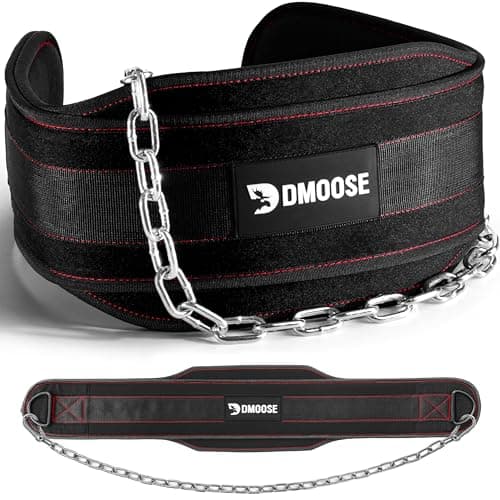
DMoose Dip Belt with Chain (350 lb). Licensed stock photograph of the category — not the specific product.
Quick picks
| # | Product | Best for | Score | Price |
|---|---|---|---|---|
| 1 | DMoose Dip Belt with Chain (350 lb) The one dip belt here with a published rating: 350 lb, a 36 in. stainless chain, 8 mm neoprene padding across a 33 in. belt with a 6 in. back, stainless D-rings and a carabiner. | Weighted pull-ups and dips past the point where a vest runs out of pockets | 9.6 | |
| 2 | 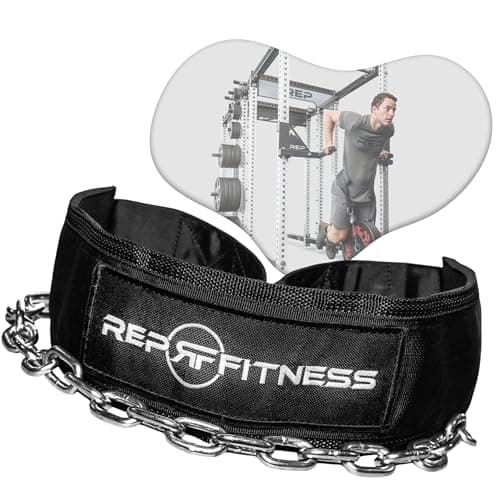 REP Fitness Dip Belt A 39 x 3.75 in. polyester-and-EVA belt with a nickel-plated steel buckle and a 31.5 in. zinc-coated chain that is not permanently attached — so the chain is a spare part, not a write-off. | A belt you expect to keep, where a worn chain does not mean a new belt | 8.2 | |
| 3 | 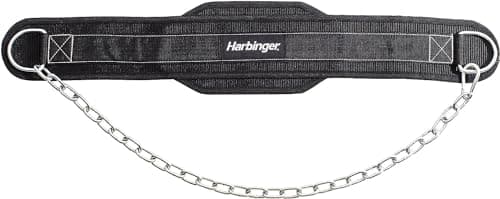 Harbinger Polypro Dip Belt The stripped-back one: thick polypropylene, heavy steel grommets holding a 30 in. steel chain, a contoured cut and no padding to compress — one size. | A simple belt for moderate loads with nothing on it to wear out | 7.7 |
Scores are our editorial judgment from each maker's published specs and mounting instructions, weighted for a renter or small-space trainer.
What a dip belt is for, and when it starts to matter
A dip belt is the cheapest way to keep adding weight to a pull-up or a dip once bodyweight stops being hard. It is a wide strap that sits across the hips with a chain running under you, and you hang plates, a kettlebell or a dumbbell from the chain. That is the whole product. There is no mechanism, nothing to adjust beyond the buckle, and no reason for one to cost three figures.
The moment it becomes the right purchase is specific: when you can do roughly eight to ten clean pull-ups or twelve clean dips and want the set to stay in that rep range. Before that, more reps and better reps are the progression, and the pull-up progression page is the better page. After that, a belt out-scales a vest dramatically - vests run out of pockets somewhere around 40 to 50 lb, and a belt will take two 45 lb plates without comment.
It also matters where you train. A belt needs something overhead that is genuinely rated for your bodyweight plus the load, which means a wall-mounted or ceiling-mounted bar or a free-standing tower, not a doorway leverage bar. Hanging 80 lb of plates off a bar that hooks over a door frame is the one genuinely dangerous thing in this category - our mounting comparison sets out which bars have the headroom for it.
The four criteria, in the order they matter
Published load rating. Thirty-five percent, and the reason this ranking is not a coin toss. Of the three belts we could verify as currently sold, exactly one prints a number: 350 lb. The other two are reputable products from reputable brands, and both are almost certainly fine at the loads a home lifter will use - but "almost certainly fine" is a judgment we are making, not a claim the maker is willing to put on the box. We score what is published, not what we assume.
Chain length and how the load hangs. Twenty-five percent. The chain has to be long enough that plates hang clear of your knees at the bottom of a dip and short enough that they do not hit the floor on a pull-up from a low bar. Thirty inches to thirty-six inches is the whole usable range, and where you sit in it depends on your height and your ceiling. A detachable chain is worth more than a longer one, because it means the belt and the chain can fail independently.
How the load spreads. Twenty-five percent. Width across the back and the presence of real padding. At 25 lb nothing matters; at 100 lb a 3.75 in. unpadded strap becomes a wire across the hip bones and the set ends early. Neoprene is the most comfortable and the worst at drying out; EVA holds its shape for years; bare polypropylene breaks in and takes your shape but never stops being a strap.
Build at the load points. Fifteen percent. Where the chain meets the belt is where every dip belt eventually fails, so the question is whether that join is steel grommets, stitched webbing or a D-ring, and whether the buckle is metal or a plastic clip. A plastic clip on a dip belt is a disqualifier.
The three, side by side
| Belt | Published rating | Chain | Padding / width | The reason to pick it |
|---|---|---|---|---|
| DMoose Dip Belt with Chain | 350 lb | 36 in. stainless, D-rings + carabiner | 8 mm neoprene, 6 in. back | A stated capacity and the widest load spread here |
| REP Fitness Dip Belt | Not published | 31.5 in. zinc-coated, interchangeable | EVA, 3.75 in. wide | The chain detaches, so a worn chain is a spare part |
| Harbinger Polypro Dip Belt | Not published | 30 in. steel, through grommets | None - polypropylene, contoured | Nothing on it to wear out or hold sweat |
What do you actually hang off it?
This is the question that catches out people buying their first belt, because most home setups do not own barbell plates. Four answers, in descending order of how well they work.
Barbell plates are the designed answer: they stack flat, they hang quietly and a 25 and a 10 get you to a sensible first load. If you have a barbell you already have this solved.
A kettlebell is the best answer for most readers of this site, because the handle takes a carabiner directly and one 16 kg bell is 35 lb of perfectly usable load. It swings more than a plate does, so keep the chain short and the tempo controlled. Our kettlebell roundup covers the sizes.
A dumbbell works if the chain can be looped around the handle between the bells, which it usually can. Adjustable dumbbells are less good - the collars are the part under load, which is not what they were designed for.
A loaded bag or a sandbag is the improvised option and it is better than it sounds, as long as the handle is a real sewn handle and not a drawstring. A training sandbag with a rated handle hangs fine, and it is forgiving if it touches the floor.
Belt or vest? The honest split
A belt wins on load - it goes as high as your plates do - and on cost per pound, by a wide margin. It also keeps the weight at the hips, which barely changes how a pull-up feels; a vest moves your centre of mass up into the chest, which changes it a little.
A vest wins on everything that is not hanging. It loads push-ups, step-ups, walks, rucks, carries and conditioning circuits, and it takes four seconds to put on rather than a minute of threading a chain. For somebody doing one weighted pull-up set inside a mixed session, that difference is the whole decision.
Most people who train seriously at home end up with both, buying the vest first and the belt when the vest runs out of pockets. The full argument - including what each one does to the movement - is on the weighted vest vs dip belt page.
How to load it without hurting yourself
Add weight in the smallest increments you own, and treat 10 percent of bodyweight as a first target rather than a milestone to rush. The tissue that complains about weighted pull-ups is not the muscle, it is the elbow tendon and the shoulder capsule, and both of them adapt on a timescale of months. Three to five reps with a load you could do six or seven times is the productive range; grinding singles with a plate hanging off your hips is how a medial elbow problem starts.
Keep the first few sessions short, control the bottom of the dip rather than dropping into it, and stop the set while the last rep still looks like the first. The pull-up progression page has the rep scheme; the belt is just the tool that lets it keep going once bodyweight is easy.
The picks in detail
Every pick, reviewed
Key specs
- Rated load
- 350 lb (158 kg)
- Chain
- 36 in. stainless steel, D-rings + carabiner
- Belt
- 33 in. long, 6 in. back, 8 mm neoprene
Scores · editorial, out of 10
- Rated load & hardware
- 10
- Comfort under load (pad width, spread)
- 9
- Chain length & loading plates
- 10
- Value
- 9
Pick 1 · Dip belts
DMoose Dip Belt with Chain (350 lb)
DMoose
The one dip belt here with a published rating: 350 lb, a 36 in. stainless chain, 8 mm neoprene padding across a 33 in. belt with a 6 in. back, stainless D-rings and a carabiner.
Best for
Weighted pull-ups and dips past the point where a vest runs out of pockets
It wins because it answers the only question that matters. DMoose publishes 350 lb, which is more than any home lifter will ever hang off it, and no other belt we could verify as currently sold publishes anything at all. Everything else about it then happens to be the most generous spec here too: a 36 in. stainless chain, stainless D-rings and a carabiner rather than an open hook, and 8 mm of neoprene across a 6 in. back.
That 6 in. back is the quiet reason to buy it rather than the rating. The load has to go somewhere, and a wider belt turns 100 lb from a wire across the hip bones into a weight you can actually finish a set with. Two honest marks against it: neoprene holds sweat and wants airing out rather than folding away damp, and a 36 in. chain needs doubling back on a shorter torso, which adds a fiddly thirty seconds to every session.
Pros
- A published 350 lb rating, which the other two belts here do not give you at all
- The longest chain of the three — you can hang a plate low enough to clear your knees on a dip
- 8 mm of neoprene over a 6 in. back is the widest spread here, and the load has to go somewhere
Cons
- Neoprene holds sweat; it wants airing out rather than folding away damp
- A 36 in. chain needs doubling back on a short torso, which adds a fiddly step every session
Specs from DMoose — Dip Belt with Chain (350 lb rating, 36 in. chain, belt dimensions, neoprene thickness).
Key specs
- Belt
- 39 in. long x 3.75 in. wide, polyester + EVA
- Chain
- 31.5 in. zinc-coated steel, interchangeable
- Rated load
- Not published by REP
Scores · editorial, out of 10
- Rated load & hardware
- 7
- Comfort under load (pad width, spread)
- 9
- Chain length & loading plates
- 8
- Value
- 9
Pick 2 · Dip belts
REP Fitness Dip Belt
REP Fitness
A 39 x 3.75 in. polyester-and-EVA belt with a nickel-plated steel buckle and a 31.5 in. zinc-coated chain that is not permanently attached — so the chain is a spare part, not a write-off.
Best for
A belt you expect to keep, where a worn chain does not mean a new belt
The one to buy if you expect to keep it for a decade. The chain is not permanently attached - it is a nickel-plated, zinc-coated part you can replace or swap for a longer one - which makes a chewed-up chain a spare part rather than a reason to buy a second belt. The buckle is steel, not the plastic clip that fails on cheap belts, and EVA holds its shape instead of compressing into a hard ridge after a year.
Second, not first, for two reasons that are both about numbers. REP does not publish a rated load, so we cannot score it against a stated capacity even though the hardware looks the part. And 31.5 in. is the shortest chain in this group, which is fine at 5 ft 8 in. and tight at 6 ft 3 in. - though the detachable chain is exactly what fixes that.
Pros
- The chain detaches, so you can swap in a longer one or replace a chewed-up link set
- EVA rather than soft foam means it does not compress into a hard ridge after a year
- Nickel-plated steel buckle instead of the plastic clip that fails on cheap belts
Cons
- REP does not publish a rated load for it, so we cannot score it against a stated number
- 31.5 in. is the shortest chain here — tall lifters will want a longer one
Specs from REP Fitness — Dip Belt (belt dimensions, materials, 31.5 in. interchangeable chain, buckle).
Key specs
- Material
- Polypropylene, heavy-duty steel grommets
- Chain
- 30 in. steel chain
- Rated load
- Not published by Harbinger
Scores · editorial, out of 10
- Rated load & hardware
- 7
- Comfort under load (pad width, spread)
- 6
- Chain length & loading plates
- 9
- Value
- 9
Pick 3 · Dip belts
Harbinger Polypro Dip Belt
Harbinger
The stripped-back one: thick polypropylene, heavy steel grommets holding a 30 in. steel chain, a contoured cut and no padding to compress — one size.
Best for
A simple belt for moderate loads with nothing on it to wear out
The stripped-back one, and genuinely the right answer for a specific buyer: someone adding 20 to 60 lb to pull-ups, who wants a belt with nothing on it that can wear out. Thick contoured polypropylene, heavy steel grommets taking the chain directly rather than stitched webbing, a 30 in. steel chain, one size. It breaks in and takes your shape, and it lives in a gym bag indefinitely because there is no foam in it to hold sweat.
It is third because of the padding, and the trade is honest rather than hidden. With no padding at all, the belt edge is what you feel at 100 lb - fine for moderate loads, limiting above that. No published capacity either, and 30 in. is the shortest chain here on a belt where the chain is not replaceable.
Pros
- Polypropylene breaks in and takes your shape instead of staying a flat board
- Steel grommets rather than stitched-on webbing at the load point
- Nothing to hold sweat, so it lives in a gym bag without complaint
Cons
- No padding — at 100 lb you feel the belt edge, and that is the whole trade
- No published capacity, and one size only
Specs from Harbinger 28900 — Polypropylene Dip Belt listing (polypropylene construction, 30 in. steel chain, sizing).
Buying guide
What to buy, in one paragraph
Buy the DMoose if you want a stated rating and expect to go past 80 lb - the 6 in. padded back is what makes those loads finishable. Buy the REP if you want a belt you will still own in ten years and value a chain you can replace over a chain that is longer. Buy the Harbinger if you are adding 20 to 60 lb and want the simplest possible object. All three cost less than a single plate, so the decision is about fit and loads, not money.
How this list was built
Three dip belts were confirmed as live, purchasable listings before being scored. Ratings, chain lengths, belt dimensions, materials and buckle types come from the page named under each product; where a maker does not publish a figure - REP and Harbinger both decline to publish a rated load - the entry says so rather than estimating one. Scores are editorial judgments built from those published specs against the category rubric at the top of the page, weighted for someone adding weight to a home bar rather than a commercial gym buying for a floor. Nothing here was tested, and no load figure in this article is ours. The methodology page sets out how the scoring works.
What wears out, in order
The chain link closest to the belt, every time - it sees every cycle and every bit of grit. Then the join between chain and belt, which is why grommets and D-rings score better than stitched webbing. Then the padding, which compresses into a permanent crease on neoprene belts and holds its shape far longer on EVA. The strap itself almost never fails, and the buckle only fails if it was plastic to begin with.
Three mistakes that cost nothing to avoid
Hanging a belt off a doorway bar. Doorway leverage bars are rated for bodyweight, not bodyweight plus 70 lb. Use a wall mount, a ceiling mount or a tower. Buying a belt before you can do ten pull-ups. More reps are the progression until then. Loading plates onto an open hook. Use the carabiner the belt came with, gate screwed shut, and check it before every set.
FAQ
Questions readers ask
What is a dip belt used for?
Adding external weight to hanging and dipping movements - weighted pull-ups, chin-ups and dips. The belt sits across the hips and a chain runs underneath you, so plates, a kettlebell or a dumbbell hang between your legs. It does not work for push-ups, step-ups or walking; those need a weighted vest.
How much weight can a dip belt hold?
It depends entirely on the belt, and most makers do not say. Of the three current belts we verified, only the DMoose publishes a figure: 350 lb. REP and Harbinger publish no rated load at all. Treat an unrated belt as suitable for moderate loads, and if you plan to go past about 80 lb, buy one that states a number.
Dip belt or weighted vest for pull-ups?
A belt if the load is the point: it scales as far as your plates do, costs less per pound, and keeps the weight at the hips. A vest if the weighted pull-up is one part of a mixed session, because it also loads push-ups, carries and walks and goes on in seconds. Vests typically top out around 40 to 50 lb; belts do not really top out.
What can I hang on a dip belt if I don't have plates?
A kettlebell is the best substitute - the handle takes a carabiner directly, and a single 16 kg bell is 35 lb of usable load. A dumbbell works if the chain loops around the handle between the bells. A sandbag with a proper sewn handle also works and is forgiving if it brushes the floor. Keep the chain short with anything that can swing.
How much weight should I start with on a dip belt?
Enough to bring a set down to five to eight clean reps - for most people that is 10 to 25 lb on the first session, not a plate. Around 10 percent of bodyweight is a sensible first target. The limiting tissue is elbow tendon and shoulder capsule rather than muscle, and both adapt over months, so add weight in the smallest increments you own.
What chain length do I need on a dip belt?
Long enough that the plates clear your knees at the bottom of a dip, short enough that they do not touch the floor on a pull-up from a low bar. Thirty inches suits most lifters up to about 5 ft 10 in.; taller lifters want 36 in. A detachable chain is the real answer, because it lets you change your mind.
Can you use a dip belt on a doorway pull-up bar?
No. Doorway leverage bars are rated for bodyweight on a frame they only grip by leverage, and weighted pull-ups put bodyweight plus the load through that same join with extra swing. Weighted work needs a wall-mounted bar, a ceiling-mounted bar bolted to joists, or a free-standing tower.
Related
Keep reading
- Weighted vest vs dip belt
The full argument for which one to buy first, and what each does to the movement.
- Best weighted vests for pull-ups
The other way to load a pull-up, and the one that also loads push-ups.
- Best wall-mounted pull-up bars
What a weighted set actually needs overhead - not a doorway bar.
- Pull-up progression
When to stop adding reps and start adding weight.
Sources
- —DMoose — Dip Belt with Chain product page (350 lb rating, 36 in. stainless chain, 33 in. belt with 6 in. back, 8 mm neoprene, stainless D-rings and carabiner) · dmoose.com
- —REP Fitness — Dip Belt product page (39 x 3.75 in. polyester and EVA belt, nickel-plated steel buckle, 31.5 in. interchangeable zinc-coated chain; no rated load published) · repfitness.com
- —Harbinger 28900 — Polypro Dip Belt listing (polypropylene construction, heavy-duty steel grommets, 30 in. steel chain, one size; no rated load published) · amazon.com