Guide · Conditioning
What weight slam ball should I get? Start lighter than you think
The short answer: 15 to 20 lb for most adults, 10 lb if you are new to training or under about 140 lb, and 30 lb and up only when the ball is being used for strength rather than conditioning. Here is how to pick properly.
Rope & Rep is reader-supported. Product links go through our affiliate resolver and we may earn a commission from qualifying purchases at no cost to you. Prices are the retailer's and change — every button opens the live price on Amazon rather than showing a stale number.
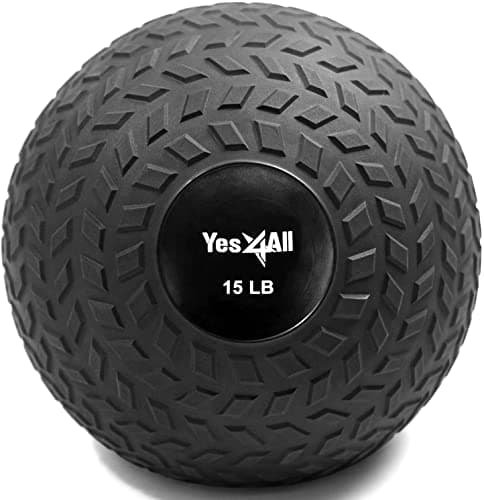
Yes4All Slam Ball (10–40 lb, 9.7 in.). Licensed stock photograph of the category — not the specific product.
The chart
Start here, then read the sections below for the adjustments. These are starting weights for slams and throws done for conditioning, which is what almost everyone buys a slam ball for.
| Who | New to training | Training regularly | Strong, ball used for power |
|---|---|---|---|
| Under 130 lb | 6-10 lb | 10-15 lb | 20 lb |
| 130-170 lb | 10 lb | 15-20 lb | 25-30 lb |
| 170-210 lb | 10-15 lb | 20 lb | 30-40 lb |
| Over 210 lb | 15 lb | 20-25 lb | 40 lb+ |
| Teenager (14-17) | 6-10 lb | 10-15 lb | 20 lb |
Why most people buy too heavy
The slam ball looks like a strength object, so people size it like one — they pick a weight they could deadlift for reps and discover that twenty slams with it is a different experience entirely.
The movement is the reason. A slam is a full-body extension followed by a fast, violent flexion: hips open, arms go overhead, then everything reverses at speed and the ball goes into the floor. The limiting factor is not how much you can lift, it is how fast you can move the ball while your heart rate is at 170. A weight that feels trivially light in your hands standing still is usually correct.
There is a second reason, and it is about where the ball ends up. After a slam the ball is on the floor at your feet and you have to pick it up, which means the real exercise is slam, hinge, pick up, repeat. At 20 lb that is a conditioning circuit. At 50 lb it is a set of deadlifts with the worst possible bar position, performed while out of breath. That is where backs get annoyed.
Adjust for what you are actually doing
Overhead slams for conditioning. The default, and the chart above is written for it. 15 to 20 lb for most adults.
Rotational throws and side slams. Go one step lighter than the chart. The trunk is doing the work in a position it is weaker in, and the ball travels further.
Wall throws. Lighter again, and note that a slam ball is a poor wall ball — it is dense and small where a wall ball is light and large. If wall work is the goal, you want a different product entirely; the slam ball vs medicine ball comparison explains why.
Carries, squats and lunges holding the ball. Go one or two steps heavier. These are strength movements and the ball is just an awkward way to hold weight, which is the point.
Partner throws. Lighter than you would guess, because the catch is what hurts. Start at 10 lb regardless of size.
One ball or two?
If the budget stretches to two, buy a 10 lb and a 20 lb rather than a single 30 lb. The light ball covers rotational work, warm-ups, partner throws, high-rep finishers and anyone else in the house; the heavier one covers the main conditioning work and carries. Between them they cover almost every session a home setup will ever run.
If it stretches to one, buy the middle of your row in the chart and accept that you will occasionally want something lighter. A single ball bought too heavy sits unused; a single ball bought slightly light gets used three times a week.
Size, not just weight
The specification nobody checks before buying is diameter, and it matters for two reasons: where the ball lives, and how it feels to catch.
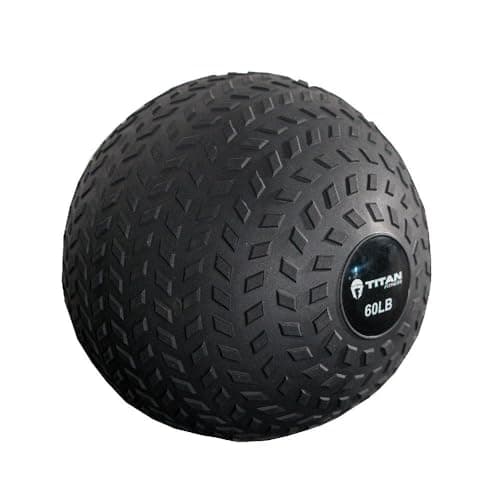
Most PVC slam balls hold a roughly constant shell size across the range — one line here publishes about 9.7 in. at 15 lb — which means the heavy balls in that line are dense and small. That is fine to slam and awkward to catch, because a 40 lb object the size of a football arrives with no warning. Rubber-shelled lines scale the diameter with the weight instead, publishing 11.5 in. at 60 lb, which catches better and eats more shelf.
If the ball is going on a rack or a shelf, check the published diameter at your weight before you order. Two of the four lines below publish one and two do not.
Which ball line covers which weight
| Line | Range | Shell | Publishes a diameter? |
|---|---|---|---|
| Yes4All Slam Ball | 10-40 lb | Seamless rotomolded PVC, iron sand | Yes - about 9.7 in. at 15 lb |
| REP Fitness Slam Ball | 5-70 lb (12 sizes) | Sand-filled rubber | Not on the collection page |
| Titan Rubber Tread Slam Ball | 10-150 lb | Hard rubber tread over sand | Yes - per weight, 11.5 in. at 60 lb |
| Amazon Basics Slam Ball | Multiple, one listing per weight | Heavy-duty PVC, sand fill | No |
The practical reading: if your number is between 10 and 40 lb, the PVC balls are the cheapest route and the seamless rotomolded shell is the one least likely to split. If your number is under 10 lb or over 40 lb, you need one of the rubber lines. If you are slamming on bare outdoor concrete or asphalt, you want rubber regardless of weight, because PVC abrades on those surfaces.
When to go up a weight
The honest answer is: later than you expect, and often never. A slam ball is not a progressive-overload tool — you progress by doing more work in less time, not by adding pounds. A 20 lb ball for 40 slams in four minutes is harder than the same 20 lb ball for 20 slams in four minutes, and that is the ladder you climb.
Go up a weight when the slam has stopped feeling violent — when the ball is being placed into the floor rather than driven into it — and when you can do thirty consecutive reps with technique intact. For most people that is a jump of 5 or 10 lb, not a doubling.
Picks
Balls that cover the weight you land on
Picked for range rather than ranking: these four lines between them cover 5 lb to 150 lb, and which one you want depends on where your number falls and what floor you are slamming onto.
Key specs
- Weights
- 10 / 15 / 20 / 25 / 30 / 40 lb
- Diameter
- 9.7 in. at 15 lb
- Shell
- Seamless rotomolded PVC, iron-sand fill
Scores · editorial, out of 10
- Shell & seam durability
- 8
- Weight range offered
- 7
- Floor manners (dead bounce, diameter)
- 9
- Grip with wet hands
- 9
- Value
- 10
Pick 1 · Slam balls
Yes4All Slam Ball (10–40 lb, 9.7 in.)
Yes4All
A rotationally molded, seamless PVC shell filled with iron sand, about 9.7 in. across, in weights from 10 to 40 lb — the cheapest ball here with no glued seam to split.
Best for
A first slam ball, and the one most people should buy two of
Pros
- Rotomolded seamless shell — there is no glued seam, which is where cheap balls fail first
- Iron sand rather than ordinary sand, so it neither bounces back nor rolls away after a slam
- Grooved tread and triangle grip patterns hold on with wet hands
Cons
- Stops at 40 lb, so a strong adult will run out of range
- A sub-10 in. shell across the line means the 40 lb ball is dense and awkward to catch
- PVC stiffens in an unheated garage over winter and scuffs quickly on rough concrete
Specs from Yes4All — Sand-Filled Slam Ball listing (weight options, measured diameter, PVC shell, sand fill).
Key specs
- Weights
- 5–70 lb (12 sizes)
- Shell
- Sand-filled rubber, little to no bounce
- Warranty
- 1 year home / 6 months commercial
Scores · editorial, out of 10
- Shell & seam durability
- 9
- Weight range offered
- 10
- Floor manners (dead bounce, diameter)
- 9
- Grip with wet hands
- 9
- Value
- 6
Pick 2 · Slam balls
REP Fitness Slam Ball (5–70 lb)
REP Fitness
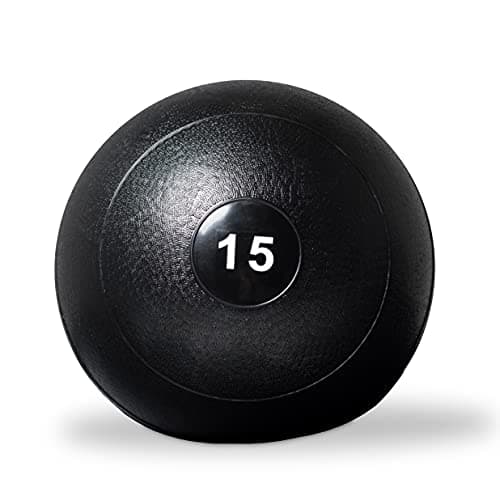
A sand-filled rubber-shelled ball in twelve weights from 5 to 70 lb with a stated 1-year home warranty — the widest range on this page and the shell least likely to give up on a concrete floor.
Best for
Buying one ball you will not outgrow, and slamming it on bare concrete
Pros
- Twelve weights from 5 to 70 lb — the only line here that covers a nervous beginner and a strong adult
- Rubber shell handles concrete and outdoor slabs better than the PVC balls
- A stated home-use warranty, which almost nothing in this category offers
Cons
- Costs more per pound than any PVC ball on this page
- Sold one weight at a time, so a light-and-heavy pair is two full-price purchases
- REP ships from its own warehouse and lists estimated ship dates rather than guaranteed ones, so a heavy size can take a while
Specs from REP Fitness — Slam Balls collection (weight range, sand-filled rubber shell, warranty terms).
Key specs
- Weights
- 10–150 lb
- Diameter
- 11.5 in. at 60 lb
- Shell
- Hard rubber tread over a sand fill
Scores · editorial, out of 10
- Shell & seam durability
- 9
- Weight range offered
- 10
- Floor manners (dead bounce, diameter)
- 5
- Grip with wet hands
- 10
- Value
- 6
Pick 3 · Slam balls
Titan Fitness Rubber Tread Slam Ball (10–150 lb)
Titan Fitness
A hard rubber tread shell over a sand fill, with a published diameter at every weight and a range that runs to 150 lb — the ball for a concrete floor and for loads no PVC ball reaches.
Best for
A garage or driveway slab, and anyone who wants to go past 40 lb
Pros
- Rubber tread is the grippiest surface on this page, wet or dry
- Titan publishes a diameter for every weight, so you can check it fits your shelf before you buy
- Weights to 150 lb for heavy throws and loaded carries, which no PVC ball offers
- 1-year warranty, with extended coverage sold separately
Cons
- The heavy sizes are genuinely bulky — 11.5 in. at 60 lb — and eat corner space
- Rubber leaves black scuffs on a light garage floor coating
- Stock rotates on individual weights: the 70 lb was out of stock at Titan when we checked in September 2026
Specs from Titan Fitness — Rubber Tread Slam Balls (weight range, per-weight diameters, shell, warranty, stock).
Key specs
- Shell
- Heavy-duty PVC, sand fill, no bounce
- Grip
- Textured non-slip surface
- Warranty
- 1-year limited
Scores · editorial, out of 10
- Shell & seam durability
- 7
- Weight range offered
- 6
- Floor manners (dead bounce, diameter)
- 8
- Grip with wet hands
- 8
- Value
- 9
Pick 4 · Slam balls
Amazon Basics Heavy-Duty Slam Medicine Ball
Amazon Basics
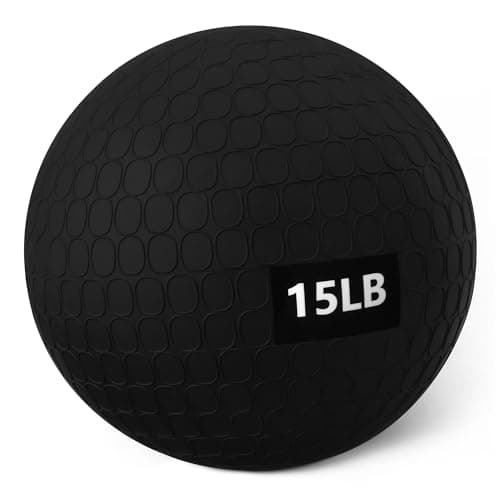
A heavy-duty PVC shell over a sand-filled core with a textured non-slip surface and balanced dead-weight distribution — the cheapest house-brand route into slams, and the fastest delivery of anything here.
Best for
The cheapest way into slams when you only ever want one ball
Pros
- Dead-weight design with balanced distribution — it stays put after a slam instead of skipping away
- A 1-year limited warranty on a house-brand ball
- Wipes clean with a damp cloth and arrives quickly
Cons
- Each weight is its own listing rather than one page with a size selector — it is easy to land on a 50 lb ball when you wanted 20
- No published diameter, so you cannot check it fits a shelf before it arrives
- PVC shell, so the same cold-garage and rough-concrete caveats as the Yes4All apply
Specs from Amazon Basics — Heavy-Duty Slam Medicine Ball listing (PVC shell, sand fill, textured surface).
FAQ
Questions readers ask
What weight slam ball should a beginner start with?
Ten pounds for most people new to training, or 15 lb if you are over about 170 lb and already active. The test is whether you can do twenty consecutive slams with the same technique on the last rep as the first — including picking the ball up properly each time. If not, go lighter.
Is a 20 lb slam ball enough?
For conditioning, yes, for almost everybody and for years. A slam ball is not progressed by adding weight; it is progressed by doing more work in less time. Twenty pounds for forty slams in four minutes is hard regardless of how strong you are.
What weight slam ball should a woman use?
The same logic applies as for anyone: 10 lb if new to training, 15 lb once training regularly, 20 lb if the ball is being used for power rather than conditioning. Bodyweight matters more than sex here, and the chart above is written around bodyweight for that reason.
Should I buy one slam ball or two?
Two if you can: a 10 lb and a 20 lb cover rotational work, warm-ups, partner throws and hard conditioning between them. If it has to be one, take the middle of your bodyweight row in the chart — typically 15 or 20 lb — rather than the top of it.
Do heavier slam balls get bigger?
It depends on the line. Most PVC balls keep a roughly constant shell size across their range, so the heavy ones are dense and small. Rubber-shelled lines scale the diameter with the weight — one publishes 11.5 in. at 60 lb — which catches better and takes more storage space. Check the published diameter before ordering if the ball has to fit a shelf.
Can you use a slam ball on a wooden floor?
No. A slam concentrates the whole weight of the ball into a small contact area at speed, over and over. Concrete or rubber matting only. On an upstairs floor, slams are one of the few home-training movements that genuinely cannot be made to work — use a kettlebell or a battle rope instead.
Related
Keep reading
- Best slam balls
The ranked list once you know the weight you want.
- Slam ball vs medicine ball
Why a slam ball is a poor wall ball, and when you want the other one.
- Best medicine balls
If throws and catches matter more than slams.
- Conditioning workouts at home
Sessions that put the ball to work once it arrives.
Sources
- —Yes4All — Sand-Filled Slam Ball listing (10-40 lb weights, measured 9.7 in. diameter at 15 lb, seamless rotomolded PVC, iron-sand fill) · amazon.com
- —REP Fitness — Slam Balls collection (5-70 lb across 12 sizes, sand-filled rubber shell, warranty terms) · repfitness.com
- —Titan Fitness — Rubber Tread Slam Balls (10-150 lb range, per-weight diameters including 11.5 in. at 60 lb, hard rubber tread shell) · titan.fitness
- —Amazon Basics — Heavy-Duty Slam Medicine Ball listing (PVC shell, sand fill, textured surface, per-weight listings) · amazon.com