Guide · Rings & Bars
Gymnastic rings for beginners: six exercises, three days a week, one doorway
Rings look advanced. The first six exercises aren't — rows, a support hold, push-ups, a tuck hold, dips and a hang — and they scale from a first session to a muscle-up. The plan, the heights, and the one shoulder rule.
Rope & Rep is reader-supported. Product links go through our affiliate resolver and we may earn a commission from qualifying purchases at no cost to you. Prices are the retailer's and change — every button opens the live price on Amazon rather than showing a stale number.
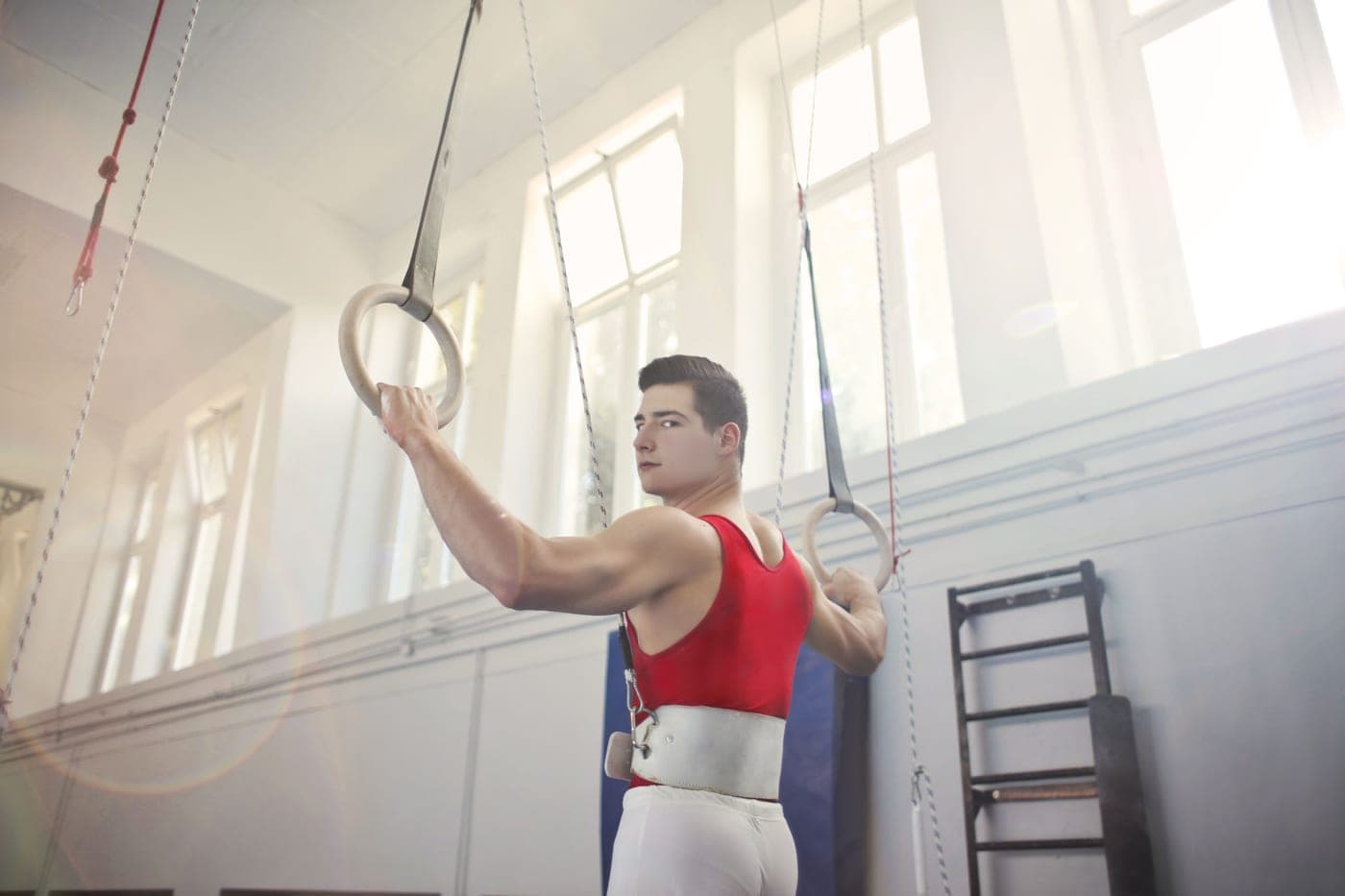
A man training on gymnastic rings indoors. Licensed stock photograph of the category — not the specific product.
Why rings for a beginner
Because they scale further than anything else you can hang in a doorway. A ring row at a shallow angle is easier than a push-up; a ring muscle-up is harder than most things in a gym; and the same two straps cover every step between. They also rotate, so the wrists and elbows track naturally — the reason people whose elbows hate bar chin-ups tolerate ring work. The setup — bar, straps, heights — is in how to hang gymnastic rings at home.
The six exercises
| Exercise | Ring height | Start with | Cue |
|---|---|---|---|
| 1. Ring row | Chest height, feet forward | 3 × 8 | Body straight; pull rings to the ribs; walk feet back to make it harder |
| 2. Support hold | Chest–shoulder height, feet clear | 3 × 10 s | Arms locked, rings turned out slightly, shoulders down |
| 3. Ring push-up | Knee height | 3 × 6 | Rings under shoulders; lower until chest is level with the rings |
| 4. Tuck hold | Chest–shoulder height | 3 × 5 s | From support, knees to chest; shoulders stay down |
| 5. Ring dip | Chest–shoulder height | 3 × 3 (when support = 30 s) | Elbows back, to upper-arm parallel, no lower; rings stay close |
| 6. Dead hang / hanging knee raise | As high as the anchor allows | 3 × 20 s / 3 × 6 | Shoulders active, not shrugged into the ears |
The shoulder rule
On every support, dip and push-up, the shoulders are pressed down and away from the ears — think “long neck”. When they rise into a shrug, the rep is over; that shrug is the joint giving up and the surrounding tissue taking the load. Beginners get sore shoulders on rings from ignoring this, and only from that. Stop each set one rep before the shrug arrives, and add reps over weeks.
A three-day starter plan
| Weeks | Day A | Day B | Day C |
|---|---|---|---|
| 1–2 | Rows 3×8 · Support 3×10 s · Push-ups 3×6 | Rows 3×10 · Tuck hold 3×5 s · Dead hang 3×20 s | Rows 3×8 (feet back) · Support 3×15 s · Push-ups 3×8 |
| 3–4 | Rows 3×10 (feet back) · Support 3×20 s · Push-ups 3×8 | Rows 3×12 · Tuck hold 3×8 s · Knee raises 3×6 | Rows 3×10 · Support 3×30 s · Push-ups 3×10 |
| 5–8 | Rows 3×12 (feet under anchor) · Dips 3×3 · Push-ups 3×10 | Rows 4×10 · Tuck hold 3×10 s · Knee raises 3×8 | Rows 3×12 · Support 3×30 s turned out · Dips 3×4 |
By week eight most people are doing feet-under-the-anchor rows, five clean ring dips and a 30-second turned-out support hold. That is the base for a first pull-up (rows are the assistance exercise in how to get your first pull-up) and, eventually, for the muscle-up progression.
Setting up each session
- Mount the doorway bar; partial-load test.
- Straps over the bar, shoulder width apart, both to the same numbered mark.
- Rows first (lower rings), then push-ups (lower still), then re-raise for supports and dips.
- Chalk if the rings are wood and your hands are wet.
Common mistakes
- Starting with dips. The support hold first — 30 seconds — or the shoulders pay.
- Unlevel rings. Every rep is lopsided; use the numbers on the straps.
- Swinging from a doorway bar. Strict only.
- Turning the rings out too far on a support before the shoulders are ready. A little turn-out, added over weeks.
Picks
What this plan needs
A ring set with numbered straps, the plastic alternative for outdoors, and the bar to hang either from.
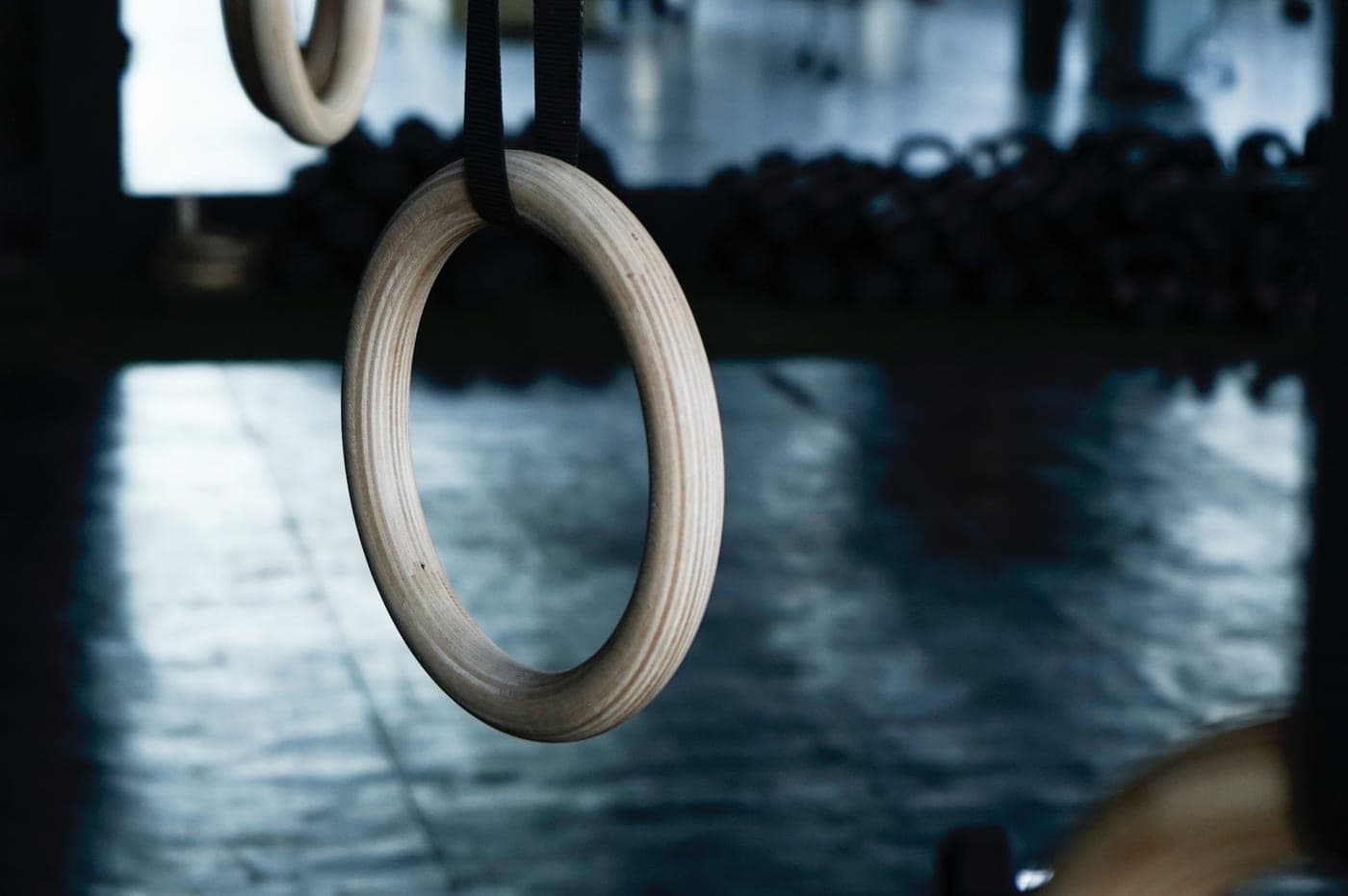
Key specs
- Rings
- Birch wood, 28 mm
- Straps
- 2 × 14.76 ft, 1.5 in., numbered scale
- Rated load
- 1500 lb
Scores · editorial, out of 10
- Strap length & numbering
- 10
- Material & grip
- 9
- Rated load
- 10
- Setup where a renter can hang them
- 8
- Value
- 9
Pick 1 · Gymnastic rings
PACEARTH Wooden Gymnastic Rings (1500 lb)
PACEARTH
Birch rings on 14.76 ft, 1.5 in. cam-buckle straps printed with a scale, rated 1500 lb — the wood ring set that makes leveling both rings under a ceiling a ten-second job.
Best for
A first pair of wood rings hung from a doorway bar, a beam or a tree
Pros
- Numbered straps — set both rings to the same mark and they're level, every time
- 1.5 in. straps are wider than most, so they dig into wrists less on dips
- Serrated cam buckles; birch grips well with or without chalk
Cons
- Wood must stay dry — not for a rainy balcony or an outdoor tree year-round
- 14.76 ft is long for an 8 ft ceiling; you'll coil the excess
Specs from PACEARTH — Wooden Gymnastics Rings listing (ring size, strap length/width, capacity).
Key specs
- Rings
- Textured PC plastic, 28 mm
- Straps
- 38 mm heavy-duty, low stretch
- Rated load
- 2200 lb
Scores · editorial, out of 10
- Strap length & numbering
- 7
- Material & grip
- 7
- Rated load
- 10
- Setup where a renter can hang them
- 9
- Value
- 10
Pick 2 · Gymnastic rings
NAYOYA Gymnastic Rings Workout Set
NAYOYA
Textured PC-plastic rings on 38 mm heavy-duty straps with almost no stretch, rated 2200 lb — the long-running budget set that's tougher than the ABS rings.
Best for
A cheap, durable plastic set for a doorway bar or outdoors
Pros
- PC plastic is stronger than ABS and the textured surface grips better wet
- Low-stretch straps — the rings don't bounce on dips
- 38 mm straps are comfortable across the wrists on support holds
Cons
- Straps aren't numbered — leveling takes a tape measure
- Plastic still gets slick with sweat on long sets
Specs from NAYOYA — Gymnastic Rings Workout Set listing (material, straps, capacity).
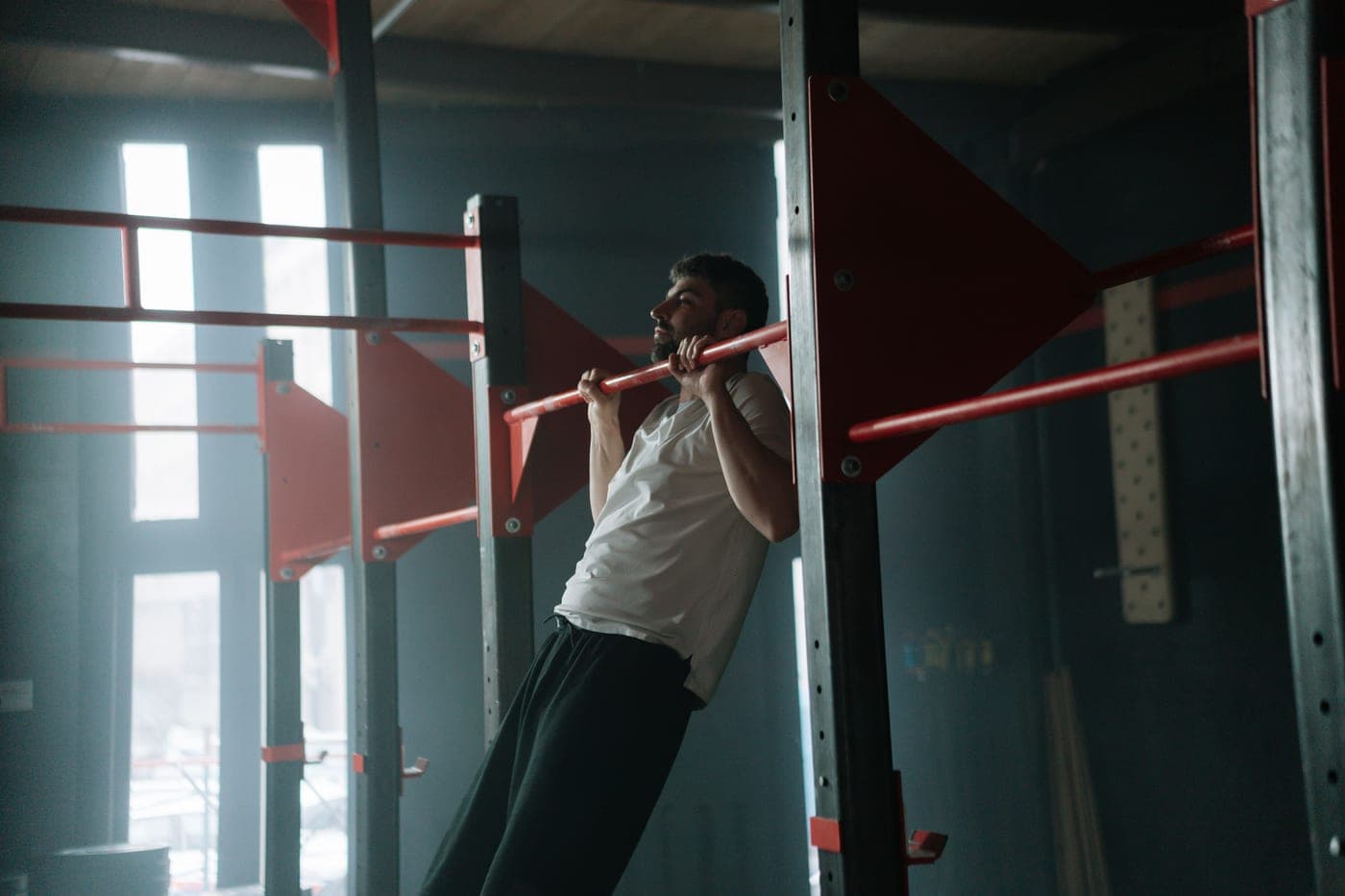
Key specs
- Door width
- 24–32 in. (trim to 3.5 in.)
- Mounting
- Leverage, no screws
- Rated load
- 300 lb
Scores · editorial, out of 10
- Fit & clearance (door, ceiling, depth)
- 7
- Reversibility (no drill, no marks, takedown)
- 9
- Rated load & build
- 7
- Grip options
- 8
- Value
- 10
Pick 3 · Pull-up bars
Iron Gym Total Upper Body Workout Bar
Iron Gym
The doorway bar everyone copies: three grips, a 300 lb rating, fits a 24–32 in. door with trim up to 3.5 in., and it leaves with you when the lease ends.
Best for
A first bar in a standard apartment doorway
Pros
- Fits the most common US interior door range and trim depth without tools
- Three grip positions (wide, narrow, neutral) on a bar this cheap is rare
- Flips to the floor for push-ups and dips — one piece of gear, four movements
Cons
- The leverage design needs a door with trim on both sides; flat, trimless frames won't hold it
- Grip width is fixed — taller lifters may find the wide grip a touch narrow
Specs from Iron Gym — Total Upper Body Workout Bar listing (door width, trim, load).
FAQ
Questions readers ask
Are gymnastic rings good for beginners?
Yes — ring rows and support holds are beginner exercises, and rings scale from those to muscle-ups without buying anything else.
What ring exercises should a beginner start with?
Rows, the support hold, and ring push-ups. Add the tuck hold and dead hangs in week two, dips when a support hold reaches 30 seconds.
How often should a beginner train on rings?
Three non-consecutive days a week, 20–30 minutes. Shoulders adapt to ring instability over weeks; the rest days are part of it.
Why do my shoulders hurt after rings?
Almost always from shrugging into the ears on supports and dips, or from dipping before a 30-second support is there. Shoulders down, stop a rep early, and build the hold first.
Related
Keep reading
- How to hang gymnastic rings at home
The setup this plan assumes.
- Best gymnastic rings
Four sets ranked; numbered straps recommended.
- How to get your first pull-up
Ring rows are the assistance exercise.
- Muscle-up progression
Where weeks 5–8 lead.
Sources