Best Ankle Weights · Conditioning
The best ankle weights, ranked by whether they stay where you put them
Nobody has ever been let down by an ankle weight that was too light. They are let down by a cuff that creeps down the shin halfway through a set, or that was never going to fit their ankle in the first place. So that is what this page ranks.
Rope & Rep is reader-supported. Product links go through our affiliate resolver and we may earn a commission from qualifying purchases at no cost to you. Prices are the retailer's and change — every button opens the live price on Amazon rather than showing a stale number.
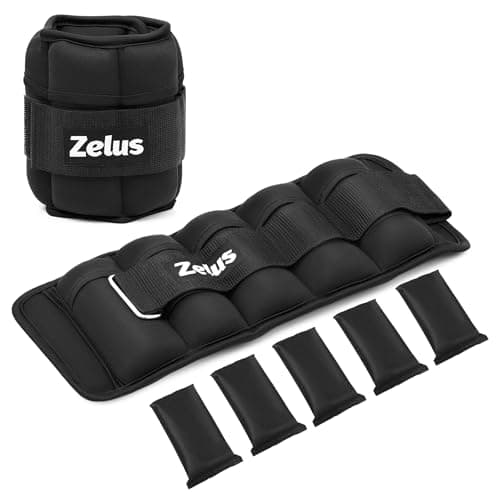
ZELUS Adjustable Ankle Weights (10 lb pair). Licensed stock photograph of the category — not the specific product.
Quick picks
| # | Product | Best for | Score | Price |
|---|---|---|---|---|
| 1 | ZELUS Adjustable Ankle Weights (10 lb pair) Ten removable 1 lb sandbags across the pair, five to a strap, so the set runs 2, 4, 6, 8 or 10 lb in the finest steps we could verify in stock — and it publishes the ankle circumference it fits. | Leg raises, kickbacks and abduction work where you want to add one pound at a time | 8.6 | |
| 2 | 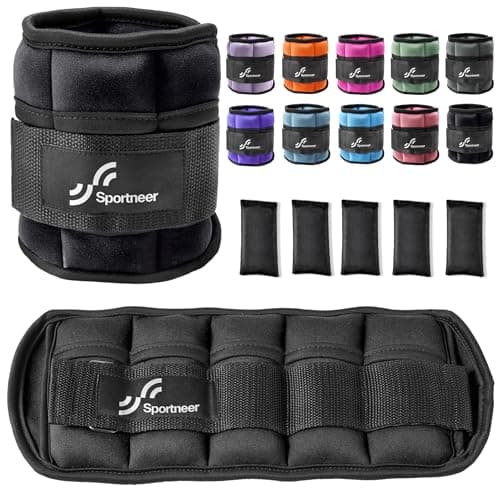 Sportneer Adjustable Ankle Weights (2-10 lb pair) Neoprene against the skin instead of canvas or polyester, 1 to 5 lb per ankle in removable iron-sand packets, and a published ankle range with a metal D-ring in the closure. | Long rehab and leg-raise sessions where the cuff is on for forty minutes and comfort decides it | 8.6 | |
| 3 | 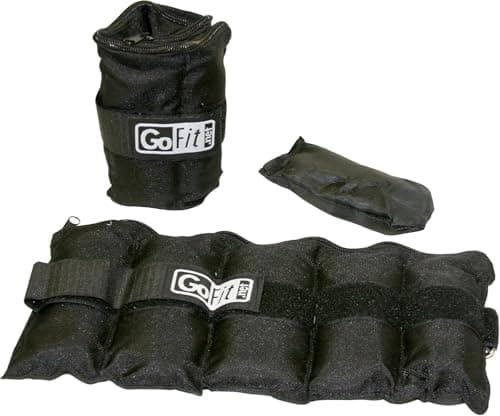 GoFit Adjustable Ankle Weights (2.5–5 lb) Nylon-canvas cuffs with removable weight packets behind a zipper, adjusting from 2.5 lb up to 5 lb. The cheapest honest way to add a pound or two to a leg. | Rehab sets, kickbacks and leg raises where you want 2 lb, not 20 | 8.2 | |
| 4 | 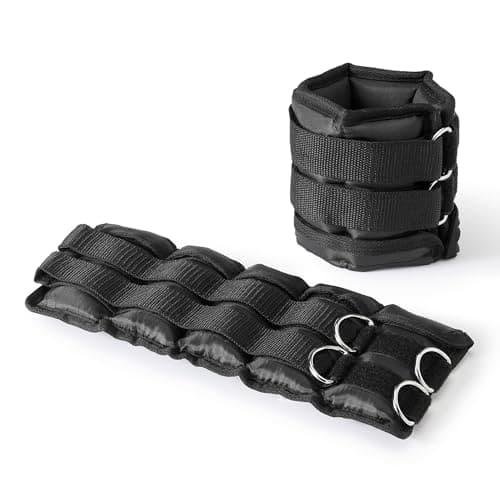 Amazon Basics Adjustable Ankle Weights (5 lb set) A 5 lb set at 2.5 lb per ankle for roughly the price of a sandwich - the right first pair if you are not yet sure ankle weights belong in your training. | Finding out whether you will use ankle weights at all before spending three times as much | 5.6 |
Scores are our editorial judgment from each maker's published specs and mounting instructions, weighted for a renter or small-space trainer.
What ankle weights are genuinely good at
One thing, and they are excellent at it: adding resistance to a movement where your leg is the lever and your hip or your core is the muscle. Hanging leg raises. Lying leg raises. Standing kickbacks and hip abduction. Donkey kicks. Fire hydrants. The late stages of a knee or hip rehab program where a physio wants two pounds on the ankle and not twenty. In every one of those, there is nowhere else to put load — you cannot hold a kettlebell with your foot — and two to five pounds changes the exercise completely.
That is the list. Ankle weights are not a conditioning tool and they are not a way to make walking harder. Walking, running or stair work with weight on the ankles changes your gait and loads the knee at the longest lever available, which is the opposite of what you want from added load. For that job the weight belongs on your torso, and the weighted vest roundup for walking is the page. Our weighted vest vs ankle weights comparison works the whole decision through if you are still weighing the two.
Everything below is ranked for the first list — the leg-raise and rehab job — because that is the job ankle weights are for.
The criteria, in the order they matter
1. Does it stay put? (30 percent) The failure mode of a loaded ankle cuff is creep: it works its way down toward your heel over a set, which moves the load, changes the exercise and eventually drops off mid-rep. What stops it is the closure. A strap that threads through a metal D-ring or a pair of rings and folds back on itself develops friction under tension. A strap that just presses onto its own loop surface relies on the hook-and-loop alone, which is the part that ages. This is the first thing to look at and the thing listings mention least.
2. Weight range and real increment (25 percent) Not the top number — the step size. A pair that goes up in one-pound bites is a pair you can progress with for a year. A fixed 2.5 lb cuff is one exercise difficulty forever. And watch for the gap between the word “adjustable” and a published count of removable packets: if the maker will not say how many bags there are or what each weighs, you do not actually know the increment.
3. Comfort against skin over time (25 percent) Weighted vests are worn over a shirt. Ankle cuffs sit on bare skin, often for a long rehab session, and the shell material is what you feel. Neoprene with a soft inner layer is the kindest; reinforced polyester and nylon canvas are tougher and scratchier. If the cuffs are going on three times a week for months, this matters more than the spec sheet suggests.
4. Value (20 percent) Last, and the spread is small in absolute terms — the whole category runs from about the price of a sandwich to about the price of a takeaway. That means value here is mostly a question of whether you are paying for a published spec or paying for a guess.
How the four compare
| Pair | Range per ankle | Real increment | Published ankle fit | Shell |
|---|---|---|---|---|
| ZELUS 10 lb pair | 1-5 lb | Five removable 1 lb sandbags per cuff | 7.5-12.5 in. | Reinforced polyester, strap through metal rings |
| Sportneer 2-10 lb pair | 1-5 lb | Removable iron-sand packets, count not published | 7.5-12.5 in. | Neoprene, moisture-absorbing inner, metal D-ring |
| GoFit adjustable | 2.5-5 lb | Removable packets behind a zipper | Not published | Heavy-duty nylon canvas, zipper closure |
| Amazon Basics 5 lb set | 2.5 lb (fixed) | None published | Not published | Not published |
The one spec nobody prints, and how to get around it
Two of these four publish the ankle circumference they fit. The other two publish nothing at all, which is remarkable for a product whose entire job is to close around a body part that varies by several inches between adults. Measure yours: a tape measure around the narrowest point just above the ankle bone, which for most adults lands between 8 and 11 in. If you are at either end of that, buy one of the two pairs that publishes a range, because a cuff with two inches of strap left over flaps, and a cuff that barely closes puts every pound on the hook-and-loop.
The second thing nobody prints is how many removable packets a cuff contains. “Adjustable” appears in all four product names. Only one of the four — the ZELUS — publishes the count and the weight of each bag, which is why it leads this page despite being neither the cheapest nor the most comfortable. Knowing you have five one-pound bags per side is the difference between a pair you progress with and a pair you guess with.
Where ankle weights fit in a week of training
Realistically: as an accessory, two or three times a week, in sets of ten to twenty reps on movements your bodyweight has stopped challenging. The honest sequence is that you add them when a set of thirty leg raises has become easy, not before — and when it has, two pounds a side takes you back to a set of twelve. That is the whole function.
They pair well with the gear that owns the rest of the session. A pull-up bar turns a weighted leg raise into a hanging one, which is the hardest version of the movement and the main reason to own cuffs at all. If core work is the goal rather than hip strength, an ab roller does more per dollar. Conditioning workouts at home covers where accessory work sits in a real week, and it is not at the front of it.
The picks in detail
Every pick, reviewed
Key specs
- Weight
- 10 lb pair — 1 to 5 lb per ankle
- Increment
- Five removable 1 lb sandbags per strap
- Fit
- Ankles 7.5–12.5 in.; hook-and-loop through metal rings
Scores · editorial, out of 10
- Stays put on the ankle (strap, closure)
- 9
- Weight range & increment
- 10
- Comfort against skin over time
- 7
- Value
- 8
Pick 1 · Ankle weights
ZELUS Adjustable Ankle Weights (10 lb pair)
ZELUS
Ten removable 1 lb sandbags across the pair, five to a strap, so the set runs 2, 4, 6, 8 or 10 lb in the finest steps we could verify in stock — and it publishes the ankle circumference it fits.
Best for
Leg raises, kickbacks and abduction work where you want to add one pound at a time
It wins on two published numbers that nothing else here matches together. Five removable one-pound sandbags per cuff — a count the maker actually states — which means the pair runs 2, 4, 6, 8 or 10 lb total in one-pound steps per ankle. And a published ankle range of 7.5 to 12.5 in., so fit is a thing you check with a tape measure before ordering rather than discover on arrival.
The closure is the third reason and the quietest. The hook-and-loop strap feeds through metal rings and doubles back, rather than pressing flat onto its own loop field. That folded path builds friction as the cuff loads, which is precisely what stops a weighted strap walking down your shin over twenty reps. It is a detail you only notice by its absence, at rep fourteen.
What it is not: soft. Reinforced polyester is a hard-wearing shell, not a kind one, and over a forty-minute rehab session on bare skin the Sportneer pair below is noticeably more comfortable. Ten loose sandbags are also ten things to lose, and the fine increments exist only while you still have all of them — keep them in the bag the set came in. And like everything here, five pounds an ankle is the top of the range, which is also where this page tells you to stop.
Pros
- One-pound steps per ankle — the smallest honest increment on either ankle cuff here
- A published ankle range, 7.5 to 12.5 in., so the fit is something you check before buying rather than after
- The hook-and-loop strap feeds through metal rings instead of onto itself, which is what stops a loaded cuff creeping down the leg
Cons
- Reinforced polyester is a hard-wearing shell rather than a soft one against bare skin
- Ten loose sandbags are ten things to lose, and the fine increments only exist while you still have them
- The top of its range, 5 lb an ankle, is the ceiling the rest of this page tells you not to pass
Key specs
- Weight
- 1-5 lb per ankle, 2-10 lb per pair
- Fit
- Ankles 7.5-12.5 in. (published)
- Shell
- Neoprene, iron sand, reinforced stitching
Scores · editorial, out of 10
- Stays put on the ankle (strap, closure)
- 9
- Weight range & increment
- 7
- Comfort against skin over time
- 10
- Value
- 8
Pick 2 · Ankle weights
Sportneer Adjustable Ankle Weights (2-10 lb pair)
Sportneer
Neoprene against the skin instead of canvas or polyester, 1 to 5 lb per ankle in removable iron-sand packets, and a published ankle range with a metal D-ring in the closure.
Best for
Long rehab and leg-raise sessions where the cuff is on for forty minutes and comfort decides it
The pick if the cuffs are going on for a long time. Neoprene with a moisture-absorbing inner layer against bare skin is in a different class from canvas or reinforced polyester, and for the person doing physio-prescribed sets three times a week for three months, comfort is not a luxury criterion — it is whether the cuffs stay in use. Sportneer also publishes the same 7.5 to 12.5 in. ankle range as the pick above, so fit is checkable.
The closure is the other reason it sits this high: hook-and-loop through a reinforced metal D-ring, which is the design that holds under load rather than the one that relies on the fastener alone. Same range as the winner, 1 to 5 lb per ankle and 2 to 10 lb per pair, from removable iron-sand packets.
It is second rather than first for one specific reason: Sportneer does not publish how many packets there are or what each weighs. “Removable iron sand” tells you the weight comes out; it does not tell you whether the step is half a pound or two and a half. So you are buying a verified fit and a verified shell with an unverified increment, where the ZELUS publishes all three. Neoprene also holds sweat and smell in a way canvas does not — these want rinsing and air-drying rather than living in a gym bag.
Pros
- Neoprene with a moisture-absorbing inner layer is the softest thing here against bare skin over a long session
- Hook-and-loop through a reinforced metal D-ring, which is the closure that does not creep under load
- A published 7.5-12.5 in. ankle range, so fit is something you check rather than discover
Cons
- Sportneer does not publish how many removable packets there are or what each one weighs, so the real increment is unknown until the box is open
- Neoprene holds sweat and smell in a way canvas does not - it wants rinsing, not a gym bag
- 5 lb an ankle is the top of its range and also the ceiling this page argues for, so there is nowhere to progress to
Key specs
- Weight
- 2.5–5 lb, adjustable
- Increment
- Removable weight packets
- Shell
- Heavy-duty nylon canvas, zipper closure
Scores · editorial, out of 10
- Stays put on the ankle (strap, closure)
- 8
- Weight range & increment
- 9
- Comfort against skin over time
- 6
- Value
- 10
Pick 3 · Ankle weights
GoFit Adjustable Ankle Weights (2.5–5 lb)
GoFit
Nylon-canvas cuffs with removable weight packets behind a zipper, adjusting from 2.5 lb up to 5 lb. The cheapest honest way to add a pound or two to a leg.
Best for
Rehab sets, kickbacks and leg raises where you want 2 lb, not 20
The long-standing cheap standby, and the one with the best closure idea on the page: the weight packets sit behind an actual zipper rather than under a flap. Nothing works loose mid-set, nothing falls out when the cuff is upside down on a leg raise, and the packets still come out when you want a lighter day. For 2.5 to 5 lb a side, which is the range that covers most people, it does the job for less than the two picks above.
Heavy-duty nylon canvas is also the most durable shell here. If the cuffs are going to live on a garage floor and get stepped on, canvas outlasts neoprene by a distance, and it does not hold smell.
Third because of what it does not publish and does not do. GoFit states no ankle circumference range, so fit is a gamble at either end of normal. Canvas on bare skin is scratchier than neoprene over a long session — fine over a sock, less fine for forty minutes of rehab in shorts. And the 2.5 lb floor means it cannot give you the one-pound step the ZELUS can, so as a progression tool it is coarser than it looks.
Pros
- Packets come out, so one pair covers every load you should ever put on an ankle
- A zipper over the packets rather than a flap — nothing works loose mid-set
- Cheapest per pound of any load-bearing gear on this site
Cons
- Nylon canvas against bare skin is scratchier than neoprene on long wear
- 5 lb per ankle is the honest ceiling for ankle load, and this pair is not built to take you past it
Specs from GoFit — Adjustable Ankle Weights (weight options, removable packets, canvas shell, zipper).
Key specs
- Weight
- 5 lb set - 2.5 lb per ankle
- Increment
- None published - treat it as a fixed 2.5 lb
- Fit
- Not published
Scores · editorial, out of 10
- Stays put on the ankle (strap, closure)
- 5
- Weight range & increment
- 4
- Comfort against skin over time
- 5
- Value
- 9
Pick 4 · Ankle weights
Amazon Basics Adjustable Ankle Weights (5 lb set)
Amazon Basics
A 5 lb set at 2.5 lb per ankle for roughly the price of a sandwich - the right first pair if you are not yet sure ankle weights belong in your training.
Best for
Finding out whether you will use ankle weights at all before spending three times as much
Here for an honest reason: it costs roughly a tenth of what the rest of this page costs per set, and 2.5 lb an ankle is where most people should start anyway. If you are not sure ankle weights will survive contact with your actual training habits — and for a lot of people they genuinely do not — this is the sensible way to find out. The listing title states the configuration plainly, 5 lb set at 2.5 lb each, which is more than several more expensive cuffs manage.
What you are giving up is every published spec. Amazon Basics states no ankle circumference range, no shell material, no fill, and no confirmation that the weight actually comes out despite “adjustable” being in the product name. We have scored it on that basis rather than assuming the generous reading: treat it as a fixed 2.5 lb per ankle that may or may not fit you, because that is what is actually published.
The practical consequence is that there is no progression inside the purchase. When 2.5 lb a side gets easy — and it will, in a couple of months — you buy again rather than remove a bag. For $13 that is a defensible trade, and it is why this is fourth rather than unlisted.
Pros
- Cheapest entry into the category by a wide margin, and 2.5 lb an ankle is where most people should start anyway
- The listing title states the configuration plainly - 5 lb set, 2.5 lb each - which is more than several branded cuffs manage
Cons
- Amazon Basics publishes no spec sheet: no ankle circumference range, no shell material, no fill, and no confirmation that the weight is removable despite the word adjustable
- 2.5 lb per ankle is the whole range, so there is no progression inside the purchase
- Fit is the thing that decides an ankle cuff, and here it is the one thing you cannot check before buying
Buying guide
Measure your ankle first. It takes ten seconds.
Tape measure around the narrowest point just above the ankle bone. Most adults land between 8 and 11 in. If you are under 8 or over 11, buy one of the two pairs on this page that publishes a fit range, because at the small end a cuff leaves inches of strap flapping against your other leg, and at the large end the closure is holding the whole load on its last half-inch of hook-and-loop. This is the single most common reason a perfectly good pair of ankle weights ends up in a drawer.
Read “adjustable” carefully
The word covers three different things in this category. It can mean removable weight packets with a published count and weight, which is a genuine increment. It can mean removable packets with no published count, which is an increment you will discover. Or it can mean the strap adjusts and the weight does not, which is not an adjustable weight at all. Only the first is worth paying extra for, and only one of the four pairs here is unambiguously in that category.
Why the closure matters more than the fill
Sand, iron sand and steel shot all weigh the same per pound and behave almost identically inside a cuff. What differs between a pair you keep and a pair you abandon is whether the strap holds position under load. Look for a strap that threads through a metal ring or D-ring and folds back on itself; that path converts tension into friction and gets tighter as the cuff pulls. A strap that presses directly onto its own loop field is relying on the hook-and-loop alone, and hook-and-loop is the component that wears out. A zipper over the packets, as on the GoFit pair, solves a different problem — packets escaping rather than the cuff creeping — and is worth having too.
What to use instead, depending on what you actually want
Loaded walking, rucking or conditioning: a vest, not cuffs — start with the walking vest roundup, and vest vs rucking if you are choosing between those two. Weighted pull-ups and dips: a vest or a dip belt, and that comparison settles which. More hip and glute resistance than 5 lb: a band or a cable, because both load the hip without putting the mass at the end of the lever — handled bands cover it. Harder core work: hanging leg raises from a pull-up bar, which is where cuffs become genuinely useful rather than optional.
What we did not rank, and why
Henkelion's 10 lb and 20 lb pairs. Live, popular and cheap, and the listings do state a pair weight and a per-cuff weight. They are not ranked because Henkelion publishes no spec sheet anywhere we could read — no ankle range, no fill, no packet count — and because the 20 lb pair sits at 10 lb per ankle, which is twice the load this page argues is sensible. CAP Barbell's adjustable cuffs. A real brand that already appears elsewhere on this site, and the pairs are live and cheap, but capbarbell.com would not return a readable ankle-weight product page to an automated read on 21 October 2026, and retailer listings disagreed about whether a “10-pound” set means 10 lb per pair or per cuff. A roundup entry cannot state a weight it cannot confirm. Nordic Lifting, Bala Bangles and ProsourceFit. All three were checked against the maker's own store on 29 September 2026 and read sold out or backordered across every weight; none has been re-verified since, so none is featured.
How this list was built
Each pair's ASIN was confirmed live on 21 October 2026 with a title-verified lookup — brand and configuration tokens present in the listing title, with a purchasable offer. Ranges, increments, fit ranges, shells and closures come from the page named under each product; where the maker publishes nothing, the entry says so and the score reflects the absence rather than an assumed figure. Scores are editorial judgments from those published specs against the ankle-weight rubric, which weights staying put at 30 percent, range and increment at 25, comfort against skin at 25 and value at 20. Nothing here was hands-on or lab tested; the methodology page sets out exactly what the scores are and are not. Nothing on this page is medical advice — if you are working through an injury, the weight your clinician specifies beats anything written here.
FAQ
Questions readers ask
How heavy should ankle weights be?
Two to five pounds per ankle covers almost everybody, and 2.5 lb is a sensible first purchase. The movements ankle weights are good at — leg raises, kickbacks, abduction, rehab work — are high-rep movements where your leg is a long lever, so a small load changes them a lot. Past 5 lb a side you are mostly adding knee torque rather than training a muscle, which is why this page does not rank a 20 lb pair.
Are ankle weights bad for your knees?
Not at sensible loads in the movements they suit. The risk is specific: weight at the ankle acts at the end of the longest lever in your lower body, so it multiplies the torque at the knee far more than the same weight at your waist does, and it arrives as a swinging mass during walking or running. Controlled, low-rep loading in leg raises and kickbacks at 2 to 5 lb is a normal training stimulus. Ten pounds a side while jogging is how people hurt themselves. If you are rehabbing anything, use the weight your clinician specifies.
Can you walk or run in ankle weights?
You can, and we would not. Weight on the ankle changes your gait — it alters swing-through timing and loads the knee at full extension — which is both an injury risk and a worse training stimulus than the same weight on your torso. For loaded walking, use a vest: the walking vest roundup ranks the pocket and plate vests, and vest vs ankle weights compares the two directly.
What size ankle weights will fit me?
Measure the narrowest point just above your ankle bone; most adults are between 8 and 11 in. Two of the four pairs here publish a 7.5 to 12.5 in. range, which covers that comfortably. The other two publish no fit information at all, so at either end of normal you are guessing. A cuff that only just closes puts the whole load on the last half-inch of hook-and-loop, which is exactly where they fail.
Do ankle weights actually build muscle?
In the hip, yes, within limits. Adding 2 to 5 lb to kickbacks, abduction and leg raises takes a movement your bodyweight has stopped challenging and makes it hard again, and hard-again sets build muscle. What they will not do is replace loaded hip extension — a kettlebell swing or a deadlift moves far more weight through the same joint. Think of cuffs as the accessory that finishes a session, not the thing that drives it. Our kettlebell page for beginners covers the tool that does the heavy half.
Ankle weights or resistance bands for glutes?
Bands, if you had to pick one. A band loads the hip without putting a swinging mass at the end of your leg, the resistance rises through the range where glutes are strongest, and it costs less. Cuffs win on two counts: they leave your hands free and they load hanging leg raises, which no band does well. Plenty of people own both for about $40 total. Handled resistance bands is the page for the other half.
Can you use ankle weights on your wrists?
Most of these are sold as wrist-and-ankle cuffs and will physically close around a wrist, but it is a worse idea than it looks. Weight on the wrist during arm movements loads the elbow and shoulder at full lever length in exactly the way that aggravates both, and for anything you would use a wrist weight for, a 2 lb dumbbell is better in every respect. The one legitimate use is clinician-prescribed shoulder rehab, at clinician-prescribed weights.
Are ankle weights worth it in a small apartment?
They are among the best things you can own in one, actually. A pair occupies less space than a pair of shoes, makes no noise, touches no floor and cannot annoy a downstairs neighbor, which is more than almost any other loaded gear manages. If your training is constrained by a lease rather than a budget, cuffs plus a doorway bar is a genuinely capable setup — the apartment gym setup guide lays out the rest of it.
Related
Keep reading
- Weighted vest vs ankle weights
Where the load belongs, decided on leverage.
- Best weighted vests for walking
The right tool if loaded walking is the goal.
- Best resistance bands with handles
More hip resistance without the long lever.
- Best pull-up bars
What turns a weighted leg raise into a hanging one.
- Apartment gym setup
The quietest loaded gear there is, and what goes with it.
Sources
- —ZELUS — Adjustable Ankle Weights, 10 lb pair listing (1-5 lb per ankle from five removable 1 lb sandbags per strap, published 7.5-12.5 in. ankle range, hook-and-loop strap through metal rings, reinforced polyester shell) · amazon.com
- —Sportneer — Adjustable Ankle Weights product page (1-5 lb per ankle and 2-10 lb per pair, 7.5-12.5 in. ankle fit, neoprene exterior with iron sand and reinforced stitching, moisture-absorbing inner material, hook-and-loop strap with a reinforced metal D-ring, $35.99, In Stock on 21 October 2026) · sportneer.com
- —GoFit — Adjustable Ankle Weights product page (2.5-5 lb adjustable via removable weight packets behind a zipper, heavy-duty nylon canvas shell; no ankle circumference range published) · gofit.net
- —Amazon Basics — Adjustable Ankle Weights, 5 lb Set listing, verified live 21 October 2026 (5 lb set at 2.5 lb each; no ankle range, shell material or fill published) · amazon.com