Best for Beginners · Jump Ropes
The best jump ropes for beginners have some weight to them
Beginners trip for one reason — they can't feel where the rope is. Four ropes that fix that, ranked for learning in a small space, plus the sizing rule and the first two weeks.
Rope & Rep is reader-supported. Product links go through our affiliate resolver and we may earn a commission from qualifying purchases at no cost to you. Prices are the retailer's and change — every button opens the live price on Amazon rather than showing a stale number.
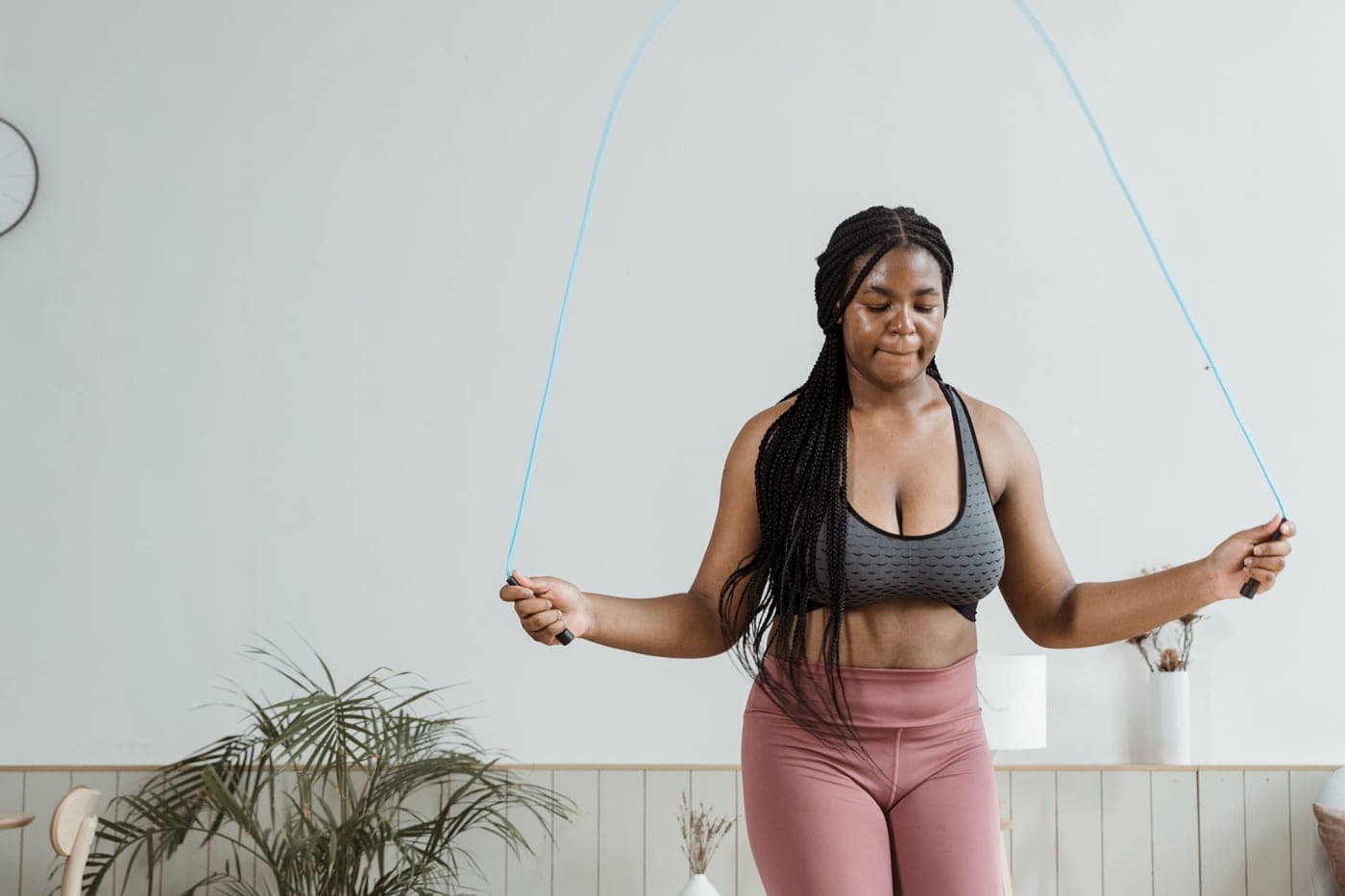
A woman in activewear jumping rope indoors. Licensed stock photograph of the category — not the specific product.
Quick picks
| # | Product | Best for | Score | Price |
|---|---|---|---|---|
| 1 | Crossrope Get Lean Set (1/4 lb + 1/2 lb) Two lightly weighted ropes (1/4 lb and 1/2 lb) on quick-clip handles, sold by height — the easiest rope to learn on because the weight keeps it taut, and it works on any surface. | A beginner who keeps tripping, or anyone who wants a rope they can feel without going heavy | 8.4 | |
| 2 | XYLsports Jump Rope A 9 ft 8 in. PVC rope with built-in bearings and foam handles that you size by cutting — heavier than a cable, quieter on a floor, and the easiest rope to learn on for the money. | Beginners and anyone jumping on an apartment floor who wants a rope they can feel | 8.6 | |
| 3 | 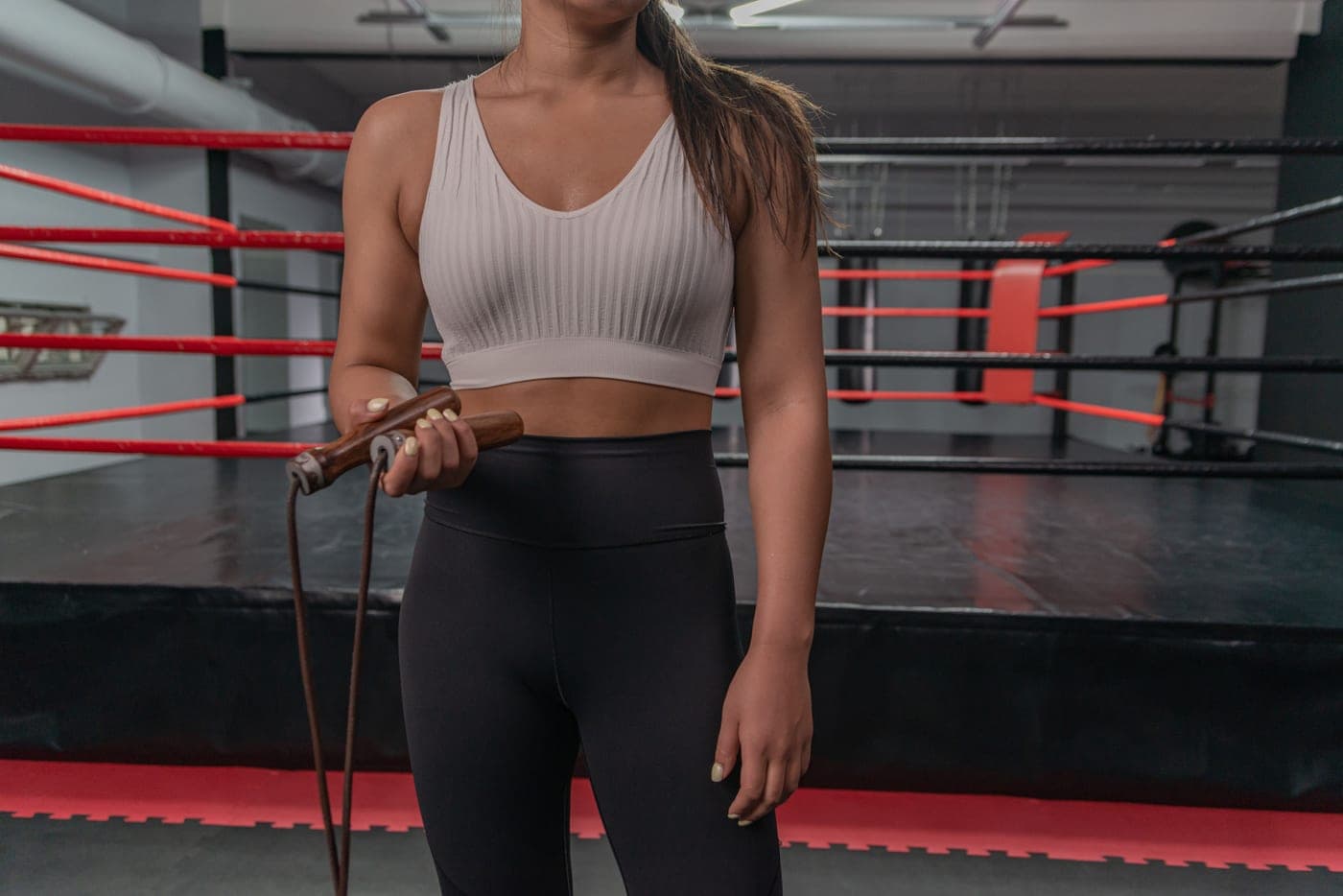 Elite Jumps Boxer Jump Rope 3.0 The classic boxer's rope done well: a 5 mm PVC cord with a string core, 10 ft to trim, 5.5 in. polymer handles with a smooth dowel, snap-lock ends for resizing — the rope that teaches rhythm. | Learning footwork and rhythm; a rope you can size yourself and use outdoors | 8.6 | |
| 4 | 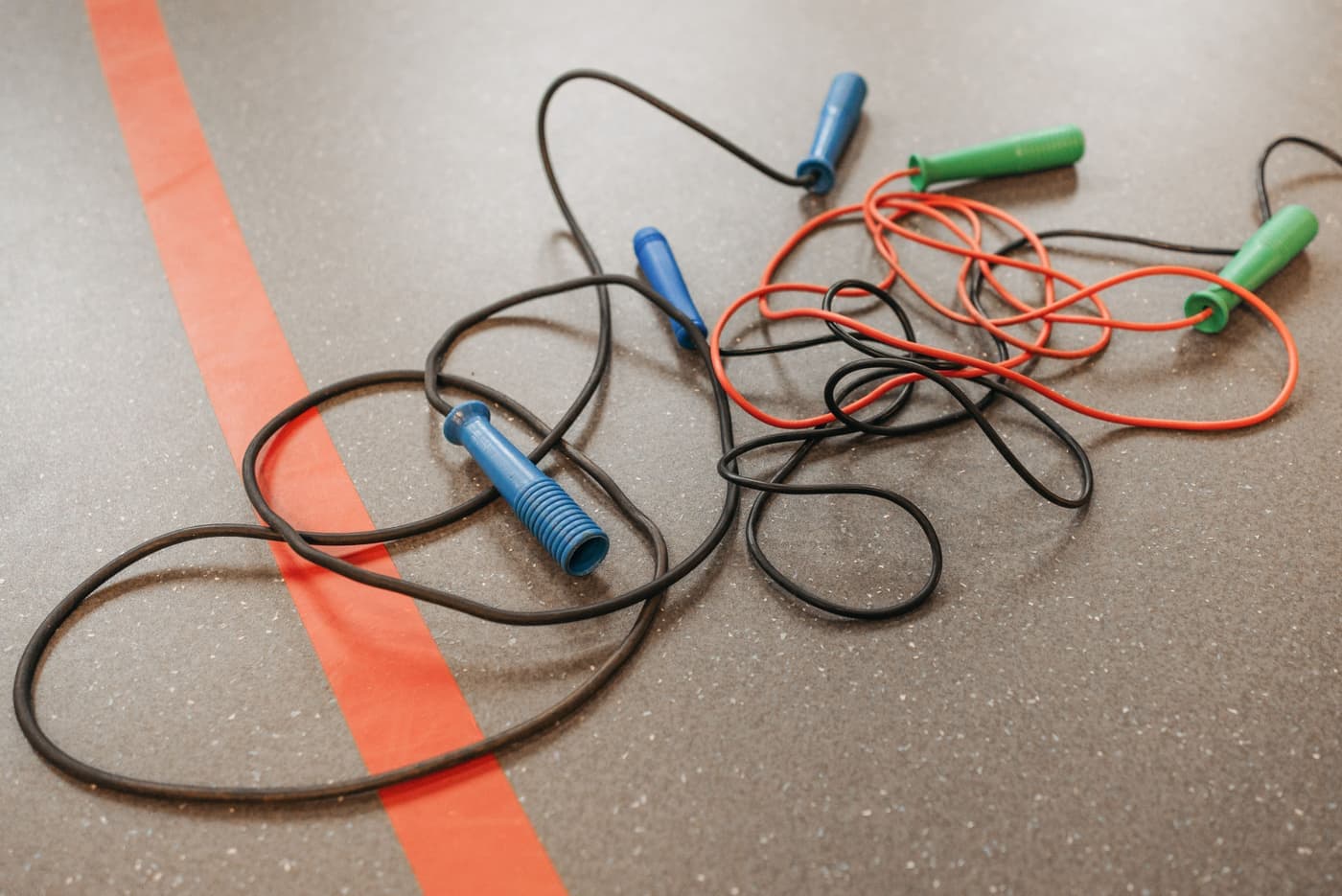 DEGOL Skipping Rope with Ball Bearings The cheapest rope that isn't a toy: a 9 ft PVC-coated steel cable, dual ball bearings, and 6 in. memory-foam handles — the default first rope for an apartment. | A first rope for someone who has never jumped and wants to spend the least | 7.7 |
Scores are our editorial judgment from published specs and mounting instructions, weighted for a renter or small-space trainer — not lab measurements. We have not tested these units.
Why beginners trip, and what fixes it
A thin steel speed cable weighs almost nothing. It turns fast, gives no resistance through the handles, and makes no sound — so a beginner can't feel or hear where it is and jumps at the wrong moment. A PVC cord or a lightly weighted rope drags a little through the air; you feel it load the handles and hear it hit the floor, and your feet learn the rhythm from that. That is the entire argument for the ranking below, and it is why the most expensive speed rope in the world is the wrong first rope.
The four ropes, ranked
| Rope | Weight / feel | Sizing | Surface | Apartment noise |
|---|---|---|---|---|
| Crossrope Get Lean | 1/4 lb + 1/2 lb — slow, taut | By height, fixed | Any, incl. concrete | Moderate; mat |
| XYLsports PVC | PVC — moderate, audible | Cut to length | Mat or wood | Low |
| Elite Jumps Boxer 3.0 | 5 mm PVC, string core | Snap-lock, reversible | Mat or wood | Low |
| DEGOL cable | Coated steel — light | Adjust and trim | Mat | Low, but stings on a miss |
Sizing the first rope
Stand on the middle of the rope with one foot and pull the handles up along your body. For a beginner the tops of the handles should reach the armpits — a little long, which gives you margin. As you improve, shorten to the chest. The Crossrope is sold in fixed lengths by height (choose carefully); the PVC ropes trim; the Boxer's snap-lock ends let you shorten and lengthen again. The full chart by height is in jump rope length by height.
The first two weeks
- Days 1–3: No jumping. Hold both handles in one hand and turn the rope beside you to the rhythm; bounce on the spot to match it.
- Days 4–7: Single jumps in sets of 10. Miss, reset, go again. Three minutes total.
- Week 2: 30 seconds on, 30 off, six rounds. Feet together, low jumps, elbows in.
The beginner workout takes it from there to a real 15-minute session over four weeks.
Floor and shoes
Jump on a mat, wood or rubber — not bare concrete, which is hard on shins and chews PVC. In an apartment, landing noise goes through the floor structure; a 1/4 in. mat is the difference between a quiet workout and a knock at the door. The mat roundup has three, and jump rope in an apartment covers the rest.
How this list was built
We scored each rope on the jump rope rubric with rope-type fit for a beginner weighted at 25%, then sizing and apartment-friendliness. The Crossrope is first for feel; the PVC ropes follow for feel and price; the DEGOL is last because a thin cable is harder to learn on, kept for the budget buyer. We have not jumped these ropes; the ranking is from the makers' specs read for someone learning.
The picks in detail
Every pick, reviewed
Key specs
- Ropes
- 1/4 lb + 1/2 lb, coated
- Handles
- Slim, fast-clip
- Sizing
- By height (S/M/L/XL)
Scores · editorial, out of 10
- Rope type fit for the buyer
- 10
- Adjustability & sizing
- 7
- Bearings & handles
- 8
- Apartment-friendliness (floors, noise)
- 10
- Value
- 6
Pick 1 · Jump ropes
Crossrope Get Lean Set (1/4 lb + 1/2 lb)
Crossrope
Two lightly weighted ropes (1/4 lb and 1/2 lb) on quick-clip handles, sold by height — the easiest rope to learn on because the weight keeps it taut, and it works on any surface.
Best for
A beginner who keeps tripping, or anyone who wants a rope they can feel without going heavy
Why it is #1 for a beginner. A 1/4 lb rope is slow and taut enough that the timing arrives in days. Clip handles swap to the 1/2 lb rope for conditioning later. Rated for any surface. Choose the height size carefully — the lengths are fixed.
Pros
- A 1/4 lb rope is slow and taut enough that beginners learn the timing in days, not weeks
- Fast-clip handles swap ropes in seconds; ropes are rated for any surface including concrete
- Lifetime warranty on the handles
Cons
- Sold in fixed lengths by height — not trimmable, so pick the size carefully
- Costs several times a PVC rope; the Get Strong set is the better value if you want heavy
Specs from Crossrope — Get Lean Jump Rope Set (contents, rope weights, sizing).
Key specs
- Rope
- PVC, 9 ft 8 in., trim to fit
- Bearings
- Built-in ball bearing
- Handles
- Non-slip foam
Scores · editorial, out of 10
- Rope type fit for the buyer
- 9
- Adjustability & sizing
- 8
- Bearings & handles
- 7
- Apartment-friendliness (floors, noise)
- 9
- Value
- 10
Pick 2 · Jump ropes
XYLsports Jump Rope
XYLsports
A 9 ft 8 in. PVC rope with built-in bearings and foam handles that you size by cutting — heavier than a cable, quieter on a floor, and the easiest rope to learn on for the money.
Best for
Beginners and anyone jumping on an apartment floor who wants a rope they can feel
The cheap one that works. Heavier than a cable, quiet on a floor, sized by cutting. If money is tight, this rope and a mat is the whole starter kit.
Pros
- PVC has enough weight to feel the turn — beginners trip less than on a thin cable
- Softer landing sound on a floor than a steel cable; kinder to downstairs neighbors
- Sizes by cutting: pop the end cap, pull the rope through, trim
Cons
- PVC wears on rough concrete faster than a coated cable
- Once cut it can't be lengthened — measure twice
Specs from XYLsports — Jump Rope listing (rope material, length, sizing).
Key specs
- Rope
- 5 mm PVC, string core, 10 ft
- Handles
- 5.5 in. polymer, dowel action
- Sizing
- Snap-lock cord ends
Scores · editorial, out of 10
- Rope type fit for the buyer
- 9
- Adjustability & sizing
- 9
- Bearings & handles
- 8
- Apartment-friendliness (floors, noise)
- 8
- Value
- 9
Pick 3 · Jump ropes
Elite Jumps Boxer Jump Rope 3.0
Elite Jumps
The classic boxer's rope done well: a 5 mm PVC cord with a string core, 10 ft to trim, 5.5 in. polymer handles with a smooth dowel, snap-lock ends for resizing — the rope that teaches rhythm.
Best for
Learning footwork and rhythm; a rope you can size yourself and use outdoors
The rope you'll still use in a year. The string core gives the steadiest feedback of the PVC ropes, and the snap-lock ends mean you can shorten it as you improve without cutting.
Pros
- String-core PVC gives a steady, audible turn — the best feedback of any non-weighted rope here
- 10 ft cord fits anyone up to about 6 ft 3 in. before trimming
- Snap-lock ends make resizing reversible, unlike a cut PVC rope
Cons
- A dowel turns slower than a bearing; double-unders are possible but not its strength
- PVC on bare concrete wears — jump on a mat
Specs from Elite Jumps — Boxer Jump Rope 3.0 listing (cord, handles, sizing).
Key specs
- Cable
- 9 ft PVC-coated braided steel
- Bearings
- Dual ball bearing
- Handles
- 6 in. EVA memory foam
Scores · editorial, out of 10
- Rope type fit for the buyer
- 7
- Adjustability & sizing
- 8
- Bearings & handles
- 8
- Apartment-friendliness (floors, noise)
- 6
- Value
- 10
Pick 4 · Jump ropes
DEGOL Skipping Rope with Ball Bearings
DEGOL
The cheapest rope that isn't a toy: a 9 ft PVC-coated steel cable, dual ball bearings, and 6 in. memory-foam handles — the default first rope for an apartment.
Best for
A first rope for someone who has never jumped and wants to spend the least
The budget cable. Bearings and 6 in. foam handles for very little. Harder to learn on than the three above; fine if you already have a little rhythm.
Pros
- Ball bearings at this price mean the rope turns without twisting — the thing cheap ropes get wrong
- 9 ft cable trims to fit anyone up to about 6 ft 2 in.
- Long foam handles are forgiving for a beginner's grip
Cons
- A thin coated cable stings when you miss and frays on bare concrete — use a mat
- Light cable gives little feedback, so timing takes longer to learn than with a PVC or weighted rope
Specs from DEGOL — Skipping Rope with Ball Bearings listing (cable, bearings, handles).
Buying guide
Weighted or PVC first?
Weighted if you have tripped on ropes before and want the easiest possible start; PVC if you want the boxing feel and a lower price. Either beats a cable for a first month.
What to skip
- Beaded “segmented” kids' ropes — fine for children, noisy and slow for an adult on a hard floor.
- Any rope without a clear length or sizing method on the listing.
- Ropes bundled with “calorie counters” in the handle — extra weight in the wrong place.
FAQ
Questions readers ask
What jump rope is best for a beginner?
A lightly weighted rope (1/4–1/2 lb) or a PVC rope — both give feedback through the handles that a thin speed cable doesn't. The Crossrope Get Lean and the Elite Jumps Boxer are the two we'd pick.
Is a weighted jump rope good for beginners?
Yes, at 1/4–1/2 lb: the weight slows the turn and keeps the rope taut, which is exactly what a beginner needs. Heavy 1–2 lb ropes are for conditioning later.
How long should a beginner jump rope for?
Three minutes total in the first week, six 30-second rounds in the second, building to 10–15 minutes by week four.
Why do I keep tripping on the jump rope?
Usually the rope is too long, too light to feel, or you're jumping too high. Shorten it to the armpits, use a PVC or weighted rope, and keep jumps to an inch.
Related
Keep reading
- Jump rope workout for beginners
Four weeks from three minutes to fifteen.
- Jump rope length by height
The sizing chart.
- Best weighted jump ropes
When you want the rope to be the workout.
- Best jump rope mats
For concrete and for neighbors.
Sources
- —Crossrope — Get Lean Jump Rope Set (contents, rope weights, sizing) · crossrope.com
- —XYLsports — Jump Rope listing (rope material, length, sizing) · amazon.com
- —Elite Jumps — Boxer Jump Rope 3.0 listing (cord, handles, sizing) · amazon.com
- —DEGOL — Skipping Rope with Ball Bearings listing (cable, bearings, handles) · amazon.com