Comparison · Conditioning
Weighted vest vs rucking pack: the answer is decided by how much weight you want to carry
Under about 20 lb, a vest is more comfortable, cheaper and works for pull-ups too. Over about 20 lb, a ruck carries the load better because it sits high on your back instead of squeezing your ribs. That is most of the decision.
Rope & Rep is reader-supported. Product links go through our affiliate resolver and we may earn a commission from qualifying purchases at no cost to you. Prices are the brand's and change — every button opens the live price on the brand's own store rather than showing a stale number.

Silhouette of a person on a street during a road run. Licensed stock photograph of the category — not the specific product.
What each one is
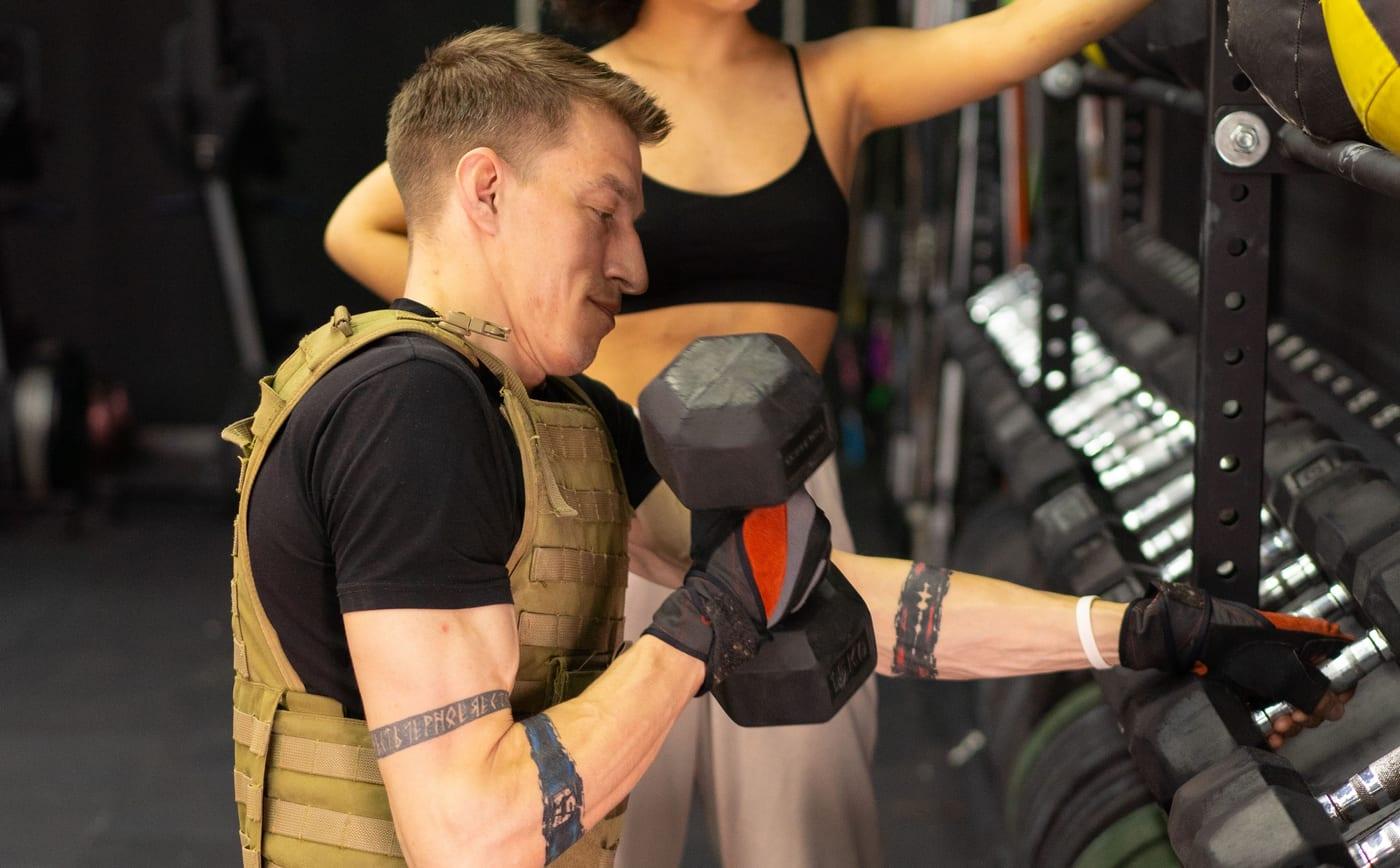
A weighted vest is a garment: a panel of pockets or thin plates that wraps your torso and holds weight against your chest and upper back. It goes on in seconds, it does not swing, and because it stays put you can do pull-ups, dips, step-ups and push-ups in it.
A rucking pack is a backpack built to carry a single flat weight plate high against your spine. GORUCK's Ruck Plate Carrier 3.0 is the minimal version — 1000D CORDURA, a 1050D ballistic base, an EVA lumbar pad, roughly 10 by 16 by 4.75 in., in Standard, Long and two-compartment sizes. The Rucker 4.0 is the same idea as a real bag: 20 liters, an elevated plate pocket that scales to 75 lb, a 210D Cordura back panel over closed-cell foam, raised lumbar padding and an internal frame sheet, at 3.8 lb empty.
The plates are the load in both cases and are sold separately. GORUCK's Ruck Plate is USA-made cast iron with a matte-black powder coat, rounded edges and a wide grab handle, shaped to sit in the elevated pocket — 10 lb is the entry size, with heavier plates sold separately.
Side by side
| Weighted vest | Rucking pack | |
|---|---|---|
| Where the load sits | Around the ribs, front and back | High on the back, against the spine |
| Comfortable range | 5-20 lb for walking; 20-40 lb for short efforts | 20-45 lb for walking; more with practice |
| Pull-ups and dips | Yes — that is its advantage | No |
| Running | Only in a slim micro-weight vest | Not recommended loaded |
| Doubles as | Nothing | A daypack (Rucker) or nothing (plate carrier) |
| Entry cost | Low — a complete 20 lb vest is cheap | Carrier plus a plate; the plate alone is not cheap |
| Storage | Folds into a drawer | Hangs on a hook, loaded, by the door |
| Adjustment | Packets or plates in small steps | Whole plates: 10, 20, 30, 45 lb |
| Hot spots | Ribs and armholes | Shoulders and lower back |
The load-position argument, which is the real one
A vest spreads weight around your torso. At 10 lb that is barely noticeable. At 30 lb it becomes a band squeezing your ribcage, and it interferes with breathing on a long effort in a way a 30 lb plate on your upper back does not. A ruck puts the mass close to your spine and high — which is why GORUCK builds elevated plate pockets and pads the lumbar rather than just making a bigger bag. The load sits over your center of mass instead of around it.
The crossover is somewhere around 20 lb for most people. Below it the vest wins on convenience and versatility; above it the ruck wins on comfort by a widening margin. That is not a law of physics, it is where most people find the change, and you will find your own number a few pounds either side.
Versatility: the vest's trump card
You can do weighted pull-ups in a vest. You cannot do them in a ruck — the pack hangs off your shoulders and swings, and a plate carrier rides up over your head on a hang. That single fact is why a vest is the better first purchase for most people on this site: it adds load to pull-ups, dips, push-ups, step-ups and squats as well as to a walk. Our pull-up vest roundup ranks for exactly that, and the walking page ranks the same vests for an hour on foot.
The ruck's trump card is the opposite kind of usefulness: the Rucker carries a jacket, water and keys, so a loaded walk can also be a commute or a dog walk. A vest carries nothing.
Cost, honestly
A complete 20 lb weighted vest is one cheap purchase. Rucking is two: a carrier and a plate, and GORUCK's plates are priced like a small kettlebell each. The Ruck Plate Carrier is less than half the price of the Rucker and holds the plate just as high, which makes it the sensible entry if you are not sure rucking will stick.
You can also just put a kettlebell wrapped in a towel into a solid backpack for a month and find out whether you like walking under load before spending anything. It is uncomfortable and it works, and it is the honest advice.
Sizing and fit, per side
Vest: measure your chest, and your torso length from collarbone to waist. A vest longer than your torso rides up over the hips. One-size vests are a circumference fix for a shape problem — sized vests and side lacing fit better. There is more on this in the women's vest page, where the issue is most acute.
Ruck: GORUCK's Long size exists for taller torsos and broad traps, which is worth knowing before you order Standard by default. Their rule of thumb pairs a 20 L pack with a 20 lb plate for most people. Set the straps so the plate sits between your shoulder blades, not at your kidneys.
What we are not going to tell you
How many calories each burns. Loaded walking costs more than unloaded walking, obviously, and the difference depends on your mass, the load, the gradient and your pace. Every published figure is a general activity estimate applied to a situation it was not measured in, and we will not put one on this page.
How we compared them
Specs, materials, dimensions, plate compatibility, prices and stock status all come from each maker's own product page, checked 26 September 2026. Products were scored on separate rubrics — the weighted vest rubric for the vest, and a rucking rubric weighting load carriage 30%, weight range 25%, build 25% and value 20% — because they are not the same tool and a single scale would flatter one of them. Every score traces back to a published figure you can check for yourself on our methodology page.
Picks
The gear on both sides of this comparison
A pocket vest, the cheap plate carrier, the purpose-built ruck, and the plates that both carriers are designed around.
Key specs
- Weights
- 12–140 lb versions, removable bags
- Fit
- Chest 28–48 in., quick-release buckles
- Shell
- 1000D nylon
Scores · editorial, out of 10
- Fit for pull-ups (stays put)
- 10
- Adjustability of load
- 10
- Durability
- 9
- Value
- 10
Pick 1 · Weighted vests
RUNFast/RUNmax Adjustable Weighted Vest (12–140 lb)
RUNFast
The classic pocket vest: sold from 12 lb to 140 lb with iron weight bags in four front and four back pockets, 1000D nylon, chest 28–48 in., optional shoulder pads — buy the 20 or 40 lb for pull-ups.
Best for
Weighted pull-ups and dips on a budget, with weight you can take out in 2.5 lb steps
Why we picked it
- Weight distributes front and back, so it hangs straight on a pull-up
- Remove bags to progress from 10 lb up to the vest's rating
- Lifetime warranty; shoulder-pad option for dips
Good to know
Bulky; the 40 lb+ versions bounce on running
Sold through third-party marketplaces only — this brand has no store of its own, so there is no link here and we earn nothing on it.
RUNFast/RUNmax Adjustable Weighted VestSpecs from RUNFast — 12–140 lb Weighted Vest listing (weights, pockets, fit, shell).

Key specs
- Load
- 10 / 20 / 30 lb standard plates (Long: 30 or 45 lb)
- Size
- 10 x 16 x 4.75 in.; Standard, Long, 2-compartment
- Build
- 1000D CORDURA, 1050D ballistic base, 20-25 mm EVA lumbar
Scores · editorial, out of 10
- Load carriage (how high and tight it sits)
- 10
- Weight range & plate options
- 9
- Build & materials
- 10
- Value
- 10
Pick 2 · Rucking packs & plates
GORUCK Ruck Plate Carrier 3.0
GORUCK
A stripped-down carrier that does one job: hold a ruck plate high on your back. 1000D CORDURA, a 1050D ballistic base, EVA lumbar pad, 10 x 16 x 4.75 in., in Standard, Long and two-compartment sizes.
Best for
Rucking on a budget, or a second carrier that lives by the door with a plate already in it
Why we picked it
- Less than half the price of the Rucker, and it carries the plate just as high
- The Long size exists specifically for taller torsos and broad traps
- Nothing to it — no compartments to flap, nothing to wear out
Good to know
It isn't a bag: no room for a jacket, keys or water beyond the plate
Specs from GORUCK — Ruck Plate Carrier 3.0 (plate compatibility, sizes, materials, dimensions).
Key specs
- Load
- Up to 75 lb of Ruck Plates in the elevated pocket
- Size
- 20 L — 18 × 11.5 × 5 in., 3.8 lb empty
- Build
- 210D Cordura back panel, closed-cell foam, internal frame sheet
Scores · editorial, out of 10
- Load carriage (how high and tight it sits)
- 10
- Weight range & plate options
- 10
- Build & materials
- 10
- Value
- 8
Pick 3 · Rucking packs & plates
GORUCK Rucker 4.0 (20 L)
GORUCK
The pack rucking was built around: an elevated Ruck Plate pocket that holds up to 75 lb high and flat against your spine, heat-laminated dual-foam shoulder straps, a 210D Cordura back panel over closed-cell foam, and an internal frame sheet — 3.8 lb empty, 20 L.
Best for
Rucking as the training session rather than a backpack that happens to carry weight
Why we picked it
- The elevated plate pocket is the whole point: weight stays high and still instead of thumping your lower back
- Wide, heat-laminated dual-density straps — no thin webbing cutting into your neck under 30 lb
- Raised lumbar padding and a frame sheet make a heavy ruck carryable for an hour
Good to know
A plate-carrying rucksack at a price that buys a whole power tower elsewhere
Specs from GORUCK — Rucker 4.0 20L listing (plate pocket, straps, back panel, capacity).
Key specs
- Weight
- 10 lb
- Material
- Cast iron, matte-black rust-resistant powder coat
- Fit
- Shaped for GORUCK Rucker and Ruck Plate Carrier pockets
Scores · editorial, out of 10
- Load carriage (how high and tight it sits)
- 10
- Weight range & plate options
- 9
- Build & materials
- 10
- Value
- 8
Pick 4 · Rucking packs & plates
GORUCK Ruck Plate (10 lb)
GORUCK
A USA-made cast-iron plate shaped for the Rucker's and Plate Carrier's elevated pockets — matte-black powder coat, rounded edges, a wide grab handle, and a published break strength over 90,000 lb.
Best for
The starting weight for a Rucker or Ruck Plate Carrier
Why we picked it
- Fits the plate pocket exactly, so it does not shift or rattle on a run
- Rounded edges and a wide molded handle — it does not chew up a floor or a doorway
- Made in Mankato, Minnesota, with a break strength the listing actually publishes
Good to know
Costs several times a generic cast-iron ruck plate of the same weight
Specs from GORUCK — Ruck Plate 10LB listing (weight, material, coating, fit, break strength).
FAQ
Questions readers ask
Is a weighted vest or a rucking pack better?
Under about 20 lb, a vest — it is cheaper, quicker to put on, and it works for pull-ups and dips as well as walking. Over about 20 lb, a ruck, because a plate high on your back is far more comfortable than a band of weight around your ribs.
Can you use a weighted vest for rucking?
Yes, up to a point. A vest is fine for loaded walking at low weight. Past roughly 20 lb it starts to restrict breathing on long efforts, and it carries nothing — no water, no jacket — which a pack does.
Can you do pull-ups with a rucking pack?
No. The pack hangs from your shoulders and swings, and a plate carrier rides up when you hang. Weighted pull-ups need a vest, a dip belt, or a plate carrier designed to be cinched tight — and even then a vest is better.
How much weight should I start rucking with?
A 20 lb plate suits most people, which is also GORUCK's own rule of thumb paired with a 20 L pack. Start with an hour at that weight before adding either distance or load, and add only one of the two at a time.
Do I need a special pack to ruck, or will any backpack work?
Any sturdy backpack will get you started — a kettlebell wrapped in a towel is a perfectly honest first plate. A purpose-built carrier is better because it holds the weight high and flat against your spine instead of letting it roll around at the bottom of the bag.
Is rucking better than running?
It is lower impact per step and easier to recover from, which is why it suits people whose joints do not want running. It is not a substitute for running if your goal is a fast run time. Both are conditioning; pick the one you will keep doing.
Our recommendation
What we'd buy
Top pick
RUNFast/RUNmax Adjustable Weighted Vest (12–140 lb)
Weighted pull-ups and dips on a budget, with weight you can take out in 2.5 lb steps
Sold through third-party marketplaces only — this brand has no store of its own, so there is no link here and we earn nothing on it.
RUNFast/RUNmax Adjustable Weighted VestAlso worth buying
GORUCK Ruck Plate Carrier 3.0
Rucking on a budget, or a second carrier that lives by the door with a plate already in it
Brands: want your product tested? For Brands.
Related
Keep reading
- Best weighted vests for walking
The vest side, ranked properly.
- Best weighted vests for pull-ups
Where the vest wins outright.
- Best weighted vests for women
Fit, sizing and the contoured cut.
- Marine PFT prep plan
Where loaded walking earns its place.
- Best weight sleds
The other way to add load to a walk.
- Best weighted vests for running
The vests you can actually run in.
- Weighted vest vs ankle weights
The other load-position argument.
Sources
- —RUNFast — 12–140 lb Weighted Vest listing (weights, pockets, fit, shell)
- —GORUCK — Ruck Plate Carrier 3.0 (plate compatibility, sizes, materials, dimensions) · goruck.com
- —GORUCK — Rucker 4.0 20L listing (plate pocket, straps, back panel, capacity)
- —GORUCK — Ruck Plate 10LB listing (weight, material, coating, fit, break strength)