Guide · Conditioning
Weighted vest increments: the step size matters more than the top number
Nearly every vest is sold on its maximum - 20 lb, 40 lb, 140 lb. The number that decides whether you can actually progress is the one almost no listing puts in the title: how small a chunk you can add or remove.
Rope & Rep is reader-supported. Product links go through our affiliate resolver and we may earn a commission from qualifying purchases at no cost to you. Prices are the retailer's and change — every button opens the live price on Amazon rather than showing a stale number.
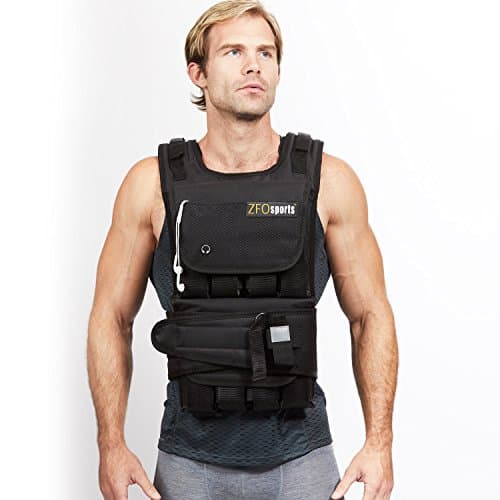
ZFOsports 40 lb Adjustable Weighted Vest. Licensed stock photograph of the category — not the specific product.
Why the increment is the spec that matters
Weighted vests get sold on their ceiling. "40 lb adjustable" sounds like a vest with forty settings, and it never is. What a vest actually has is a number of pockets and a weight per packet, and those two numbers between them decide every load you can wear. A 40 lb vest holding eight 5 lb bags gives you nine loads including empty. A 40 lb vest holding thirteen 3 lb packets gives you fourteen. Same ceiling, very different tool.
That matters because progression in weighted training is small. The useful jump for weighted pull-ups is somewhere around 2 to 5 percent of the load you are already using - which for a 180 lb person doing bodyweight pull-ups means two or three pounds, not ten. If the smallest thing you can add is a 5 lb bag, you will spend weeks either understimulated or overloaded, and overloaded on a weighted pull-up is how elbow tendons start complaining.
It matters even more for running and walking, because your legs feel load changes far more sharply than your lats do. Adding 5 lb to a walk is a real change in ground reaction force at every step for an hour. Adding half a pound is the kind of jump a body absorbs without noticing, which is exactly what you want when the goal is to keep doing it for months.
What each vest actually steps in
| Vest | Weight unit | Range | Settings you really get | What that step suits |
|---|---|---|---|---|
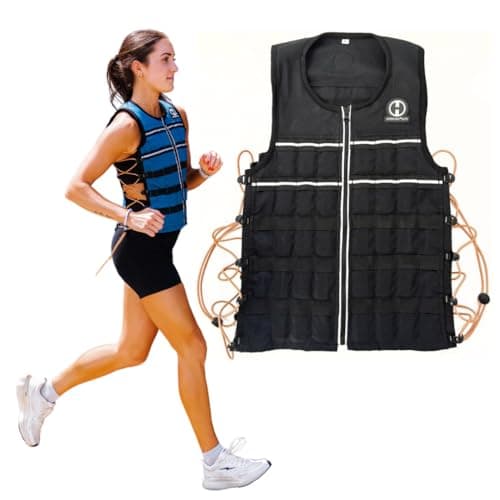
| Hyperwear Hyper Vest ELITE | 2.25 oz steel plates | 20 lb, booster packs sold separately | Effectively continuous - you can add a few ounces | Running, daily wear, anything where load changes must be invisible |
| Hyperwear Hyper Vest FIT | 0.5 lb bars (20 of them) | To 10 lb | 20 | Walking and bone loading on a torso a unisex vest does not fit |
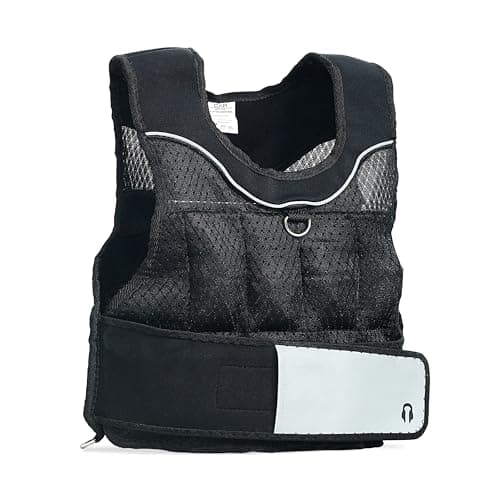
| CAP Barbell 20 lb | ~0.75 lb steel-shot packets | To 20 lb | ~26 | Light pull-ups, dips and walks - the finest steps on a cheap vest |
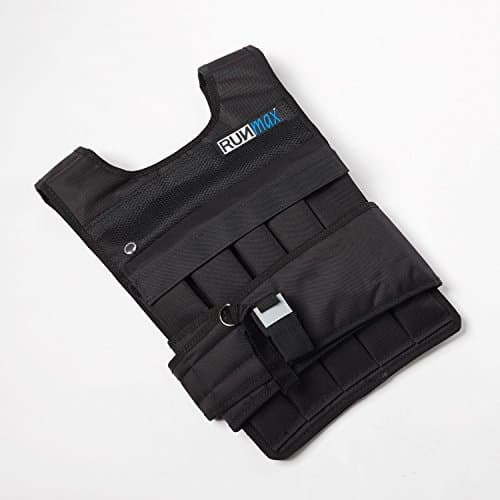
| RUNFast / RUNmax | 2.5 lb iron bags, 8 pockets | 12-140 lb versions | Depends on version; 2.5 lb steps within it | Weighted pull-ups and dips on a budget |
| ZFOsports 40 lb | 3 lb packets | 3-40 lb | ~14 | Progressing weighted pull-ups in 3 lb jumps |
Two patterns fall out of that table. The first is that the finest increments live at the two ends of the price range and not in the middle: a cheap mesh vest full of shot packets and a premium vest full of thin steel plates both adjust beautifully, while the mid-priced iron-bag pocket vests move in 2.5 lb and 3 lb chunks. The second is that fine increments and high capacity are, at the moment, mutually exclusive - nothing on the market gives you 40 lb in half-pound steps.
The increment you need, by what you are doing
Weighted pull-ups and dips: 2 to 3 lb. This is the movement where the increment question is most often asked and most consequential. You are adding load to a joint complex - elbow, shoulder capsule - that adapts over months rather than weeks, and the productive progression is a couple of pounds at a time held for a fortnight. A 3 lb packet system is close to ideal. If you already need more than about 40 lb, stop looking at vests and read the dip belt roundup instead: a belt will take two plates and a vest never will.
Walking and rucking: 2.5 to 5 lb. Load carriage over distance is forgiving of larger jumps because the intensity is low and the duration gives your body time to adjust gait. Conventional rucking progression moves in 5 lb plate steps and works fine. The walking vest roundup covers fit, which matters more here than step size does.
Running: 0.5 to 1 lb, and no more than about 10 percent of bodyweight total. Running in a vest multiplies every impact, and the vest that bounces is the vest that injures. This is the one case where micro-weight vests are genuinely worth their price - not for the fineness itself, but because thin steel plates spread over a compression panel are the only way to carry load at running cadence without it moving. The running vest page goes into the bounce problem properly.
Daily wear and bone loading: as fine as you can get. If the vest is on for hours rather than sets, you want to be able to creep the load up by ounces, and you want the option of going back down on a bad week. Half-pound bars and 2.25 oz plates are built for exactly this.
How to actually progress, once the vest fits
Pick a load that brings your working set into the rep range you want - five to eight reps for weighted pull-ups - and leave it there for two weeks minimum. Then add one packet. Not two, not a round number: one. That is the whole method, and the reason it works is that it is slow enough for tendon to keep up with muscle.
Two refinements worth knowing. First, take weight out for your warm-up sets and the last set of a session rather than grinding the same load throughout; a vest that adjusts in small units lets you do that in thirty seconds. Second, if a packet makes the set collapse from eight reps to four, the packet is too big for your current strength - hold the previous load and add reps instead. The pull-up progression page has the rep scheme that goes around this.
One honest limit on all of it: the pockets are the ceiling, and vests do not grow. A 20 lb vest with 0.75 lb packets is a wonderful tool for a year and then it is finished, whereas a 40 lb vest with 3 lb packets will carry most people as far as they intend to go. If weighted pull-ups are the goal and you expect to progress, buy the higher ceiling and accept the coarser step - and read best adjustable weighted vests for how the removable-weight systems compare on everything other than step size.
Where the weight sits, not just how much of it there is
Two vests at the same load can feel completely different, and the increment system is part of why. Iron bags in four front and four back pockets hang low on the chest and ribs; thin steel plates sewn across a compression panel sit high and flat. On a pull-up, the low-hanging version swings slightly as you come off the bottom; on a run, it bounces. Neither is a defect - a pocket vest is cheap and goes heavy, a micro-weight vest is slim and does not - but the distribution is worth as much attention as the step size.
The practical rule: load front and back as evenly as the vest allows. People instinctively fill the front pockets first because they are easier to reach, which pulls the vest forward and makes the shoulder straps dig on a hang. Balance it, cinch it down with whatever side adjustment the vest has, and keep the load closer to your sternum than your belly.
Picks
Four vests, four different step sizes
The 3 lb packet vest, the 2.5 lb bag vest, the 0.75 lb shot-packet vest and the 2.25 oz micro-weight vest - listed by what each step size is good for, not by price.
Key specs
- Weights
- 3–40 lb in 3 lb packets
- Fit
- One size, adjustable straps
- Shell
- 1200D nylon, padded shoulders
Scores · editorial, out of 10
- Fit for pull-ups (stays put)
- 9
- Adjustability of load
- 10
- Durability
- 8
- Value
- 8
Pick 1 · Weighted vests
ZFOsports 40 lb Adjustable Weighted Vest
ZFOsports
A 1200D nylon vest that adjusts from 3 to 40 lb in 3 lb packets, one-size straps, padded shoulders, water-bottle and phone pockets — the 40 lb vest with the finest weight steps.
Best for
Progressing weighted pull-ups in 3 lb jumps from a light start
Pros
- 3 lb packets — the smallest increments of any vest here
- 40 lb top end covers most people's weighted pull-up goals for years
- Padded shoulders matter on dips and on long pull-up sets
Cons
- One size fits most — very small or very large torsos may not cinch well
- Heavier and bulkier than a 20 lb vest when full
Specs from ZFOsports — 40 lb Adjustable Weighted Vest (weight packets, fit, shell).
Key specs
- Weights
- 12–140 lb versions, removable bags
- Fit
- Chest 28–48 in., quick-release buckles
- Shell
- 1000D nylon
Scores · editorial, out of 10
- Fit for pull-ups (stays put)
- 9
- Adjustability of load
- 9
- Durability
- 8
- Value
- 9
Pick 2 · Weighted vests
RUNFast/RUNmax Adjustable Weighted Vest (12–140 lb)
RUNFast
The classic pocket vest: sold from 12 lb to 140 lb with iron weight bags in four front and four back pockets, 1000D nylon, chest 28–48 in., optional shoulder pads — buy the 20 or 40 lb for pull-ups.
Best for
Weighted pull-ups and dips on a budget, with weight you can take out in 2.5 lb steps
Pros
- Weight distributes front and back, so it hangs straight on a pull-up
- Remove bags to progress from 10 lb up to the vest's rating
- Lifetime warranty; shoulder-pad option for dips
Cons
- Bulky; the 40 lb+ versions bounce on running
- One vest per weight class — a 20 lb vest can't become a 40 lb
Specs from RUNFast — 12–140 lb Weighted Vest listing (weights, pockets, fit, shell).
Key specs
- Weights
- To 20 lb, ~0.75 lb packets
- Fit
- One size, chest + waist belts
- Shell
- Reinforced nylon/polyester mesh
Scores · editorial, out of 10
- Fit for pull-ups (stays put)
- 7
- Adjustability of load
- 9
- Durability
- 7
- Value
- 10
Pick 3 · Weighted vests
CAP Barbell 20 lb Adjustable Weighted Vest
CAP Barbell
A one-size mesh vest with removable 0.75 lb steel-shot packets to 20 lb, adjustable chest and waist belts and padded shoulders — the cheap entry into weighted pull-ups and walks.
Best for
A first light vest to add 5–20 lb to pull-ups, dips and walks
Pros
- 0.75 lb packets allow almost any load from 5 to 20 lb
- Breathable mesh; machine-washable with packets removed
- Reflective strips for evening walks
Cons
- 20 lb ceiling — you'll outgrow it if weighted pull-ups become a focus
- Two-belt fit is less secure inverted or on kipping movements
Specs from CAP Barbell — 20 lb Adjustable Weighted Vest (packets, fit, materials).
Key specs
- Weights
- 20 lb of 2.25 oz steel weights; 5 lb booster packs sold separately
- Fit
- Sized S–XL, front zip plus adjustable side cords
- Shell
- Two-way stretch CORDURA (PFAS-free)
Scores · editorial, out of 10
- Fit for pull-ups (stays put)
- 10
- Adjustability of load
- 9
- Durability
- 9
- Value
- 5
Pick 4 · Weighted vests
Hyperwear Hyper Vest ELITE (20 lb)
Hyperwear
Hyperwear's heavy one: pre-loaded with 20 lb of removable 2.25 oz steel weights in stretch CORDURA with a front zip, adjustable side cords and reflective stripes — slim enough to walk in, heavy enough to load a pull-up.
Best for
One vest for the walk and the bar, when you don't want to own two
Pros
- 20 lb of ultra-thin steel in a vest you can wear under a hoodie — the usual trade between slim and heavy mostly disappears
- Side cords tighten the whole panel, so the load doesn't swing on a hang
- Same micro-weight system as the PRO, so weights carry across
Cons
- The most expensive vest on this site by a wide margin
- Booster packs are a separate purchase, and the ceiling depends on the size you buy
Specs from Hyperwear — Hyper Vest ELITE listing (20 lb pre-loaded, 2.25 oz steel weights, CORDURA shell, side cords).
FAQ
Questions readers ask
What weight increments do weighted vests come in?
Across the vests we have verified: 2.25 oz thin steel plates at the premium end, half-pound bars, roughly 0.75 lb steel-shot packets, 2.5 lb iron bags, and 3 lb packets. The fine increments live on light vests (10 to 20 lb) and the coarse ones on heavy pocket vests (20 to 140 lb). No current vest offers half-pound steps at a 40 lb capacity.
Does the ZFOsports weighted vest adjust in 2.5 lb increments?
No - the ZFOsports 40 lb adjustable vest uses 3 lb packets and adjusts from 3 lb to 40 lb. That is the smallest step of any verified 40 lb vest, but it is 3 lb rather than 2.5 lb. The vest that uses 2.5 lb units is the RUNFast/RUNmax pocket vest, which takes iron bags in four front and four back pockets.
How much weight should I add to a weighted vest at a time?
One packet, roughly every two weeks, for weighted pull-ups and dips - that is about 2 to 3 lb. For walking, 2.5 to 5 lb steps are fine. For running, half a pound to a pound. The tissue that limits weighted work is tendon and joint capsule rather than muscle, and it adapts over months, so small and patient beats big and occasional.
Is a finer increment always better?
No. Fine increments currently come with low ceilings: the vests that adjust in ounces top out around 10 to 25 lb. If you expect to be doing weighted pull-ups with 30 to 40 lb within a year, a 3 lb step on a 40 lb vest is the better buy than a half-pound step on a 10 lb vest you will outgrow.
How many weight settings does an adjustable vest really have?
Divide the capacity by the weight of one packet. A 20 lb vest with 0.75 lb packets gives about twenty-six settings; a 40 lb vest with 3 lb packets gives about fourteen; a 40 lb vest with 5 lb bags gives nine. The listing title tells you the ceiling and almost never tells you this number, which is why it is worth checking the specification before buying.
Can you buy extra weights for a weighted vest?
Sometimes. Hyperwear sells 5 lb booster packs for its micro-weight vests, so a 20 lb ELITE can go higher within the limit of the size you bought. Most pocket vests are sold as a fixed weight class - a 20 lb RUNFast does not become a 40 lb one - so with those you choose the ceiling at purchase. Check before you buy if growing into it is part of the plan.
Related
Keep reading
- Best adjustable weighted vests
How the removable-weight systems compare on everything other than step size.
- Best weighted vests for pull-ups
The movement where a 2 to 3 lb step matters most.
- Best dip belts
Where to go when a vest runs out of pockets at 40 lb.
- Best weighted vests for running
Why running wants half-pound steps and a panel that does not bounce.
Sources
- —ZFOsports — 40 lb Adjustable Weighted Vest product page (adjusts 3-40 lb in 3 lb packets, 1200D nylon shell, one-size straps, padded shoulders) · gymreadyequipment.com
- —RUNFast — 12-140 lb Adjustable Weighted Vest listing (removable iron weight bags in four front and four back pockets, 1000D nylon, chest 28-48 in.) · amazon.com
- —CAP Barbell — 20 lb Adjustable Weighted Vest product page (removable steel-shot packets of about 0.75 lb to 20 lb, one size, chest and waist belts) · capbarbell.com
- —Hyperwear — weighted vest collection (Hyper Vest ELITE pre-loaded with 20 lb of removable 2.25 oz steel weights, 5 lb booster packs sold separately; Hyper Vest FIT twenty 0.5 lb weights to 10 lb) · hyperwear.com