Guide · Training
Start here: what to buy first, decided by your ceiling, your doorway and your lease
Every section of this site answers one question. This page works out which question is yours, in the order that stops you buying the wrong thing first.
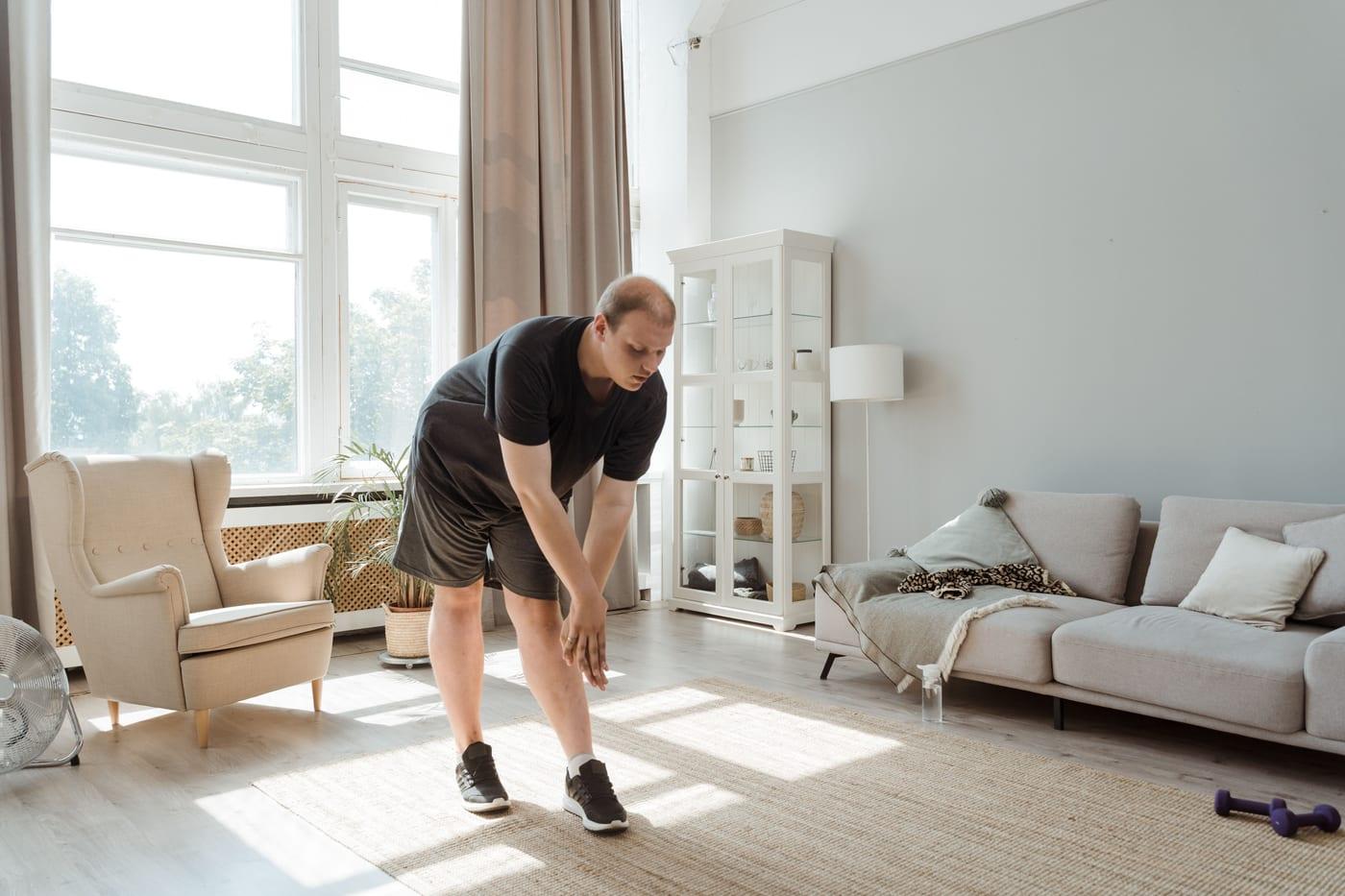
A small home training corner in an apartment with a mat and equipment. Licensed stock photograph of the category — not the specific product.
Step one: measure three things
Almost every bad home-gym purchase traces back to a number nobody checked. Take two minutes with a tape measure and write these down.
| Measure | Why it decides the purchase | Where it is used |
|---|---|---|
| Ceiling height, floor to ceiling | Under 8 ft rules out most ceiling-mounted bars and changes which rope length works | Pull-up bars, jump ropes |
| Door frame width and trim depth | A doorway bar needs the right opening and enough trim to seat against | Pull-up bars |
| Whether you can drill | Drilling doubles the rated load you can buy and halves the price of getting it | Pull-up bars, rings, sleds |
If you are not sure what your ceiling allows, the ceiling height guide for a pull-up bar has the arithmetic, and pull-up bars for wide door frames covers the openings a standard bar will not reach.
Step two: pick the section that matches your space
Each section below answers one question. Go to the one that describes your situation — you do not need the others yet.
- You rent and cannot drill. Start with the best doorway pull-up bars, then the apartment gym setup plan for what fits in six by four feet without holes.
- You live above someone. Noise is the whole problem, and it travels through the floor rather than the air. The fix is in the best jump rope for renters and kettlebells in an apartment.
- You own the place, or the landlord said yes. Drilling changes everything: wall-mounted pull-up bars and gymnastic rings become the better buy.
- You have a garage or a driveway. That is the one space that unlocks real conditioning — garage gym essentials and the best weight sleds.
- You want one object that covers everything below the waist. That is a bell: the best kettlebells, and what size to buy first.
- You want a heart rate in a small room. The best jump ropes, or battle ropes if you have no ceiling to work with.
Step three: buy in an order that wastes nothing
The order matters more than the brand. Something to hang from comes first, because it is the hardest thing to improvise and it unlocks the most movements. Something to pick up comes second. Something for the heart rate comes third, and it is the cheapest of the three — which is why people buy it first and then wonder why their training stalled.
If your goal is a specific one, the plans are written out: your first pull-up, the pull-up progression, the muscle-up progression, or the Marine PFT prep plan if you have a test date.
Every section on the site
Eight sections, each with its own roundups, comparisons and guides: jump ropes, pull-up bars, rings, dip bars and parallettes, kettlebells, conditioning gear, training plans and setups, apparel and recovery. The full page list has everything in one place.
FAQ
Questions readers ask
What should I buy first for a home gym?
Something to hang from. A doorway or wall-mounted pull-up bar unlocks the most movements and is the hardest thing to improvise. A kettlebell comes second, a jump rope third — the rope is cheapest, which is why it is usually bought first and why so many home gyms stall there.
What can I use if I am not allowed to drill?
A doorway bar, a kettlebell and a mat cover almost everything, and none of them leaves a mark. The apartment gym setup plan lists what fits in six by four feet and the order to buy it in.
How much ceiling height do I need?
For a doorway bar, whatever your door frame has. For a ceiling-mounted bar you need the bar's drop plus your standing reach plus room for your chin — the ceiling height guide does the arithmetic for 8, 9 and 10 ft rooms.
Can I train at home without annoying the neighbors?
Yes, and it is mostly about the floor rather than the exercise. Impact travels through the structure, so a dense mat and a lighter rope fix more than training quietly does — the renter's jump rope guide covers it.
Related
Keep reading
- Apartment gym setup
What fits in six by four feet, with no holes in anything.
- Best doorway pull-up bars
The no-drill bar to start with, sized to your frame.
- Best jump rope for renters
The quiet rope and the mat that keep a shared floor peaceful.
- What size kettlebell to buy first
The one number that decides your first bell.
- Garage gym essentials
What the one space that lets you drill is actually for.