Best for CrossFit · Conditioning
The best weighted vest for CrossFit starts with one number: 20 lb
Murph is Rx at 20 lb for men and 14 lb for women, and almost every vest sold for CrossFit is built around those two figures. The real question is what the vest does across 100 pull-ups and 300 air squats, not what it weighs on a shelf.
Rope & Rep is reader-supported. Product links go through our affiliate resolver and we may earn a commission from qualifying purchases at no cost to you. Prices are the retailer's and change — every button opens the live price on Amazon rather than showing a stale number.
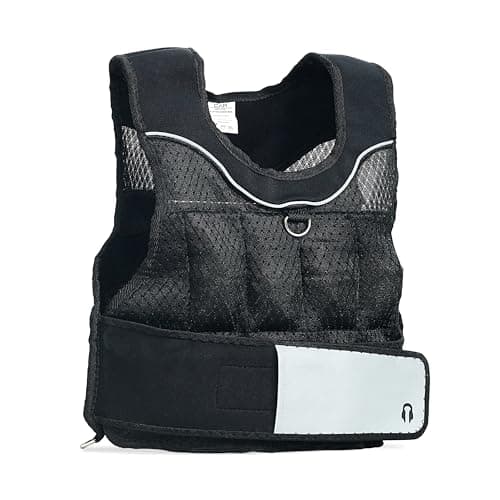
CAP Barbell 20 lb Adjustable Weighted Vest. Licensed stock photograph of the category — not the specific product.
Quick picks
| # | Product | Best for | Score | Price |
|---|---|---|---|---|
| 1 | CAP Barbell 20 lb Adjustable Weighted Vest A one-size mesh vest with removable 0.75 lb steel-shot packets to 20 lb, adjustable chest and waist belts and padded shoulders — the cheap entry into weighted pull-ups and walks. | A first light vest to add 5–20 lb to pull-ups, dips and walks | 8.1 | |
| 2 | 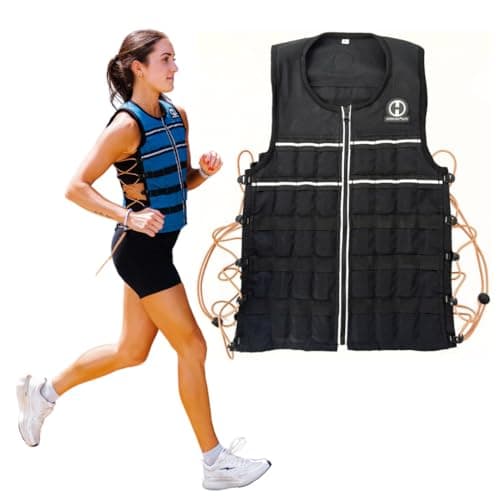 Hyperwear Hyper Vest ELITE (20 lb) Hyperwear's heavy one: pre-loaded with 20 lb of removable 2.25 oz steel weights in stretch CORDURA with a front zip, adjustable side cords and reflective stripes — slim enough to walk in, heavy enough to load a pull-up. | One vest for the walk and the bar, when you don't want to own two | 8.5 | |
| 3 | 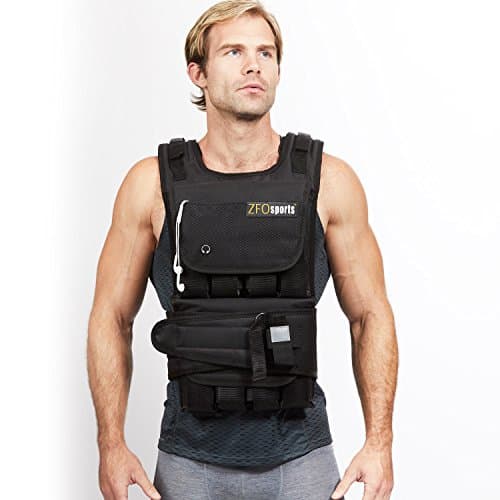 ZFOsports 40 lb Adjustable Weighted Vest A 1200D nylon vest that adjusts from 3 to 40 lb in 3 lb packets, one-size straps, padded shoulders, water-bottle and phone pockets — the 40 lb vest with the finest weight steps. | Progressing weighted pull-ups in 3 lb jumps from a light start | 8.8 | |
| 4 | 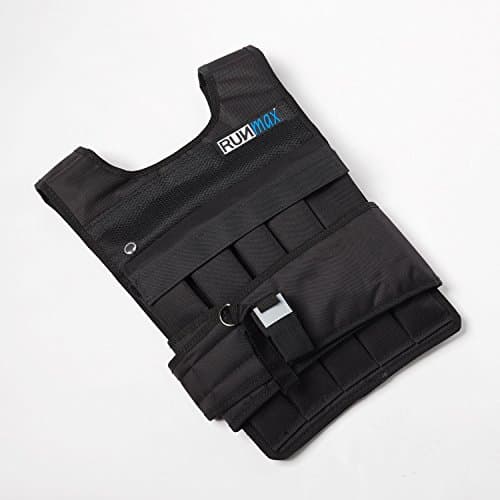 RUNFast/RUNmax Adjustable Weighted Vest (12–140 lb) The classic pocket vest: sold from 12 lb to 140 lb with iron weight bags in four front and four back pockets, 1000D nylon, chest 28–48 in., optional shoulder pads — buy the 20 or 40 lb for pull-ups. | Weighted pull-ups and dips on a budget, with weight you can take out in 2.5 lb steps | 8.8 |
Scores are our editorial judgment from each maker's published specs and mounting instructions, weighted for a renter or small-space trainer.
What CrossFit actually asks a vest to do
The weighted vest shows up in CrossFit for a short list of workouts, and they are all long. Murph is the big one: a mile run, 100 pull-ups, 200 push-ups, 300 air squats and a second mile, wearing 20 lb if you are a man and 14 lb if you are a woman. The other regular appearances are vested versions of Cindy and Angie, chipper workouts, and a lot of vested running in open-gym conditioning.
That means the vest has to survive three awkward positions in the same session. It has to sit flat enough under your chest that a push-up still reaches the floor. It has to stay put when you drop under a pull-up bar, because a vest that lags half a beat behind your torso turns a rhythmic kip into a fight. And it has to breathe through an hour of work, because the one thing nobody mentions about a vested hero WOD is how hot it gets under the shell.
None of that is about capacity. Most vests sold for CrossFit can hold far more than 20 lb, and the extra range is close to irrelevant here. What separates them is thickness, how the load is spread, and how small the weight increments are when you decide 20 lb is too much for your first attempt.
The four criteria, weighted the way this workout weights them
Does it hit 20 and 14 lb cleanly? Thirty-five percent. A vest that only comes in 12 lb steps cannot give a woman 14 lb, and a 40 lb vest that unloads in 3 lb packets lands on 21 lb rather than 20. This is the single criterion most vest roundups skip.
Profile and how it sits. Thirty percent, judged from what the maker publishes about the weights themselves: thin steel plates lie flat, iron sand bags do not. This is the difference between a vest you forget about at rep 150 and one you are shrugging back into place.
Ventilation and strap security. Twenty percent. Mesh beats solid nylon over an hour of work, and a vest that cinches at the chest and the waist stays put better than one that only buckles once.
Cost per usable pound. Fifteen percent. Most people buy one vest, use it for a handful of workouts a year and keep it a decade. That argues for the cheap one unless something specific justifies the premium.
The four, side by side
| Vest | Weight as sold | Smallest increment | Shell | Lands on 14 lb? |
|---|---|---|---|---|
| CAP Barbell 20 lb | 20 lb | ~0.75 lb packets | Reinforced nylon/polyester mesh | Yes - within a pound |
| Hyperwear Hyper Vest ELITE | 20 lb pre-loaded | 2.25 oz steel weights | Two-way stretch CORDURA, front zip | Yes - to the ounce |
| ZFOsports 40 lb | 3-40 lb | 3 lb packets | 1200D nylon, padded shoulders | No - stops at 12 and 15 lb |
| RUNFast/RUNmax | 12-140 lb versions | 2.5 lb bags | 1000D nylon | No - stops at 12.5 and 15 lb |
Setting 14 lb when the vest is sold at 20
This is the practical problem for roughly half the people reading this page, and it is why the increment column above exists. The Rx women's load is 14 lb, and no vest on the market is sold at 14 lb.
With the CAP vest, you pull packets until the vest reads about 14 lb; at roughly 0.75 lb a packet that is eight packets out of a 20 lb vest, and you land within three quarters of a pound. With the Hyperwear ELITE, the steel weights are 2.25 oz each, so 14 lb is an exact number of weights and you can get it dead on. With the ZFOsports, 3 lb packets mean the nearest stops are 12 lb and 15 lb — close enough for training, not exact. The RUNFast is sold in several weight classes with 2.5 lb bags, so the right version gets you to 15 lb or 12.5 lb.
If you are not chasing Rx, none of this matters much; scale to whatever lets you keep moving. If you are, buy for the increment, not the headline weight. The weighted vest weight increments guide goes through this in more detail for every vest on the site.
How a vest changes the movements in Murph
The run. This is where a thick vest punishes you. A pocket vest with iron sand bags bounces, and over a mile that bounce becomes a shoulder ache. A thin steel-weight vest barely moves. If you are doing both miles, this is the biggest single argument for the slim vest.
Pull-ups. Twenty pounds on the chest moves your centre of mass up and forward, which makes a kip harder to time and a strict pull-up noticeably heavier. Expect to lose a large slice of your unweighted rep capacity at 20 lb. Our weighted vests for pull-ups page covers the hanging side of this in full.
Push-ups. The forgotten problem. A bulky vest bunches between your sternum and the floor, so you reach the ground before your chest does, and the rep gets shorter. Vest thickness is the whole story here.
Air squats. Mercifully, the easiest. Twenty pounds on the torso in a squat is the one place a vest behaves exactly as you would expect it to.
What to buy
Buy the CAP 20 lb if you are doing a handful of vested workouts a year and the price difference matters, which describes most people. Buy the Hyperwear ELITE if you also run in it, or if you want a vest that disappears under a shirt. Buy the ZFOsports if the vest is going to see heavy weighted pull-up work outside the hero WODs and 20 lb will not be enough for long. Buy the RUNFast if you want to pick your own weight class from the widest range on the market. If none of those fit, the adjustable vest roundup covers the same ground for someone who wants one vest to do everything.
The picks in detail
Every pick, reviewed
Key specs
- Weights
- To 20 lb, ~0.75 lb packets
- Fit
- One size, chest + waist belts
- Shell
- Reinforced nylon/polyester mesh
Scores · editorial, out of 10
- Fit for pull-ups (stays put)
- 7
- Adjustability of load
- 9
- Durability
- 7
- Value
- 10
Pick 1 · Weighted vests
CAP Barbell 20 lb Adjustable Weighted Vest
CAP Barbell
A one-size mesh vest with removable 0.75 lb steel-shot packets to 20 lb, adjustable chest and waist belts and padded shoulders — the cheap entry into weighted pull-ups and walks.
Best for
A first light vest to add 5–20 lb to pull-ups, dips and walks
It wins on the only number this workout cares about. Twenty pounds is the Rx men's load, and this vest is sold at exactly 20 lb rather than as a 40 lb vest you have to unload. The 0.75 lb steel-shot packets then do the thing almost nothing else at this price does: they let you set 14 lb, or 10 lb, or anything in between, within three quarters of a pound.
The mesh shell is the second reason it ranks here. An hour of vested work generates a startling amount of heat, and a reinforced mesh panel moves more air than solid nylon does. Two honest marks against it: the 20 lb ceiling means it will never be your weighted-pull-up vest, and the chest-plus-waist belt arrangement is less locked-down than a zip-front vest when you go upside down or start kipping.
Pros
- 0.75 lb packets allow almost any load from 5 to 20 lb
- Breathable mesh; machine-washable with packets removed
- Reflective strips for evening walks
Cons
- 20 lb ceiling — you'll outgrow it if weighted pull-ups become a focus
- Two-belt fit is less secure inverted or on kipping movements
Specs from CAP Barbell — 20 lb Adjustable Weighted Vest (packets, fit, materials).
Key specs
- Weights
- 20 lb of 2.25 oz steel weights; 5 lb booster packs sold separately
- Fit
- Sized S–XL, front zip plus adjustable side cords
- Shell
- Two-way stretch CORDURA (PFAS-free)
Scores · editorial, out of 10
- Fit for pull-ups (stays put)
- 10
- Adjustability of load
- 9
- Durability
- 9
- Value
- 5
Pick 2 · Weighted vests
Hyperwear Hyper Vest ELITE (20 lb)
Hyperwear
Hyperwear's heavy one: pre-loaded with 20 lb of removable 2.25 oz steel weights in stretch CORDURA with a front zip, adjustable side cords and reflective stripes — slim enough to walk in, heavy enough to load a pull-up.
Best for
One vest for the walk and the bar, when you don't want to own two
The one to buy if you are running both miles. Twenty pounds of 2.25 oz steel weights in stretch CORDURA is a fundamentally different object from the same weight in iron sand bags — it lies flat against the torso instead of standing off it, so the push-ups reach the floor and the run does not turn into a bouncing shoulder ache. The adjustable side cords pull the whole panel tight, which is what stops the load swinging on a kipping pull-up.
Second rather than first for one reason: price. It is the most expensive vest on this site by a wide margin, and for somebody who wears a vest twice a year the CAP does the job for a small fraction of it. The other caveat is that the booster packs that take it past 20 lb are a separate purchase, and how far it goes depends on the size you bought.
Pros
- 20 lb of ultra-thin steel in a vest you can wear under a hoodie — the usual trade between slim and heavy mostly disappears
- Side cords tighten the whole panel, so the load doesn't swing on a hang
- Same micro-weight system as the PRO, so weights carry across
Cons
- The most expensive vest on this site by a wide margin
- Booster packs are a separate purchase, and the ceiling depends on the size you buy
Specs from Hyperwear — Hyper Vest ELITE listing (20 lb pre-loaded, 2.25 oz steel weights, CORDURA shell, side cords).
Key specs
- Weights
- 3–40 lb in 3 lb packets
- Fit
- One size, adjustable straps
- Shell
- 1200D nylon, padded shoulders
Scores · editorial, out of 10
- Fit for pull-ups (stays put)
- 9
- Adjustability of load
- 10
- Durability
- 8
- Value
- 8
Pick 3 · Weighted vests
ZFOsports 40 lb Adjustable Weighted Vest
ZFOsports
A 1200D nylon vest that adjusts from 3 to 40 lb in 3 lb packets, one-size straps, padded shoulders, water-bottle and phone pockets — the 40 lb vest with the finest weight steps.
Best for
Progressing weighted pull-ups in 3 lb jumps from a light start
Here because a lot of people who buy a vest for Murph end up using it mostly for weighted pull-ups, and 20 lb runs out fast on a bar. This one adjusts from 3 lb to 40 lb in 3 lb packets with padded shoulders, which is the right shape for a vest that will spend most of its life hanging rather than running.
Third for CrossFit specifically because of the arithmetic. Three-pound packets put the stops at 18 lb and 21 lb rather than 20 lb, and at 12 lb or 15 lb rather than 14 lb — fine for training, not exact for Rx. It is also a one-size vest, which cinches well on most torsos and poorly on the extremes, and it is a bulkier garment than either of the two above when it is full.
Pros
- 3 lb packets — the smallest increments of any vest here
- 40 lb top end covers most people's weighted pull-up goals for years
- Padded shoulders matter on dips and on long pull-up sets
Cons
- One size fits most — very small or very large torsos may not cinch well
- Heavier and bulkier than a 20 lb vest when full
Specs from ZFOsports — 40 lb Adjustable Weighted Vest (weight packets, fit, shell).
Key specs
- Weights
- 12–140 lb versions, removable bags
- Fit
- Chest 28–48 in., quick-release buckles
- Shell
- 1000D nylon
Scores · editorial, out of 10
- Fit for pull-ups (stays put)
- 9
- Adjustability of load
- 9
- Durability
- 8
- Value
- 9
Pick 4 · Weighted vests
RUNFast/RUNmax Adjustable Weighted Vest (12–140 lb)
RUNFast
The classic pocket vest: sold from 12 lb to 140 lb with iron weight bags in four front and four back pockets, 1000D nylon, chest 28–48 in., optional shoulder pads — buy the 20 or 40 lb for pull-ups.
Best for
Weighted pull-ups and dips on a budget, with weight you can take out in 2.5 lb steps
The widest range here by a long way: versions from 12 lb to 140 lb, with iron weight bags in four front and four back pockets and a 1000D nylon shell. If you want to choose your own weight class rather than accept 20 lb, this is the line that offers it, and the 2.5 lb bags are finer steps than the ZFOsports' 3 lb packets.
Fourth for this particular use because it is the bulkiest vest on the page, and bulk is the exact thing that hurts across 200 push-ups and two miles of running. The maker's own caveat is that the 40 lb and heavier versions bounce on a run. Buy the 20 lb version if you buy this one, and treat the heavier versions as pull-up bar equipment.
Pros
- Weight distributes front and back, so it hangs straight on a pull-up
- Remove bags to progress from 10 lb up to the vest's rating
- Lifetime warranty; shoulder-pad option for dips
Cons
- Bulky; the 40 lb+ versions bounce on running
- One vest per weight class — a 20 lb vest can't become a 40 lb
Specs from RUNFast — 12–140 lb Weighted Vest listing (weights, pockets, fit, shell).
Buying guide
What to buy, in one paragraph
The CAP 20 lb is the default: the exact Rx men's load, 0.75 lb packets that reach 14 lb, a mesh shell that breathes, and the lowest price here. Pay up for the Hyperwear ELITE only if you are also running in it or you want a vest nobody can see. Choose the ZFOsports or the RUNFast if the vest's main job will be weighted pull-ups rather than hero WODs, and accept that neither lands exactly on 14 lb.
How this list was built
Four vests confirmed as live, purchasable listings were scored against the weighted-vest rubric, re-weighted for this use: increment precision and profile matter far more for a vested hero WOD than top-end capacity does. Weights, increments, shell materials and fit ranges all come from the page named under each product. Nothing here was tested, and no load, dimension or capacity figure in this article is ours. The methodology page sets out how the scoring works.
Three mistakes worth avoiding
Buying a 40 lb vest for a 20 lb workout. You will carry the extra bulk through every rep and use none of the range. Assuming a plate carrier is a complete purchase. Price the plates before you compare. Doing the whole thing vested on day one. Build the volume first and add the vest after.
FAQ
Questions readers ask
What weight vest is used for Murph?
Twenty pounds for men and fourteen pounds for women is the Rx standard. Those two numbers are why almost every vest marketed for CrossFit is sold at 20 lb. Scaled versions of the workout are commonly done at 10 lb or with no vest at all.
Is a weighted vest or a plate carrier better for CrossFit?
A vest if you do not already own plates, because it arrives at weight and costs less in total. A plate carrier if you own 10 lb steel plates, because the plates sit flat against the back and chest and the carrier is easy to strip. The carrier on its own is only half the purchase.
How do I set a weighted vest to 14 lb?
Remove packets until the vest reads 14 lb, which depends entirely on how small the packets are. The CAP vest uses roughly 0.75 lb packets and gets within a pound; the Hyperwear ELITE uses 2.25 oz steel weights and lands exactly; the ZFOsports uses 3 lb packets, so the nearest stops are 12 lb and 15 lb.
Can you run in a CrossFit weighted vest?
You can run in any of them, but bulk decides whether you enjoy it. A slim steel-weight vest barely bounces over a mile; a thick pocket vest with iron sand bags does, and the makers of the heavier versions say so themselves. If both Murph miles are part of your plan, buy for profile over capacity.
Does a weighted vest make pull-ups much harder?
Yes, and more than the weight alone suggests, because the load sits high on the torso and shifts your centre of mass. Most people lose a large part of their unweighted rep capacity at 20 lb. Plan the first vested session as a volume reduction, not a test.
Related
Keep reading
- Best weighted vests for pull-ups
The hanging side of the same purchase, where capacity matters more than profile.
- Weighted vest weight increments
Every vest on the site, ranked by how small a jump it can make.
- Weighted vest vs dip belt
What to buy when the load is only ever going on a bar.
- Best adjustable weighted vests
If one vest has to cover 10 lb through 40 lb.
Sources
- —CAP Barbell — 20 lb Adjustable Weighted Vest (packet size, one-size fit, mesh shell) · capbarbell.com
- —Hyperwear — Hyper Vest ELITE (20 lb pre-loaded, 2.25 oz steel weights, stretch CORDURA, side cords) · hyperwear.com
- —ZFOsports — 40 lb Adjustable Weighted Vest (3 lb packets, 1200D nylon, padded shoulders) · gymreadyequipment.com
- —RUNFast — 12-140 lb Weighted Vest listing (weight classes, 2.5 lb bags, pockets, 1000D shell) · amazon.com