Best Kettlebell for Women · Kettlebells
The best kettlebells for women: the handle is the spec, not the weight
There is no such thing as a women's kettlebell, and the bells marketed that way are usually just light and pink. What actually changes the purchase is handle diameter against your hand, whether 8 to 12 kg is buyable in that line, and how you add the second bell.
Rope & Rep is reader-supported. Product links go through our affiliate resolver and we may earn a commission from qualifying purchases at no cost to you. Prices are the retailer's and change — every button opens the live price on Amazon rather than showing a stale number.
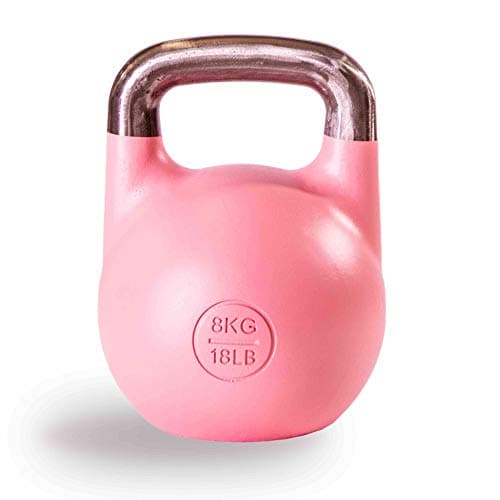
Bells of Steel Pro Grade Competition Kettlebell (8 kg). Licensed stock photograph of the category — not the specific product.
Quick picks
| # | Product | Best for | Score | Price |
|---|---|---|---|---|
| 1 | Bells of Steel Pro Grade Competition Kettlebell (8 kg) A gravity-cast, single-piece competition bell built to Girevoy Sport Union, IKFF and IUKL specification: the shell is the same size at every weight, so your technique does not change as you move up. | Girevoy-style long sets, and anyone who wants one grip and one shell size forever | 8.0 | |
| 2 | 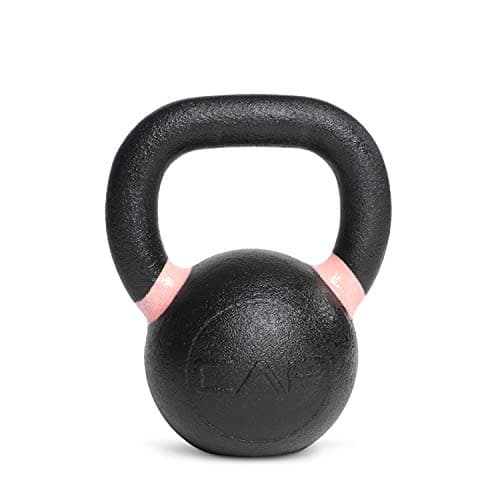 CAP Barbell Cast Iron Competition Kettlebell Seam-free, powder-coated cast iron in 5–80 lb, weight accurate to 1%, with a wide opening handle and a flat base — a step up in finish from painted bells at a small premium. | A powder-coat bell with an honest weight in the widest range of sizes | 8.5 | |
| 3 | 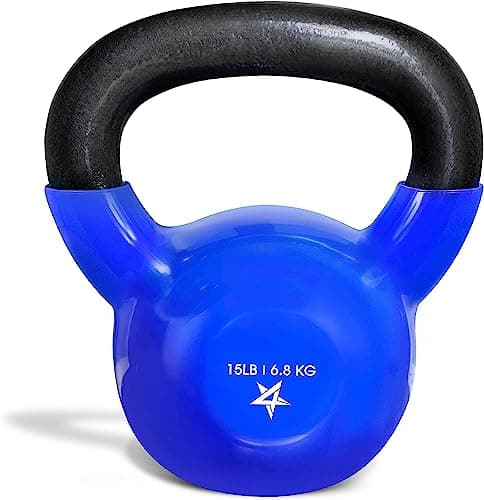 Yes4All Vinyl Coated Kettlebell The same cast iron bell in a vinyl jacket, 5–100 lb across the range — the apartment kettlebell: quieter to set down and kinder to a floor you don't own. | Kettlebell training on an apartment floor with neighbors below | 8.4 | |
| 4 | 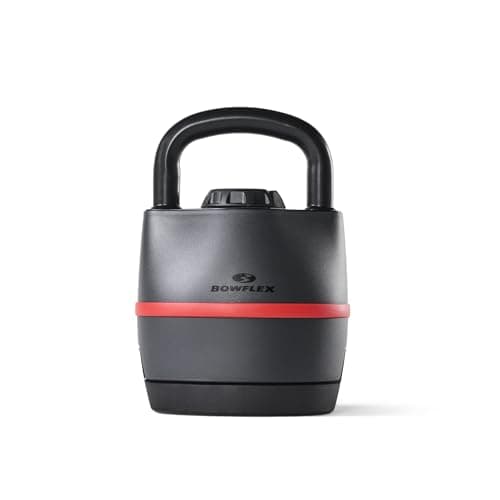 BowFlex SelectTech 840 Adjustable Kettlebell Six bells in one: 8, 12, 20, 25, 35 and 40 lb by turning a dial, in an 8.8 × 7 × 12.5 in. footprint — the adjustable bell for an apartment corner that can't hold a rack. | Replacing a beginner's first three bells with one object that fits under a desk | 7.4 | |
| 5 | 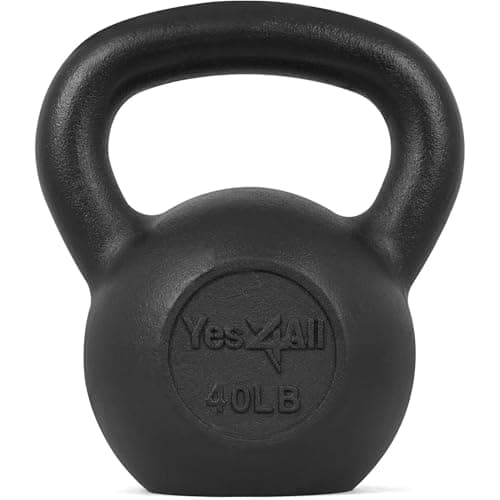 Yes4All Solid Cast Iron Kettlebell The one-piece cast iron bell sold in 5 lb steps from 5 to 80 lb with a 1.25 in. handle and a flat base — the default first kettlebell because you can buy exactly the size you need. | A first bell in the exact weight you need without paying for a coating you don't | 8.1 |
Scores are our editorial judgment from each maker's published specs and mounting instructions, weighted for a renter or small-space trainer.
Why this page ranks differently from our main kettlebell list
The site's main kettlebell roundup ranks on build and finish and puts a wide-handled powder-coated bell first, because for two-handed swinging that is the right answer. Our beginners page ranks on whether you can buy the exact weight you need, which is why it leads with plain cast iron sold in 5 lb steps.
This page ranks on a third thing: handle diameter relative to your hand, and the availability of the 8 to 12 kg sizes in that line. That produces a different order — a competition bell comes first here and third there, and the wide-handled bell that wins the main page does not appear on this one at all. That is not a contradiction; it is a different question getting a different answer.
The reason handle diameter gets the lead weight is simple. A kettlebell handle is a fixed-diameter bar you have to hold with one hand while it rotates around that hand, and the smaller your hand, the more of your grip strength goes into simply not dropping it. On a two-handed swing this barely matters — two hands on a wide handle is comfortable. On a single-arm swing, a clean, a snatch or a press, a handle that is a few millimeters too thick converts a technique session into a grip-endurance session.
The numbers that actually differ
| Spec | Typical cast iron | Competition bell | Why it matters here |
|---|---|---|---|
| Handle diameter | 33-38 mm, thickening as the bell gets heavier | 34-35 mm, identical at every weight | A smaller hand has less margin; a handle that grows with the bell changes the lift as you progress |
| Shell size | Grows with weight | Same at every weight | The rack position and the clean path stay identical on a competition bell |
| Weight steps | 5 lb steps across 5-80 lb on the widest lines | 4 kg steps are common; fewer sizes | The 18-26 lb band is where most women start and where some lines have gaps |
| Price per bell | Lowest in the category | Two to three times a cast iron bell of the same weight | The handle consistency is worth real money only if you will own three or four bells |
What weight to actually buy
The common mistake is buying too light, and the reason is that a kettlebell swing is a hip movement that only teaches itself when the bell is heavy enough to pull you into a hinge. A bell that is too light gets lifted with the arms and the movement never clicks — which is why the 5 and 8 lb bells sold as women's kettlebells, in pastel vinyl, are a dead end rather than a starting point.
A general starting point for an untrained adult woman is 8 to 12 kg, which is 18 to 26 lb. If you have any lifting background, 12 kg. If you have none at all and want a bell you can also press overhead, 8 kg. The sizing page goes movement by movement, because the right weight for a two-hand swing and the right weight for a single-arm press are not the same number and never will be — a bell you can swing fifty times is a bell you cannot press once, and that is normal rather than a sign you bought wrong.
The five criteria, in the order they matter
Handle and finish carries the most weight in the kettlebell rubric, and on this page it is doing double duty: diameter against a smaller hand, plus whether the casting seam under the handle has been finished. An unfinished seam is a ridge that tears skin during high-rep swings, and it is the one defect you cannot sand out of a bell you already own. Powder coat grips chalk and lasts; paint and enamel chip and go slick; vinyl is quiet and floor-friendly and is also the first thing to fail.
Weight increments and adjustability is second, and it is where lines quietly let you down. It is no use a bell being perfect at 16 kg if the 10 and 12 kg sizes are permanently out of stock. A line that covers the 18 to 26 lb band in small steps is worth more to a first-time buyer than a better-finished bell that does not.
Footprint and floor safety matters more than most roundups admit, because a lot of this training happens in a rented apartment with somebody underneath. A vinyl or rubber-coated bell set down on a wooden floor is a different noise event from bare cast iron, and the apartment page covers the rest of that problem.
Build — single-piece gravity casting with no welded joint between handle and bell — and value finish the rubric. Value is last deliberately: the cheapest bell here and the most expensive are separated by less than the cost of two months of a gym membership, and a bell lasts decades.
What about bells marketed to women?
Most of them are light bells in pastel vinyl, and the vinyl is the only honest part of the proposition — a coated bell really is quieter and kinder to a floor. The weight is the problem. A 5 lb or 8 lb kettlebell is below the threshold at which the swing teaches the hinge, so it trains the arms to lift a small weight and then stops being useful. If you want the quiet coating, buy a coated bell in a real working weight: the vinyl line on this page runs from 5 lb to 100 lb, so an 18 or 20 or 26 lb coated bell exists and costs about the same as the 8 lb one marketed at you.
The second thing worth knowing is that a smaller hand is an argument for a narrower handle, not a lighter bell. Those are independent specs, and the market keeps bundling them. A 12 kg competition bell with a 35 mm handle is a far better fit for a small hand than a 6 kg cast iron bell with a 38 mm one.
How to add the second bell
Almost nobody stays at one bell, and the order matters. The standard progression is: buy your working bell first, then buy one lighter bell for presses, windmills and technique work, and only then go heavier for swings. People do it the other way round — working bell, then heavier bell — and end up with two bells they can swing and nothing they can press.
If you expect to own three or four bells eventually, that is the case for a competition line: the shell is the same size at every weight, so the clean path and the rack position never change and progress is just a number. If you expect to own one or two, cast iron is the better value and the growing handle will not bother you. If you expect to own three or four and have nowhere to put them, that is the case for an adjustable bell — one object, the whole ladder, and a handle you will like slightly less.
One honest warning about sets. Boxed starter sets are mostly a trap for this buyer: they tend to cap at 15 lb, they almost always include a 5 lb bell nobody trains with, and they cost more than two singles in the right weights. The set page lays out why, and the three better routes to the same ladder.
Training it on a floor you do not own
The rule is that you never drop the bell. Swings get set down at the end of a set, cleans are controlled to the floor, and anything that involves releasing a bell belongs in a garage. With a mat under the working area this is one of the quietest kinds of training available in an apartment — far quieter than a slam ball, quieter than a rope, and considerably quieter than anything you drop on a rack. A single bell and six square feet of floor is a complete gym: the one-bell session is twenty minutes, twice a week, and needs nothing else.
The picks in detail
Every pick, reviewed
Key specs
- Weight
- 8 kg / 17.6 lb
- Handle
- 34 mm on the 4–8 kg bells; 35 mm from 10 kg up
- Build
- Gravity-cast single piece, no welding; colour-coded
Scores · editorial, out of 10
- Handle & finish
- 10
- Weight increments / adjustability
- 8
- Footprint & floor safety
- 5
- Build (casting, seams)
- 10
- Value
- 6
Pick 1 · Kettlebells
Bells of Steel Pro Grade Competition Kettlebell (8 kg)
Bells of Steel
A gravity-cast, single-piece competition bell built to Girevoy Sport Union, IKFF and IUKL specification: the shell is the same size at every weight, so your technique does not change as you move up.
Best for
Girevoy-style long sets, and anyone who wants one grip and one shell size forever
It wins on the criterion this page is built around: a 34 mm handle on the 4-8 kg bells, and a shell that is the same size at every weight in the line. For a smaller hand doing single-arm work, that is the narrowest handle we could verify in stock, and the constant shell means the clean path and rack position you learn at 8 kg are the ones you use at 16 kg.
Two honest marks against it. It costs two to three times a cast iron bell of the same weight, which is money well spent only if you will own three or four bells. And the listing is inconsistent with itself — 33 mm in the title, 34 mm in the detail for this size — so assume 34 mm and read the spec for whichever weight you buy.
Pros
- Uniform shell size across the range — the rack position and the clean path never change
- Built to GSU / IKFF / IUKL competition specification rather than approximating it
- Gravity-cast as one piece, so there is no weld seam to catch a forearm
Cons
- Competition bells cost two to three times a cast-iron bell of the same weight
- The listing's own copy quotes 33 mm in the title and 34 mm for this size in the detail — assume 34 mm
Key specs
- Weights
- 5–80 lb (13 sizes)
- Finish
- Powder coat, no seams
- Accuracy
- Within 1% of stated
Scores · editorial, out of 10
- Handle & finish
- 9
- Weight increments / adjustability
- 9
- Footprint & floor safety
- 7
- Build (casting, seams)
- 9
- Value
- 8
Pick 2 · Kettlebells
CAP Barbell Cast Iron Competition Kettlebell
CAP Barbell
Seam-free, powder-coated cast iron in 5–80 lb, weight accurate to 1%, with a wide opening handle and a flat base — a step up in finish from painted bells at a small premium.
Best for
A powder-coat bell with an honest weight in the widest range of sizes
The practical pick, and the one most people on this page should probably buy. Thirteen sizes from 5 to 80 lb means the 18 and 20 lb bells genuinely exist, powder coat holds chalk rather than going slick, the casting is machined seam-free so there is no ridge under the handle, and the stated weight is accurate to within 1%.
The catch is in the name: despite "competition", this is cast iron and the shell grows with the weight, so the handle thickens as you move up and the rack position changes with it. It also costs more than a painted bell at the same weight. For one or two bells that is the right trade; for a four-bell ladder it is not.
Pros
- Powder coat holds chalk and doesn't chip like paint or enamel
- Machined seam-free casting — no ridge under the handle
- Color-coded band and lb/kg markings
Cons
- Bell dimensions scale with weight (it's cast iron, not a true competition bell despite the name)
- Costs more than the painted Yes4All at the same weight
Specs from CAP Barbell — Competition Weight Cast Iron Kettlebell (weights, finish, accuracy).
Key specs
- Weights
- 5–100 lb across the range
- Coating
- Vinyl over cast iron
- Handle
- Solid steel, 8.86 in. wide
Scores · editorial, out of 10
- Handle & finish
- 8
- Weight increments / adjustability
- 8
- Footprint & floor safety
- 10
- Build (casting, seams)
- 7
- Value
- 9
Pick 3 · Kettlebells
Yes4All Vinyl Coated Kettlebell
Yes4All
The same cast iron bell in a vinyl jacket, 5–100 lb across the range — the apartment kettlebell: quieter to set down and kinder to a floor you don't own.
Best for
Kettlebell training on an apartment floor with neighbors below
The apartment answer, and the honest version of what "women's kettlebell" marketing is gesturing at. The vinyl jacket damps the clang on a hard floor and will not scratch it, the bells are color-coded so grabbing the right one takes no thought, and crucially the line runs from 5 lb to 100 lb — so a coated bell in a real working weight exists rather than only in token sizes.
It ranks third rather than first because the coating is the weak point: vinyl adds bulk to the bell and can crack or split at the handle if it takes a knock on concrete. The color also varies by weight, so a matched pair means buying one weight twice.
Pros
- Vinyl coating dampens the clank on a hard floor and won't scratch it
- PVC-coated shell takes a knock on a hard floor without chipping the way enamel does
- Color-coded — the fastest way to grab the right weight
Cons
- Vinyl adds a little bulk to the bell and can crack if dropped on concrete
- Colour varies by weight, so a matched-looking pair means buying one weight twice
Specs from Yes4All — Vinyl Coated Kettlebell listing (weights, coating, handle).
Key specs
- Weights
- 8 / 12 / 20 / 25 / 35 / 40 lb
- Size
- 8.8 × 7 × 12.5 in.
- Adjust
- Dial
Scores · editorial, out of 10
- Handle & finish
- 6
- Weight increments / adjustability
- 9
- Footprint & floor safety
- 9
- Build (casting, seams)
- 6
- Value
- 7
Pick 4 · Kettlebells
BowFlex SelectTech 840 Adjustable Kettlebell
BowFlex
Six bells in one: 8, 12, 20, 25, 35 and 40 lb by turning a dial, in an 8.8 × 7 × 12.5 in. footprint — the adjustable bell for an apartment corner that can't hold a rack.
Best for
Replacing a beginner's first three bells with one object that fits under a desk
Six bells in one object with a footprint of 8.8 by 7 by 12.5 inches, covering 8, 12, 20, 25, 35 and 40 lb on a dial. For a studio apartment where the whole kettlebell question is really a storage question, this replaces the first three bells and fits under a desk — and the 8 to 40 lb range is exactly the beginner-to-intermediate window.
It ranks fourth because of the handle, which is the thing this page cares most about: it is flat and wide rather than round and 34 mm, and the shell is plastic. That makes it a poor bell for snatches and a bell you should not drop. The weight jumps are uneven too, going 20 to 25 to 35.
Pros
- Six weights in the footprint of one 40 lb bell — the space argument is decisive in a studio
- Dial change takes a second between sets
- Flat base; the 8–40 lb range is exactly the beginner-to-intermediate window
Cons
- Plastic shell and a flat, wide handle — it's not a bell you should drop or use for hard snatches
- Tops out at 40 lb; the jumps (20→25→35) aren't even
Specs from BowFlex — SelectTech 840 Adjustable Kettlebell (weights, dimensions).
Key specs
- Weights
- 5–80 lb in 5 lb steps
- Handle
- ~1.25 in. (35 mm), textured
- Base
- Flat
Scores · editorial, out of 10
- Handle & finish
- 7
- Weight increments / adjustability
- 9
- Footprint & floor safety
- 7
- Build (casting, seams)
- 8
- Value
- 10
Pick 5 · Kettlebells
Yes4All Solid Cast Iron Kettlebell
Yes4All
The one-piece cast iron bell sold in 5 lb steps from 5 to 80 lb with a 1.25 in. handle and a flat base — the default first kettlebell because you can buy exactly the size you need.
Best for
A first bell in the exact weight you need without paying for a coating you don't
The cheapest route to exactly the weight you need: one-piece cast iron in 5 lb steps from 5 to 80 lb, so 20 and 25 lb are both there, with a flat base that doubles as a push-up and row handle. If the budget is the binding constraint, this is a perfectly good first bell and the money saved buys a mat.
It is last here for two specific reasons rather than general ones. The basic version is painted rather than powder-coated, so it chips and can mark a wood floor. And the handle is about 1.25 in. — roughly 35 mm — which is fine for swings and a bit thick for a smaller hand on high-rep single-arm work. That is the exact trade this page exists to flag.
Pros
- 5 lb increments across the whole range — 15, 20, 25, 30, 35 lb are all there for a beginner's first two bells
- One-piece casting, no welded handle to fail
- Flat base sits still for rows, push-ups and storage
Cons
- Painted (not powder-coated) finish on the basic version chips and can leave marks on a wood floor — use a mat
- 35 mm handle is a bit thick for smaller hands on high-rep snatches
Specs from Yes4All — Solid Cast Iron Kettlebell listing (weights, handle, base).
Buying guide
What to buy, in one paragraph
If you will own one or two bells: buy the powder-coated cast iron bell in 18 or 20 lb, and a mat. If you have small hands and intend to do single-arm cleans, snatches and presses seriously, buy the 8 kg competition bell and plan on a 12 kg next. If the floor is the problem, buy the vinyl bell in 18 or 20 lb. If storage is the problem, buy the adjustable. Do not buy a boxed starter set, and do not buy anything under 15 lb as your only bell.
How this list was built
Every bell here is a live, purchasable listing re-verified on 7 October 2026 before it was scored. Handle diameters, weight ranges, finishes and dimensions come from the page named under each product; where a maker's own listing contradicts itself — the competition bell quotes two different handle diameters — the entry says so rather than picking the flattering number. Scores are editorial judgments from those published specs against the kettlebell rubric, weighted here for a smaller hand, a rented floor and the 18 to 26 lb starting band. Nothing on this page was lab tested or hands-on tested; the methodology page sets out exactly what the scores are and are not.
What actually goes wrong with a first bell
In order: the weight was too light, so the swing never taught the hinge and the bell went in a cupboard. The handle was too thick, so single-arm work became grip work and got dropped from the program. The coating chipped on a concrete floor, which is cosmetic. The casting seam tore a hand during a long swing set, which is not, and is the one thing to check before buying — look for "machined", "seam-free" or "single-piece gravity cast" in the spec.
Two things that are not worth paying for
Color. Color-coding across a ladder of bells is genuinely useful; a pastel finish on a single bell is not, and it frequently comes attached to a weight too light to train with. "Competition" in a product name on a cast iron bell. Several cast iron bells use the word while the shell still grows with the weight. If the constant shell size is what you are buying, check that the diameter is published as identical across the range.
FAQ
Questions readers ask
What size kettlebell should a woman start with?
8 to 12 kg, which is 18 to 26 lb. Take 12 kg if you have any lifting background and 8 kg if you have none and want a bell you can also press overhead. The common mistake is going lighter than this: a kettlebell swing only teaches the hip hinge when the bell is heavy enough to pull you into it, and a 5 or 8 lb bell gets muscled with the arms instead.
Are there kettlebells made specifically for women?
Not in any engineering sense. Bells marketed that way are usually just light and brightly coated, and the weights involved are often below the point where the swing works. The two specs that genuinely differ by buyer are handle diameter and the availability of the 18 to 26 lb sizes, and a smaller hand is an argument for a narrower handle rather than a lighter bell.
What handle diameter should I look for if I have small hands?
Around 33 to 35 mm, and a handle that stays that diameter as you move up in weight. Competition bells hold one diameter across the whole line; cast iron bells thicken with the weight, and some run to 38 mm, which is comfortable for two hands and thick for one. On a two-handed swing the difference barely registers. On single-arm cleans, snatches and presses it is the difference between a technique session and a grip session.
Is one kettlebell enough?
For a long time, yes. One bell in the right weight covers the swing, the goblet squat, the press, the row, the carry and a complete conditioning session, which is more than most home gyms do with far more equipment. When you do add a second, add a lighter one for presses and technique before you add a heavier one for swings.
Should I buy a kettlebell set instead of a single bell?
Usually not. Boxed starter sets tend to cap around 15 lb, nearly always include a 5 lb bell nobody trains with, and cost more than two singles in the weights you actually want. Two bells bought in the right order — working weight first, lighter second — is the better purchase and the cheaper one.
Are vinyl-coated kettlebells any good?
For an apartment, yes. The coating damps the sound of setting the bell down and will not scratch a floor you do not own, and it is corrosion-resistant. The trade-offs are that vinyl adds bulk, can split at the handle if the bell takes a hard knock, and will not hold chalk. Buy one in a real working weight rather than in the token light sizes the coating usually appears in.
Can you do kettlebell training in an apartment?
Yes, and it is one of the quietest kinds of loaded training there is, provided you never drop the bell. Swings are set down at the end of a set, cleans are controlled to the floor, and anything requiring you to release the bell belongs outdoors. A mat under the working area handles the rest.
Cast iron or competition kettlebell for a beginner?
Cast iron if you will own one or two bells, because it is a third of the price and the growing handle will not bother you. Competition if you expect to own three or four, or if you have small hands and intend to train single-arm work seriously — the constant 34 to 35 mm handle and constant shell size mean nothing about the lift changes as you get stronger.
Related
Keep reading
- What size kettlebell should a beginner buy?
The sizing table, movement by movement.
- Cast iron vs competition kettlebells
Handle diameter and shell size, in full.
- Kettlebells in an apartment
Quiet, floor-safe, and nothing dropped.
- One kettlebell workout for beginners
Twenty minutes, one bell, six square feet.
- Best kettlebell sets
Why boxed sets are mostly a trap, and the better routes.
Sources
- —Bells of Steel — Pro Grade Competition Kettlebell 8 kg listing: gravity-cast single piece, 34 mm handle on 4-8 kg bells and 35 mm from 10 kg up, GSU / IKFF / IUKL specification · amazon.com
- —CAP Barbell — Competition Weight Cast Iron Kettlebell: 5-80 lb in 13 sizes, powder coat, seam-free machined casting, weight accurate within 1% · capbarbell.com
- —Yes4All — Vinyl Coated Kettlebell listing: 5-100 lb across the range, vinyl over cast iron, 8.86 in. solid steel handle · amazon.com
- —BowFlex — SelectTech 840 Adjustable Kettlebell: 8 / 12 / 20 / 25 / 35 / 40 lb by dial, 8.8 x 7 x 12.5 in. · bowflex.com
- —Yes4All — Solid Cast Iron Kettlebell listing: 5-80 lb in 5 lb steps, ~1.25 in. (35 mm) textured handle, flat base · amazon.com