Comparison · Kettlebells
Vinyl vs cast iron kettlebells: which one lasts longer, and why the answer is the floor
A vinyl kettlebell is a cast iron kettlebell in a jacket. The iron inside is effectively immortal either way, so the real question is which coating survives your floor - and which floor survives the bell.
Rope & Rep is reader-supported. Product links go through our affiliate resolver and we may earn a commission from qualifying purchases at no cost to you. Prices are the retailer's and change — every button opens the live price on Amazon rather than showing a stale number.
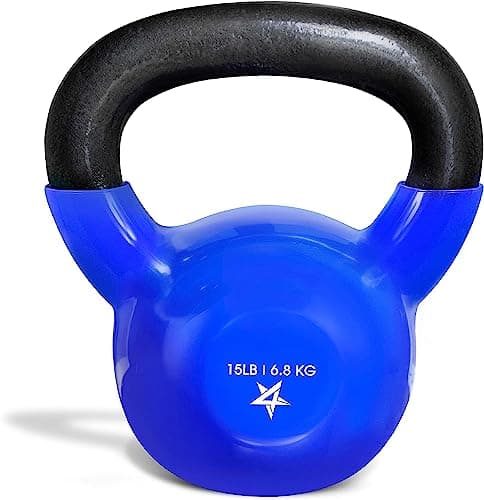
Yes4All Vinyl Coated Kettlebell. Licensed stock photograph of the category — not the specific product.
What "vinyl" and "cast iron" actually mean
Every kettlebell on this page is cast iron. That is not a marketing claim, it is the only sensible way to make a dense object of a specific weight. The split people are really asking about is the finish on the outside of the iron, and there are four of them in common use.
Bare or painted cast iron is the cheapest: a thin coat of paint over the casting, which chips when the bell meets concrete. Enamel is a harder, glossier version of the same idea and chips in larger flakes. Powder coat is a baked-on polymer layer that holds chalk, does not peel like paint and is what most serious bells now use. Vinyl is a thick PVC jacket moulded around the whole bell, usually colour-coded by weight.
So "vinyl vs cast iron" is a slightly misleading way to put the question. It is really "jacketed vs not", and the jacket changes three things: what happens to your floor, what happens to the bell when it lands, and how the handle feels in your hand.
Which one lasts longer
The honest answer is that the question has two parts, and they point in opposite directions.
The iron lasts forever either way. A cast iron kettlebell is a single lump of metal. Short of dropping it off a roof, nothing a home lifter does will damage the mass of it. Bells from the 1950s are still in circulation. Neither coating extends or shortens that.
The coating is what fails, and the surface decides which fails first. On bare concrete, a vinyl jacket is the loser: PVC cracks when a loaded bell lands on a hard edge, and once it splits it peels away in a strip and cannot be repaired. On that same floor, a chipped painted bell just looks worse and carries on working indefinitely, with a small rust patch where the chip is. On a wooden or laminate floor, the order reverses completely: vinyl survives, the bare iron chips and the paint flake takes a piece of your floor with it.
If you want a coating that does not really fail on either surface, that is powder coat, which is why it has become the default on anything sold above the budget tier.
Side by side
| Vinyl coated | Bare / painted cast iron | Powder coated | |
|---|---|---|---|
| Floor protection | Best - the jacket is the bumper | Worst - iron on wood marks immediately | Middling - softer than bare iron, harder than vinyl |
| What fails first | The jacket cracks and peels on concrete | Paint chips, then rusts at the chip | Very little; coating wears smooth over years |
| Noise on set-down | Quietest by a clear margin | Loudest | Between the two |
| Handle feel | Often thicker and slicker where the jacket wraps | Thin paint, close to bare iron | Grippiest, holds chalk |
| Colour coding | Standard on most ranges | Rare | Common as a band or marking |
| Typical price | Lowest or near it | Lowest | A step up |
The handle is where vinyl loses
This is the argument that matters more than durability for anyone doing swings, cleans or snatches, and it is worth stating plainly: on a cheap vinyl bell, the coating does not always stop at the bell. Some ranges wrap the handle too, which adds a couple of millimetres of diameter and makes the grip slick when your hands are damp. A kettlebell handle you cannot hold is a kettlebell you will not use.
The better vinyl bells leave the handle as bare steel. The Yes4All vinyl range publishes a solid steel handle 8.86 in. wide, with the vinyl confined to the body of the bell, which is the arrangement you want. Check this specifically before you buy a vinyl bell: if the listing photographs show a coloured handle, the jacket goes over the grip.
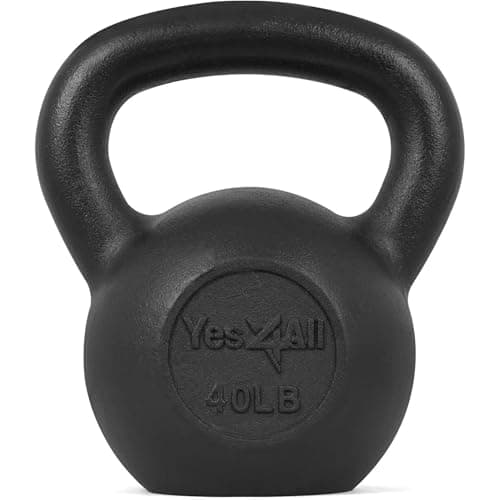
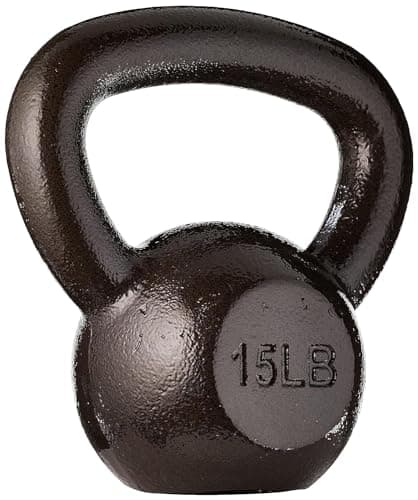
On bare iron the handle question is different and comes down to diameter. The Yes4All cast iron bells run about 1.25 in. (35 mm), which is comfortable for most hands on single-arm work. The Amazon Basics bells run about 1.5 in. (38 mm), which is excellent for two-handed swings and thick for snatches. Our kettlebell size guide goes through which handle suits which movement.
Noise, and why apartment dwellers buy vinyl
Set a 35 lb bare iron bell down on a wooden floor and the whole building hears it. Set a vinyl one down and it is a dull thud. That is the single most common reason people choose vinyl, and it is a completely legitimate one — the alternative is a dense rubber mat under the training area, which costs about as much as the coating premium and takes up permanent floor space.
If the bell is for an apartment, read the kettlebells in an apartment guide alongside this one; the coating is only one of four things that decide whether kettlebell training works upstairs from someone else.
Where competition bells come into it
One more finish turns up in searches around this comparison: competition or "steel" bells. These are a different shape rather than a different coating — a hollow steel shell at a fixed size regardless of weight, so a 12 kg and a 32 kg are the same dimensions and sit identically in the rack position. They are powder-coated or painted steel, and they cost two to three times a cast iron bell.
They are not a durability upgrade, and for someone choosing between a vinyl and a cast iron bell they are almost certainly the wrong answer. The full argument is on the cast iron vs competition kettlebells page.
What to buy
If you train on hardwood, laminate or an upstairs floor: vinyl, with the handle left bare. If you train on concrete, rubber matting or in a garage: plain cast iron, and spend the saving on a second bell. If you want the finish that outlasts both and holds chalk, and you are willing to pay a small premium: powder coat. And if you cannot decide, note that the difference in price between all three at a typical 35 lb is usually less than the cost of the mat you should be putting underneath any of them. The kettlebell roundup has the ranked picks in every finish.
Picks
The bells either side of this decision
The same Yes4All casting in both finishes, plus the two bare-iron bells worth comparing them against if you have decided the coating does not matter.
Key specs
- Weights
- 5–100 lb across the range
- Coating
- Vinyl over cast iron
- Handle
- Solid steel, 8.86 in. wide
Scores · editorial, out of 10
- Handle & finish
- 8
- Weight increments / adjustability
- 8
- Footprint & floor safety
- 10
- Build (casting, seams)
- 7
- Value
- 9
Pick 1 · Kettlebells
Yes4All Vinyl Coated Kettlebell
Yes4All
The same cast iron bell in a vinyl jacket, 5–100 lb across the range — the apartment kettlebell: quieter to set down and kinder to a floor you don't own.
Best for
Kettlebell training on an apartment floor with neighbors below
Pros
- Vinyl coating dampens the clank on a hard floor and won't scratch it
- PVC-coated shell takes a knock on a hard floor without chipping the way enamel does
- Color-coded — the fastest way to grab the right weight
Cons
- Vinyl adds a little bulk to the bell and can crack if dropped on concrete
- Color varies by weight, so a matched-looking pair means buying one weight twice
Specs from Yes4All — Vinyl Coated Kettlebell listing (weights, coating, handle).
Key specs
- Weights
- 5–80 lb in 5 lb steps
- Handle
- ~1.25 in. (35 mm), textured
- Base
- Flat
Scores · editorial, out of 10
- Handle & finish
- 7
- Weight increments / adjustability
- 9
- Footprint & floor safety
- 7
- Build (casting, seams)
- 8
- Value
- 10
Pick 2 · Kettlebells
Yes4All Solid Cast Iron Kettlebell
Yes4All
The one-piece cast iron bell sold in 5 lb steps from 5 to 80 lb with a 1.25 in. handle and a flat base — the default first kettlebell because you can buy exactly the size you need.
Best for
A first bell in the exact weight you need without paying for a coating you don't
Pros
- 5 lb increments across the whole range — 15, 20, 25, 30, 35 lb are all there for a beginner's first two bells
- One-piece casting, no welded handle to fail
- Flat base sits still for rows, push-ups and storage
Cons
- Painted (not powder-coated) finish on the basic version chips and can leave marks on a wood floor — use a mat
- 35 mm handle is a bit thick for smaller hands on high-rep snatches
Specs from Yes4All — Solid Cast Iron Kettlebell listing (weights, handle, base).
Key specs
- Weights
- 10–45 lb
- Handle
- ~1.5 in. (38 mm), textured, wide
- Finish
- Enamel over cast iron
Scores · editorial, out of 10
- Handle & finish
- 6
- Weight increments / adjustability
- 7
- Footprint & floor safety
- 7
- Build (casting, seams)
- 8
- Value
- 10
Pick 3 · Kettlebells
Amazon Basics Cast Iron Kettlebell
Amazon Basics
Solid cast iron, 10–45 lb, an enamel coat and a thick 1.5 in. textured handle with the weight stamped on both sides — the house-brand bell that's often the cheapest way to get a 35 lb.
Best for
The lowest price on a mid-weight bell with a two-hand-friendly wide handle
Pros
- Wide handle takes two hands comfortably for swings and goblet squats
- Weight stamped on both faces — easy to read on a rack
- Usually the cheapest 35–45 lb bell on Amazon
Cons
- 38 mm handle is thick for one-hand work and smaller hands
- Enamel chips over time on concrete; 45 lb is the top of the range
Specs from Amazon Basics — Cast Iron Kettlebell listing (weights, handle, finish).
Key specs
- Weights
- 5–80 lb (13 sizes)
- Finish
- Powder coat, no seams
- Accuracy
- Within 1% of stated
Scores · editorial, out of 10
- Handle & finish
- 9
- Weight increments / adjustability
- 9
- Footprint & floor safety
- 7
- Build (casting, seams)
- 9
- Value
- 8
Pick 4 · Kettlebells
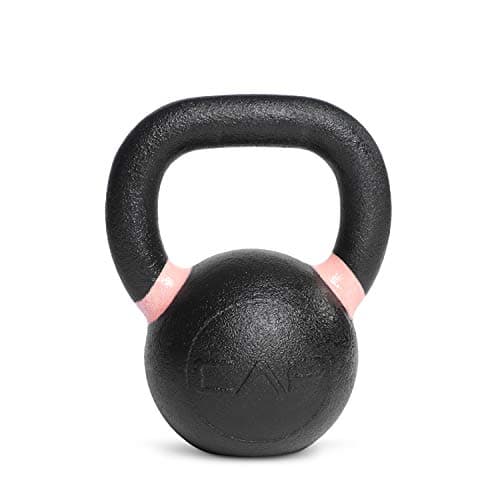
CAP Barbell Cast Iron Competition Kettlebell
CAP Barbell
Seam-free, powder-coated cast iron in 5–80 lb, weight accurate to 1%, with a wide opening handle and a flat base — a step up in finish from painted bells at a small premium.
Best for
A powder-coat bell with an honest weight in the widest range of sizes
Pros
- Powder coat holds chalk and doesn't chip like paint or enamel
- Machined seam-free casting — no ridge under the handle
- Color-coded band and lb/kg markings
Cons
- Bell dimensions scale with weight (it's cast iron, not a true competition bell despite the name)
- Costs more than the painted Yes4All at the same weight
Specs from CAP Barbell — Competition Weight Cast Iron Kettlebell (weights, finish, accuracy).
FAQ
Questions readers ask
Do vinyl kettlebells last as long as cast iron ones?
The iron inside lasts the same length of time, because it is the same casting. The jacket is what has a lifespan: vinyl cracks if a loaded bell lands on concrete, and once it splits it peels and cannot be repaired. On a wooden or laminate floor the vinyl will outlive a painted bell's finish comfortably, because the paint chips and then rusts at the chip.
Are vinyl kettlebells good for beginners?
Yes, with one check. They are quieter, they protect a floor, and they are usually the cheapest bell in the range — all genuinely useful for someone starting out at home. The thing to check before buying is whether the vinyl wraps the handle as well as the body; a coated handle is thicker and slicker than bare steel, which makes swings and cleans harder to hold.
Will a cast iron kettlebell damage a wooden floor?
Yes, and quickly. Bare or painted iron marks hardwood and laminate on the first careless set-down, and a chipped paint edge will gouge it. If the bell has to live on a floor like that, either buy vinyl or put a dense rubber mat under the training area. There is no third option that ends well.
What is the difference between vinyl and powder coated kettlebells?
Vinyl is a thick PVC jacket moulded around the bell; powder coat is a thin baked-on polymer layer bonded to the iron. Vinyl protects floors better and is quieter. Powder coat grips better, holds chalk, does not peel, and survives concrete. Powder coat costs more than either plain iron or vinyl.
Can you drop a vinyl kettlebell?
Not onto concrete, repeatedly. The jacket cracks where the bell lands, and once there is a split the PVC lifts away in a strip. On rubber matting or a padded surface it is fine. If dropping is part of the plan, bare cast iron on a mat is the more forgiving combination.
Related
Keep reading
- Cast iron vs competition kettlebells
The other finish question, and the one that changes the shape of the bell.
- Kettlebells in an apartment
Everything else that decides whether bells work on an upstairs floor.
- Best kettlebells
The ranked picks in every finish, including both bells compared here.
- What size kettlebell should a beginner buy
Handle diameter and weight, which matter more than the coating.
Sources
- —Yes4All — Vinyl Coated Kettlebell listing (weights, vinyl over cast iron, solid steel 8.86 in. handle, colour coding) · amazon.com
- —Yes4All — Solid Cast Iron Kettlebell listing (5-80 lb in 5 lb steps, ~1.25 in. handle, painted finish, flat base) · amazon.com
- —Amazon Basics — Cast Iron Kettlebell listing (10-45 lb, enamel finish, ~1.5 in. textured handle, stamped weights) · amazon.com
- —CAP Barbell — Competition Weight Cast Iron Kettlebell (powder coat, seam-free casting, weight accurate to 1%) · capbarbell.com